A Few Projects from a Fiber Artist… AKA a Procrastinator

It’s been a while… well, a little over 3 months. I am sure I have taken longer breaks from blogging. I have been baking, but mostly things that I have made before. I recently tried a new pumpkin recipe that was a fail. It was a recipe for Pumpkin Snickerdoodle Brownies that sounded promising but, in the end, had no flavor whatsoever. That led me to a deep dive into whether people post “fake” recipes and I learned that thanks to AI people are now posting recipes that have never been tested and completely computer generated, recipe and pictures, in order to generate clicks, views and likes. Great! No need to worry though, everything I am bringing you today is completely real and created by me. While I haven’t been baking my fingers have been busy crocheting and knitting.

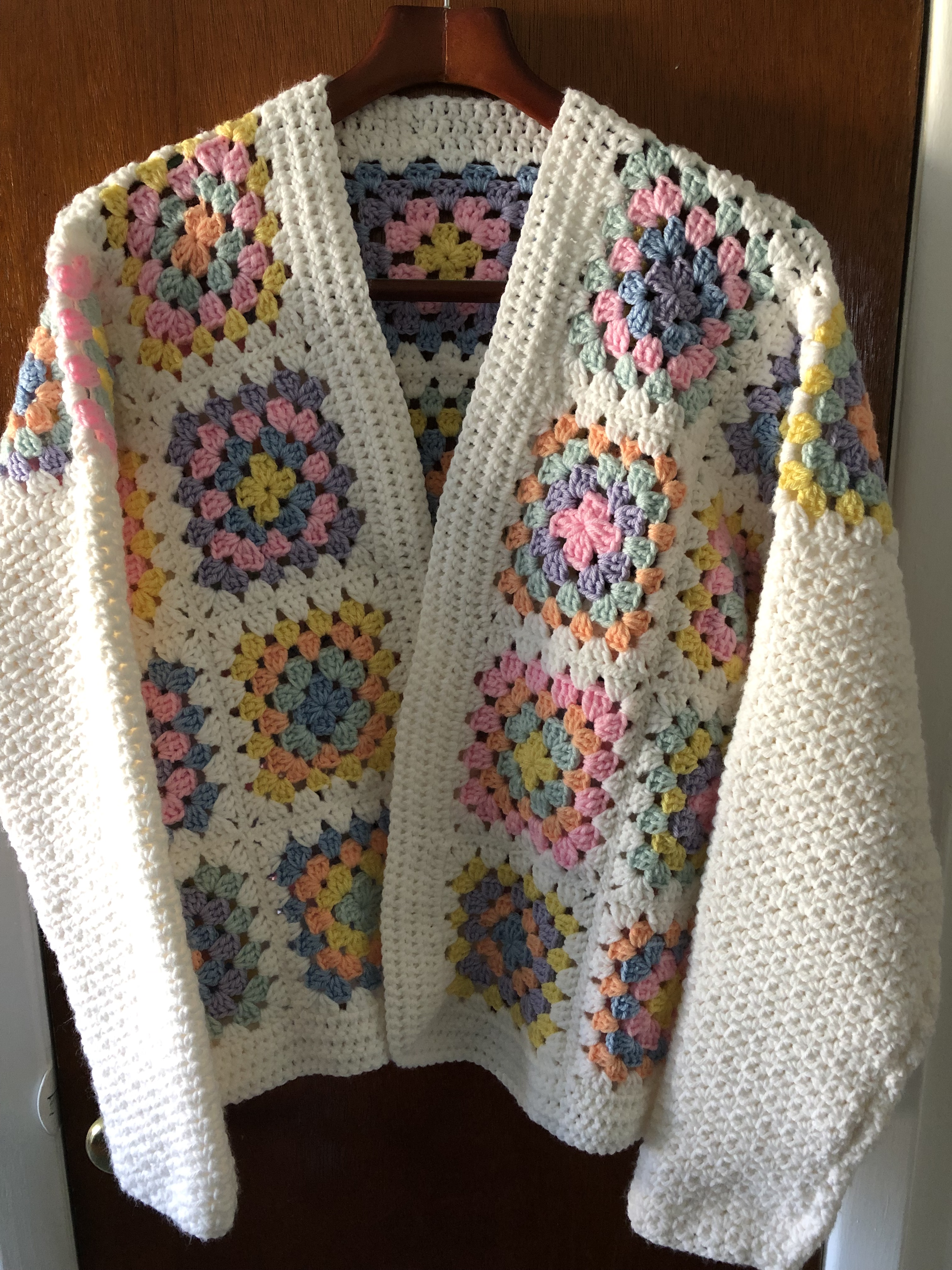
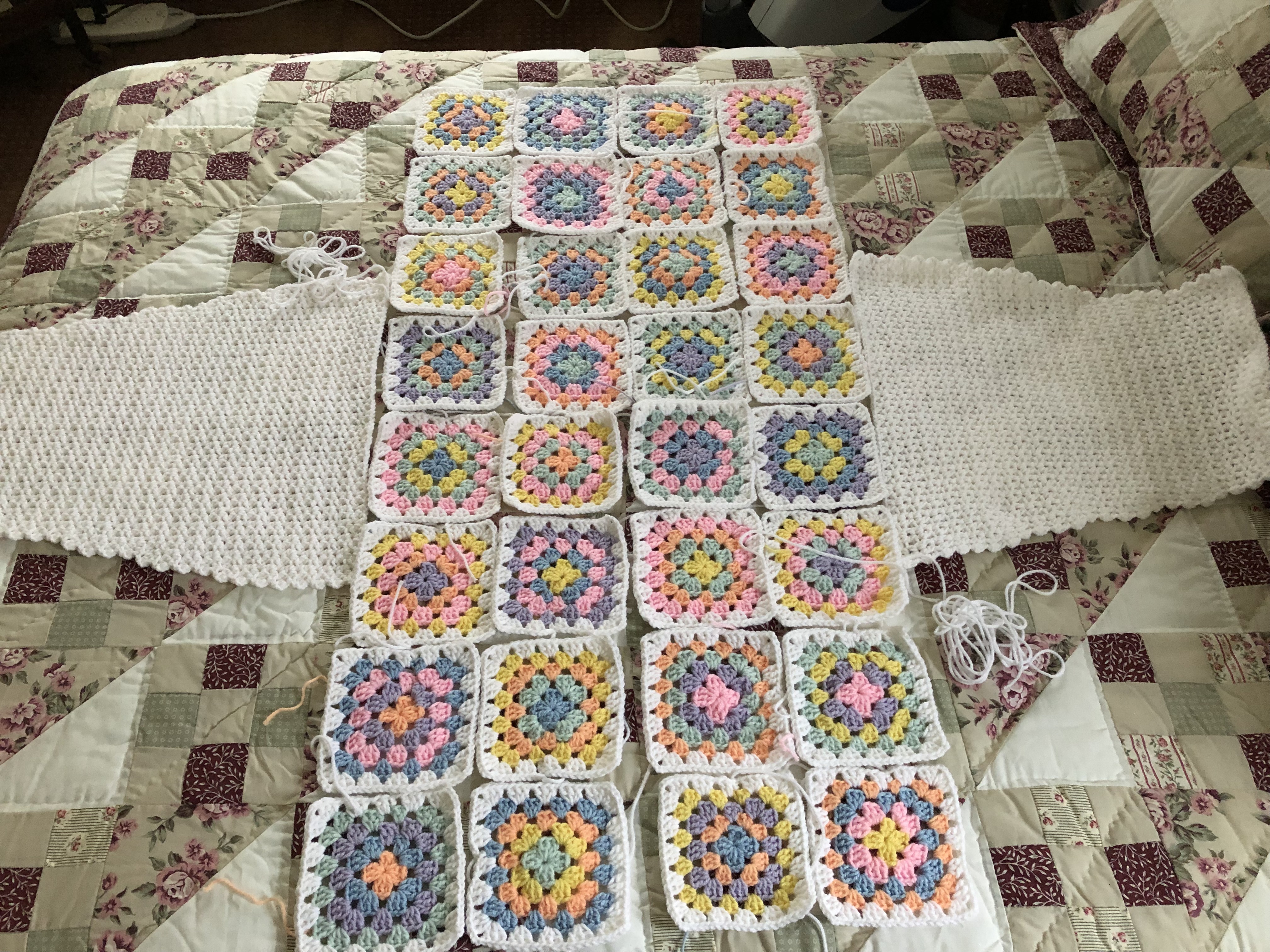
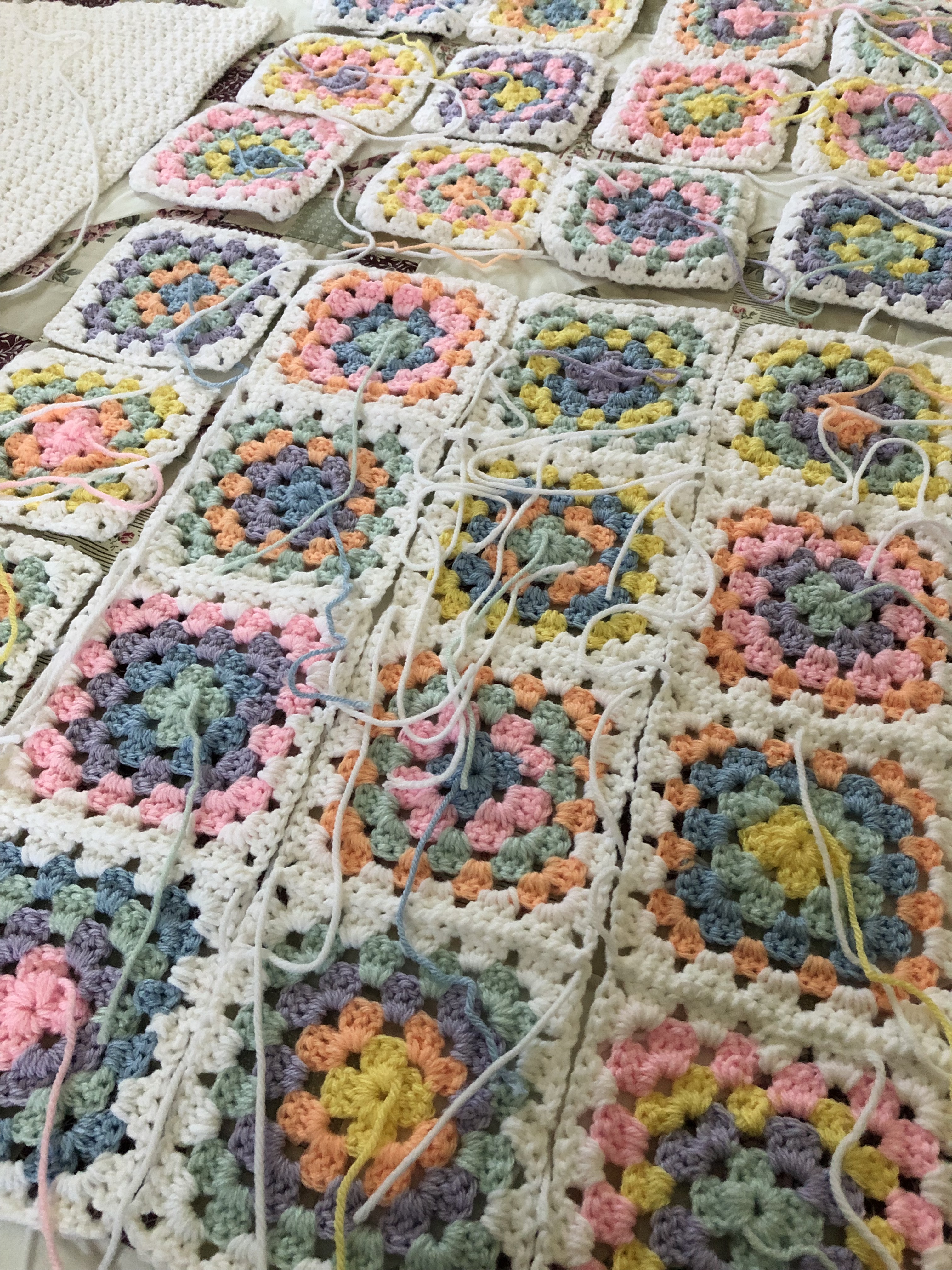
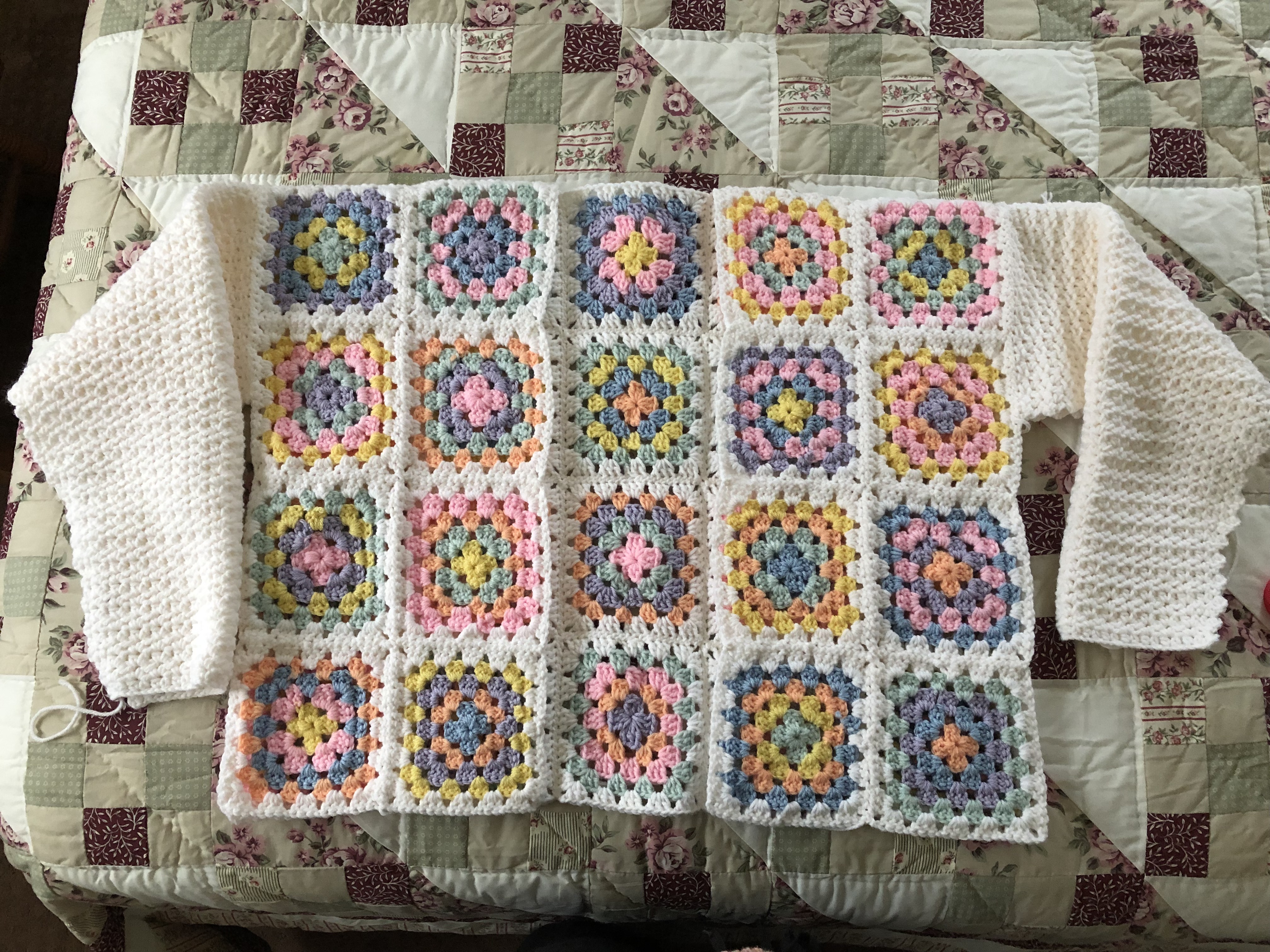
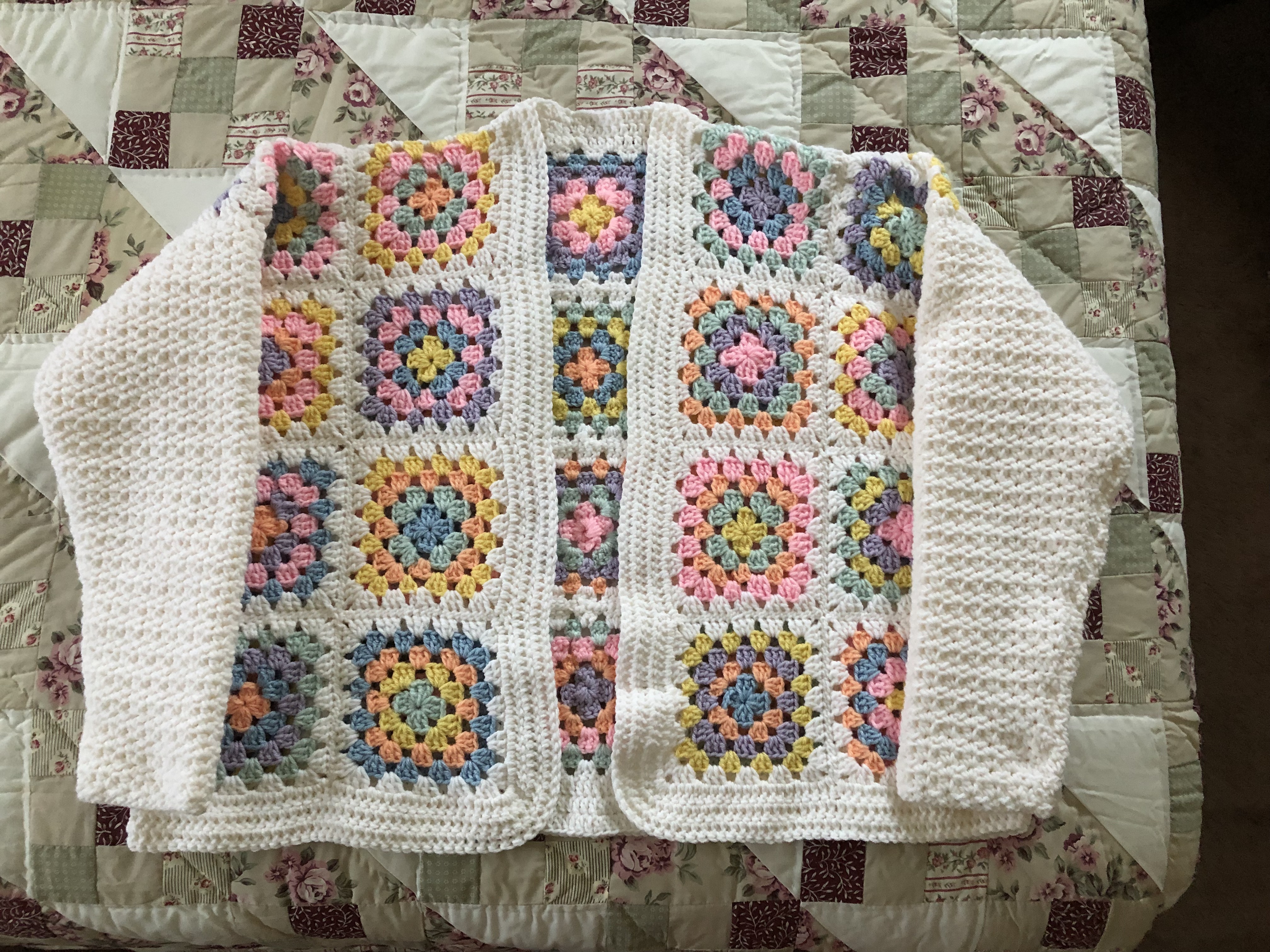
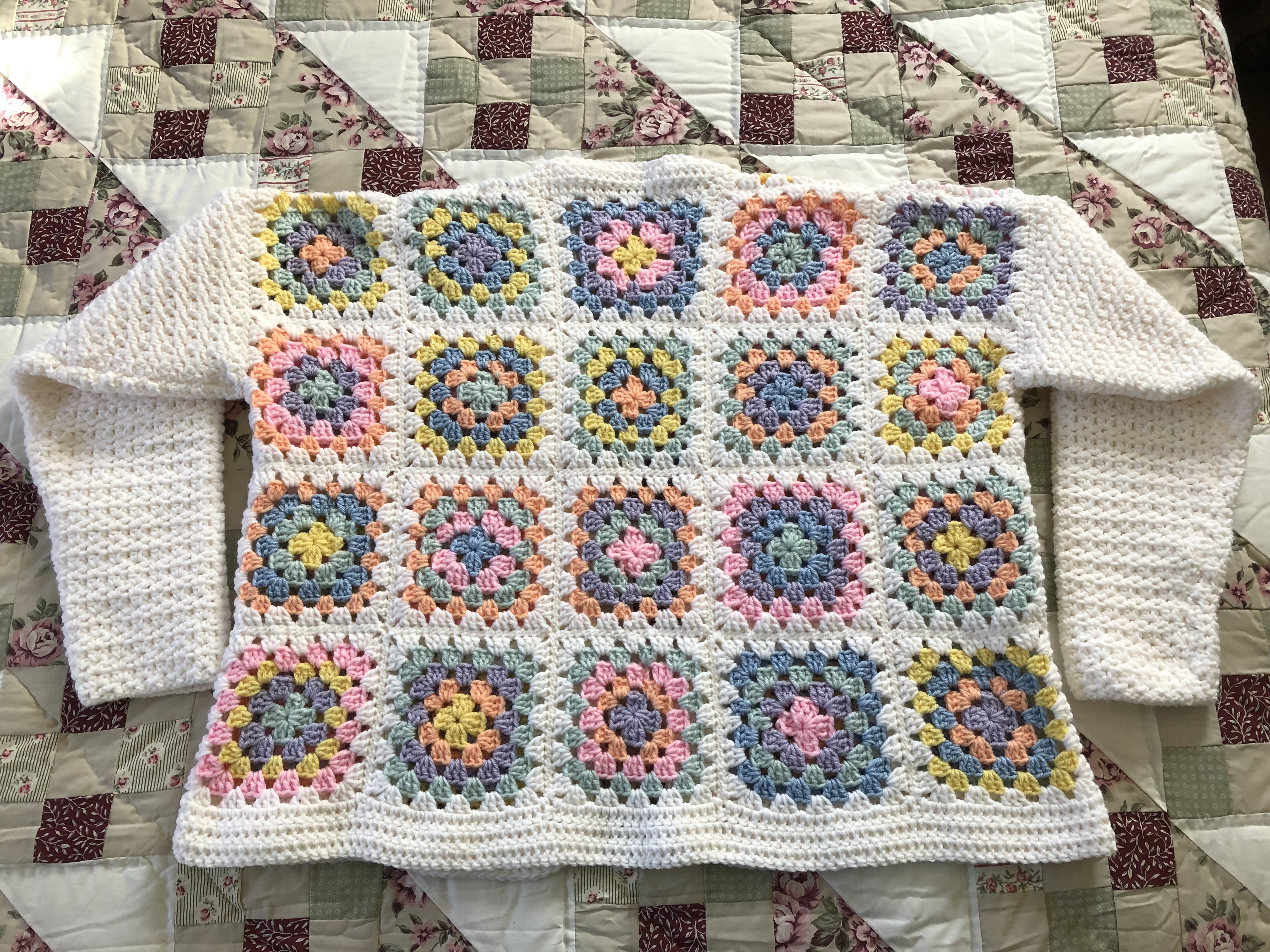
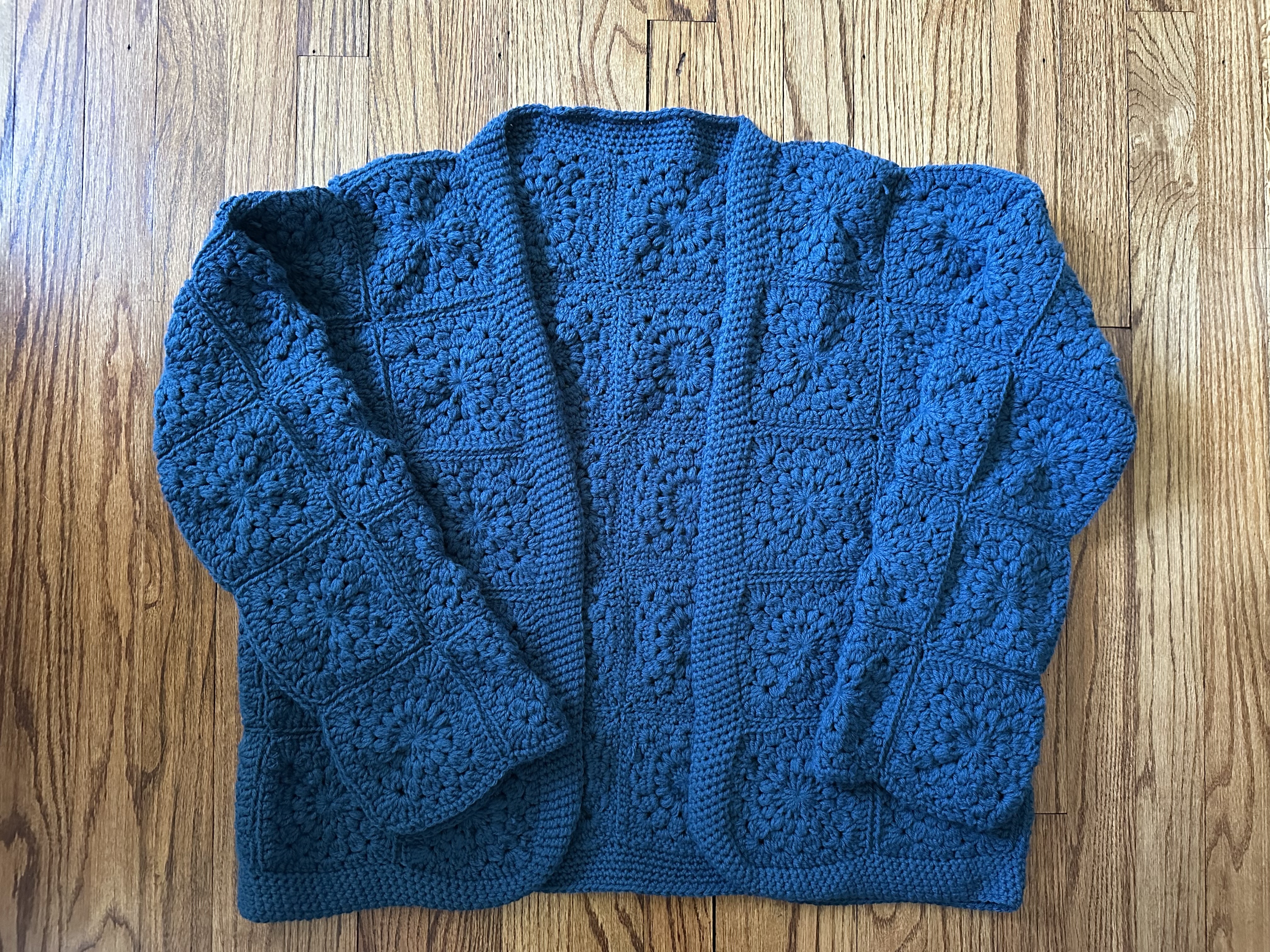
Up first a granny square cardigan that I made for myself. I made my first granny square cardigan a few years ago. It was a request – order – from someone and they were happy with the final product. Since then, I thought about making one for myself, but I didn’t want to make the typical granny square for it. After some research I settled on a sunburst granny square, which was a bit more involved than your typical granny square. I started making the squares last year and then took a break from making them, started up again, took another break and it wasn’t until this summer that I decided it was time to finish. When I laid out the squares to design my cardigan, I realized that I made way too many, so I probably could have finished it a lot sooner. Oh well! I’m really happy with how it came out, and I have quite a few of the squares left-over and a bunch of yarn in this color that I will need to decide what to do with.
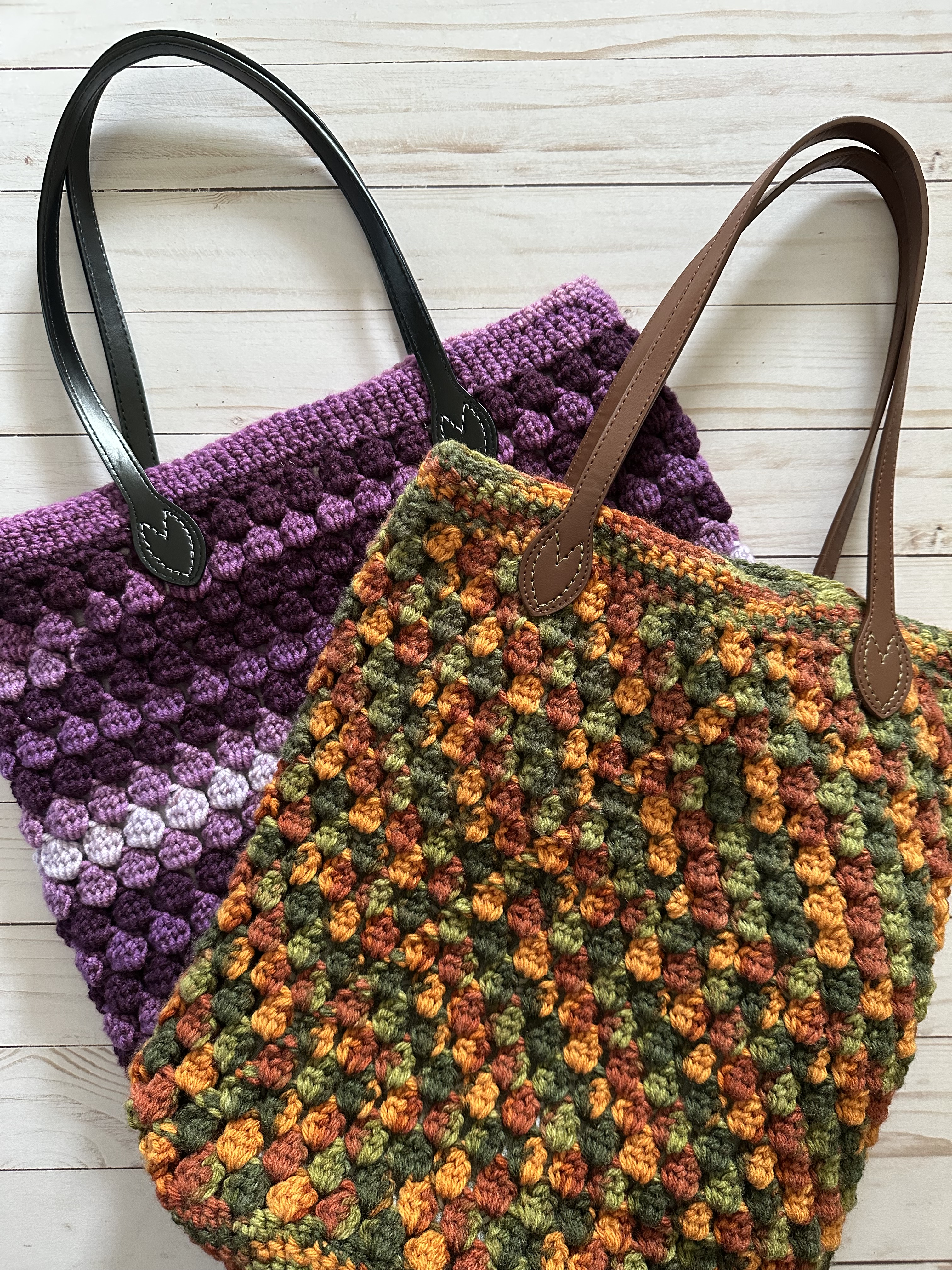
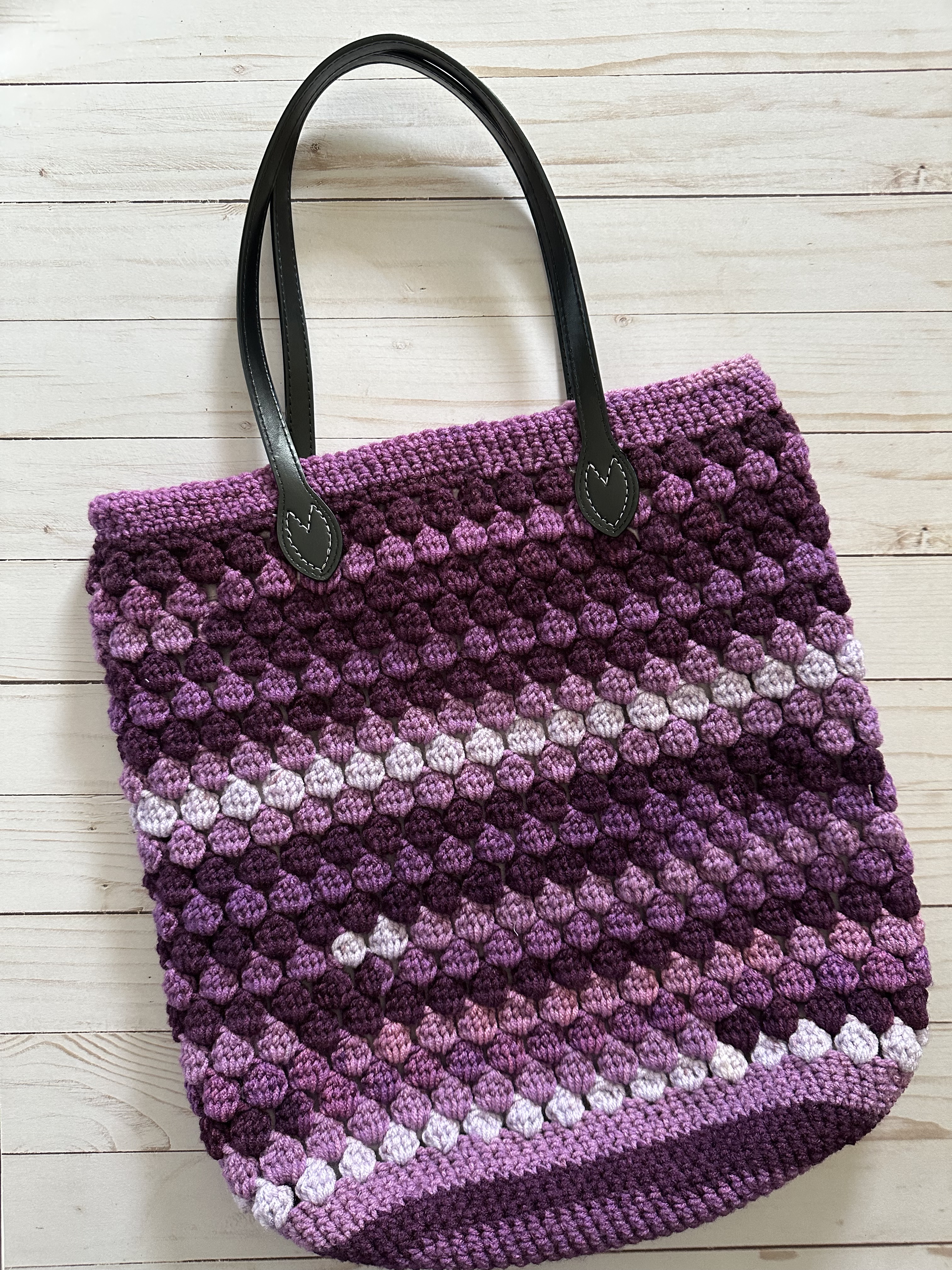
Next, another item – a crocheted tote bag – that sat for a while before I finally finished it. It’s the life of a crocheter though. More WIPs (works in progress) than they can manage. Actually, only one of these sat, the other one I got done fairly quickly. I started the tote bag in the fall colors last year. I worked this up without an actual pattern. I had an idea of what I wanted so I combined components of two different patterns to create it, and I was very happy with how it came out. But then it sat. The hold-up, having to sew a liner into the bag. Since I was hand sewing it and I haven’t had much practice doing so I psyched myself out and just put it aside. This summer though I decided it was time to finish. I think I got into a kick over the summer that it was time to finish the projects that I had started and left astray. Truthfully it weighs on my mind when I do this. I see the project half done and I just feel like something is amiss, that things are unraveling at the seams because I am not finishing things. Talk about a metaphor. So, I sewed the liner in, and I ordered handles that I stitched onto the bag. Truthfully, I was very proud of myself for how this tote came out considering I had no pattern to follow. I was so happy with it that I made another one in shades of purple for a friend. This was the one that I worked up quickly. No lagging whatsoever. Probably because her birthday was coming up and it was fresh in my mind how to finish it. I am thinking of making another one so that I can actually write-up the pattern to have for future reference.

And finally, a knitted cowl. I’ve made a few of these scarves, the pattern is super simple. It’s the seed stitch and it creates a scarf that looks good in basically any weight yarn. This was the first time I made it using a heavier weight yarn and I really like how full and warm it will be for the colder months ahead. Truthfully, I had to make this scarf two times. The first time I casted on too many stitches and the scarf didn’t look good in the end. It was too short and bulky to loop around my neck, so I sadly frogged the entire thing and started over by casting on fewer stitches and it came out exactly how I wanted.

And now, I am looking for my next big yarn project that will hopefully not take me over a year to complete!
A Blanket, a Tote Bag and Some Pumpkins

As I mentioned in my last post, I haven’t been doing much baking – although now that the temps & humidity are dropping I am hoping to get back into it – but one thing I have been doing is a decent amount of crocheting.

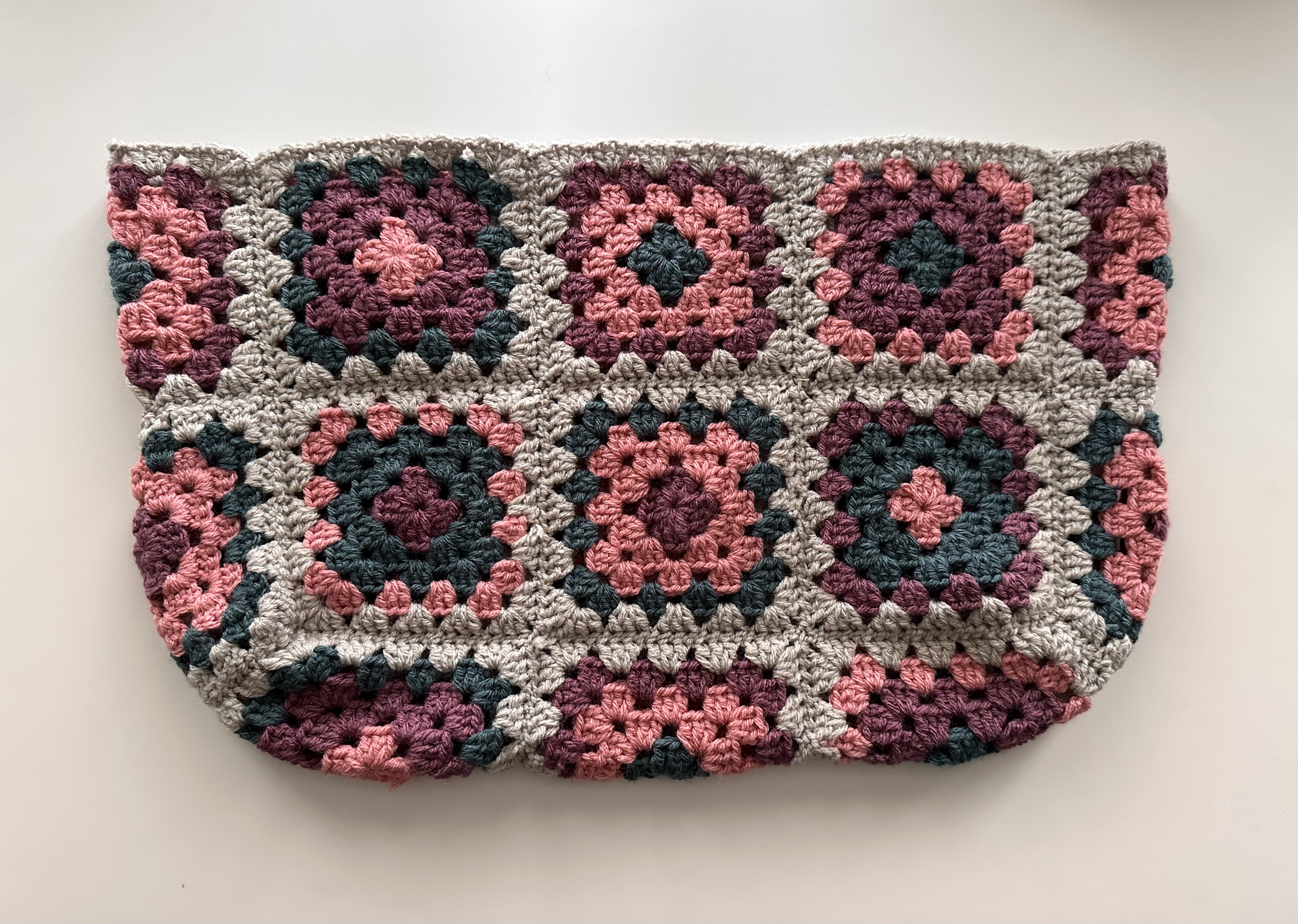
I’ve been working on a granny square tote bag. Out of nowhere these bags started popping up on my Instagram feed and I figured since I knew how to make a granny square why not try one. Well, it’s taken me a bit longer than I thought it would. First, I was trying to come up with different color variations so no two squares would be the same. I gave up on that plan quickly and then decided to settle on a few variations and work with those to create a pattern for the bag. I made a slight mistake while stitching them together but decided it was okay… It’s a prototype. LOL!  Then it was time to work the border and make handles… Not sure what happened but I didn’t like how it was coming out, so I ended up frogging the whole border and the handles to start over. I am at that point now. 

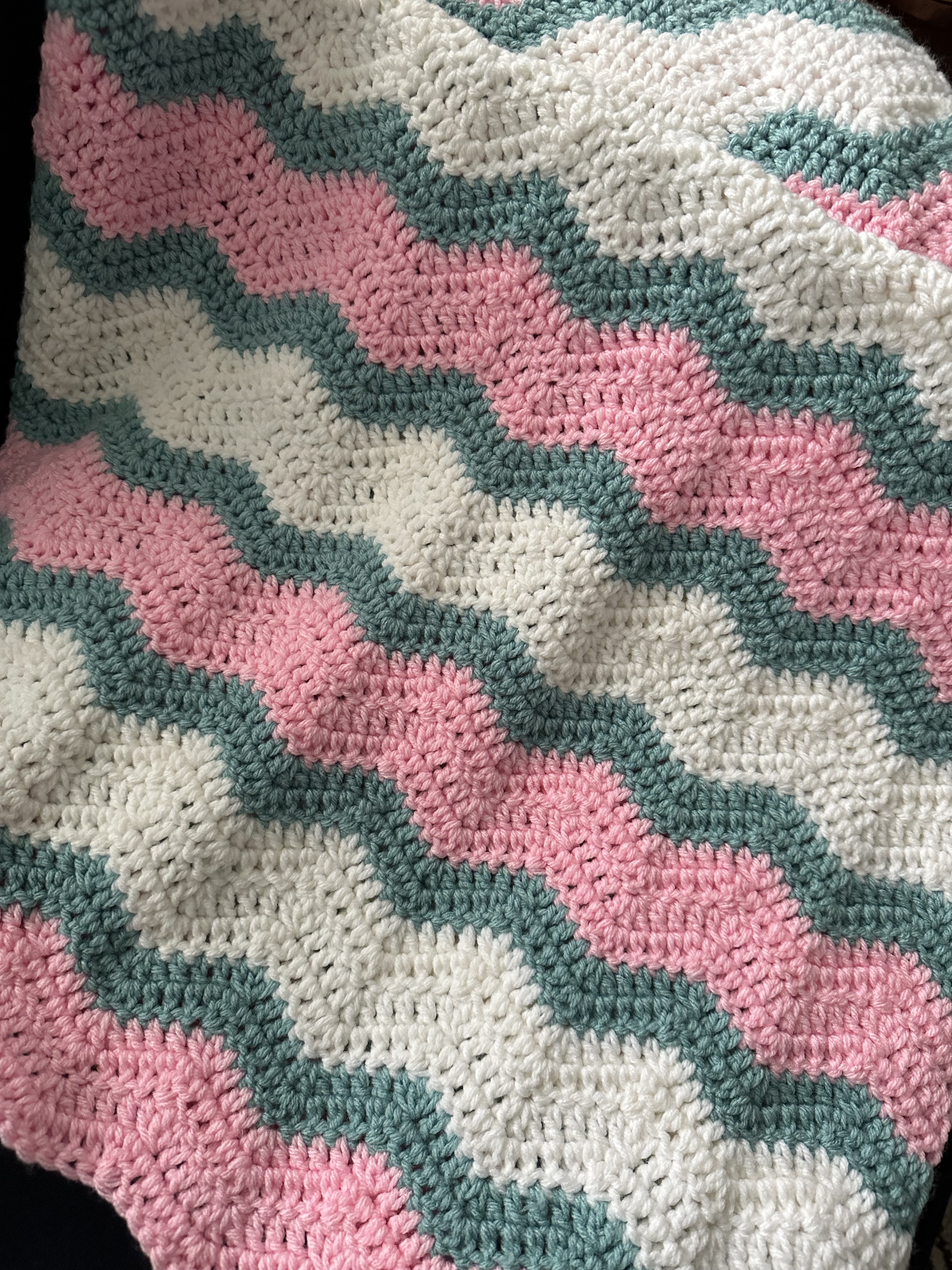
I recently finished a baby blanket in a ripple stitch pattern. While I normally like to use white as the accent/separator color the person requesting this blanket asked that I use green instead. While I initially had my doubts about how it would look, I ended up really liking the variation.

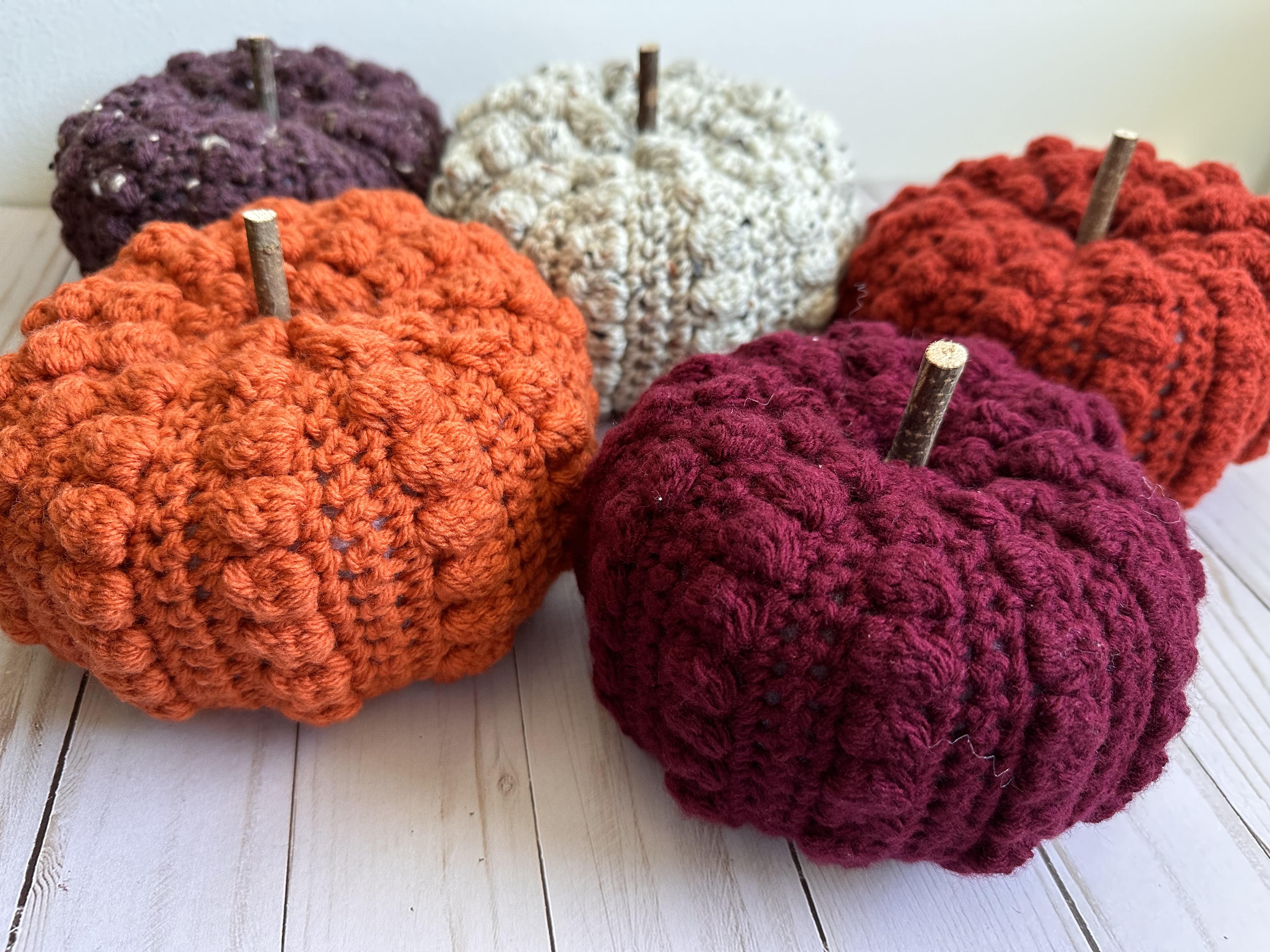
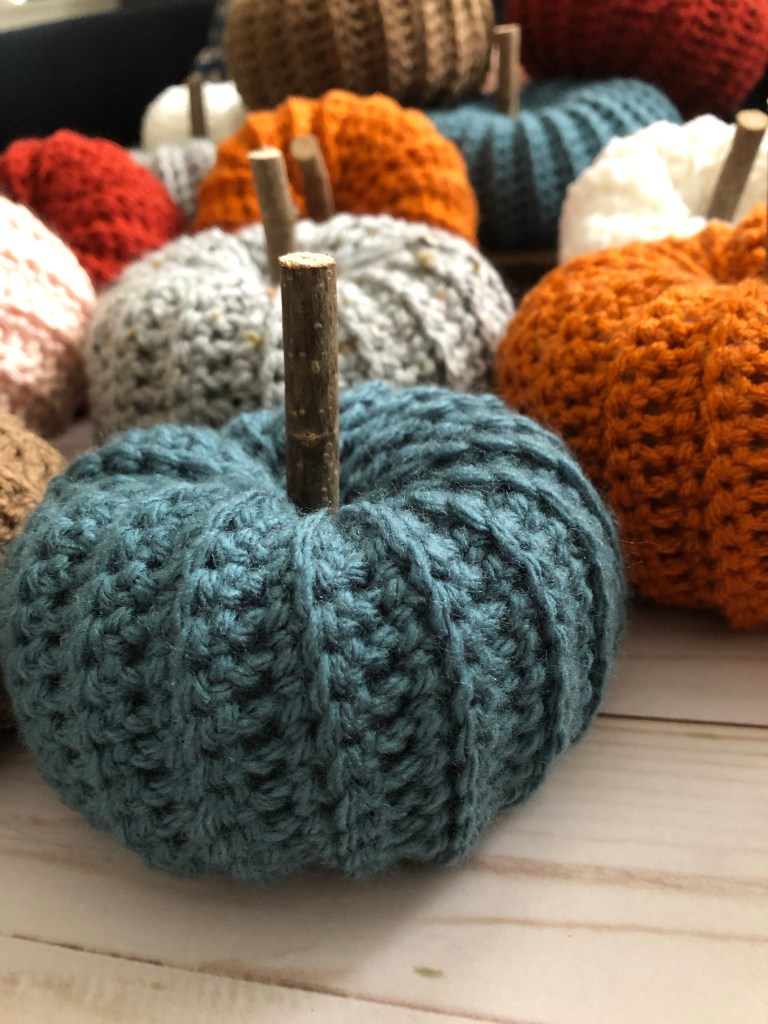
I also finished a few pumpkins to add to my Etsy shop. I made these pumpkins using the bobble stitch. It’s a fun stitch that gave the pumpkins a nice 3D texture. Some might say that they are reminiscent of a pumpkin with warts, but just in a more uniform pattern. Either way, they are cute! It was the first time I used the stitch and while it’s a super easy stitch that results in a nice design it is one that requires a lot of yarn. It’s a yarn eater! The reason is because the stitch consists of multiple double crochets that are grouped together in the same stitch. Not sure I would ever make something larger than these pumpkins using the stitch.

They are available on my Etsy shop now.  

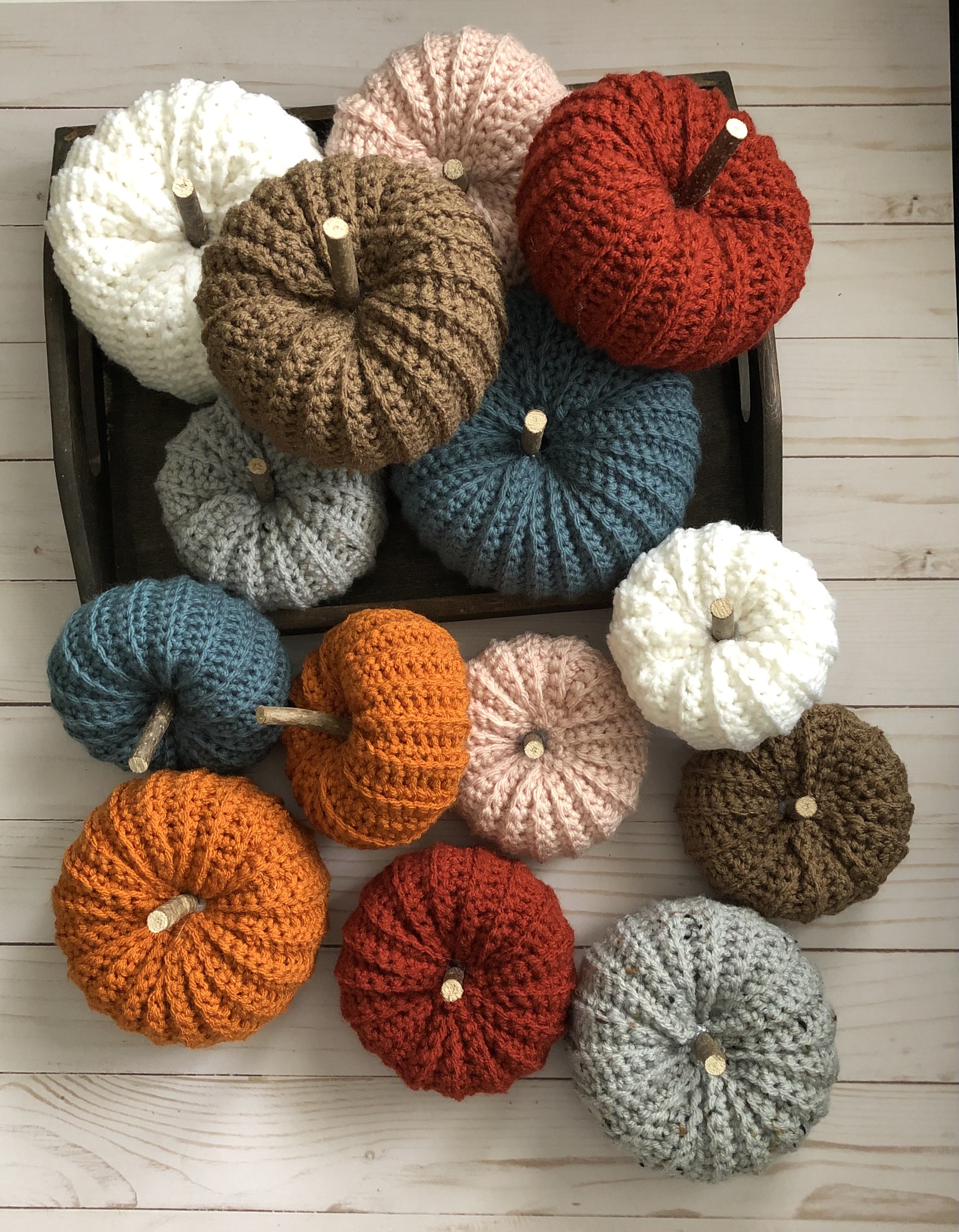
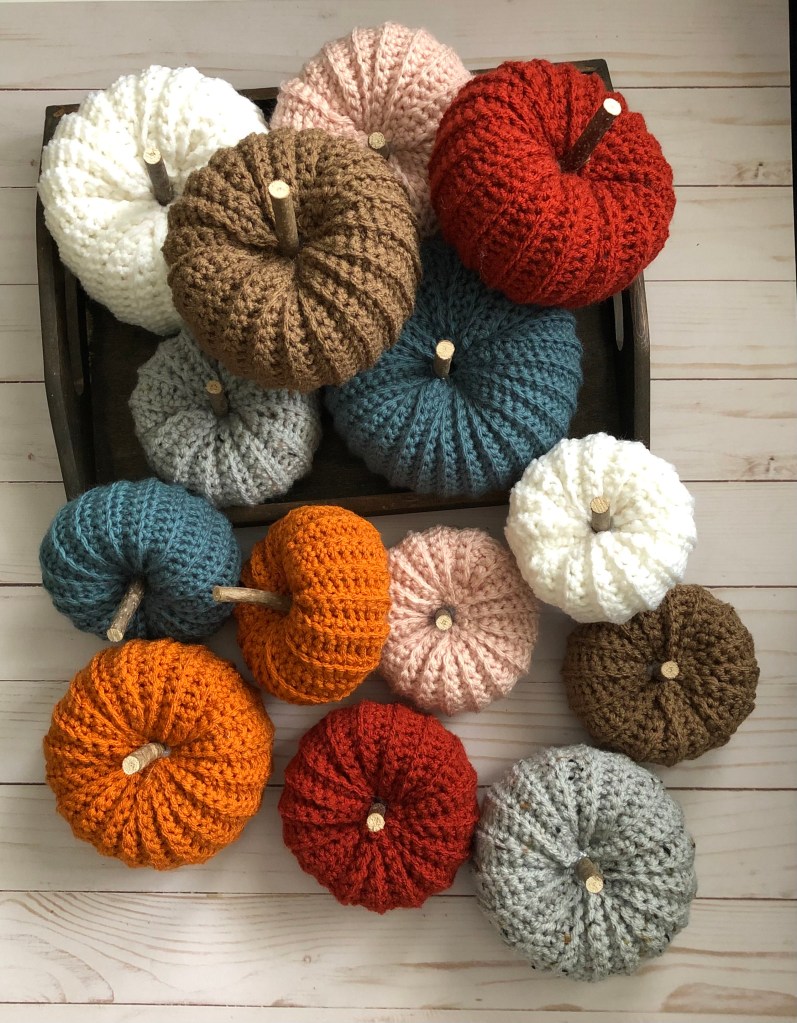
I also have other pumpkins available that were made with a simpler stitch but are just as equally cute.

One great thing about these pumpkins is that they will last all season year after year!

And that’s about it when it comes to my yarn projects. I have some ideas for a few other things I would like to make but I haven’t gotten to them yet. Hopefully soon!

Yarn WIPs & Yarn Stashes

I’ve seen quite a few jokes about crocheters/knitters and their WIPs (works in progress) and yarn stashes.  I used to be guilty of both of those things. As for the latter, I’m sure my stash wasn’t (and isn’t) as big as others, but I did have a lot of scrap balls – yarn that isn’t enough to do anything with but enough to wind into a ball. And then there was yarn that I didn’t like working with or couldn’t for the life of me remember why I ever bought it. I didn’t want to get rid of any of it because I thought the perfect project would come along for it. Ultimately, I got into a purging mood (I get those from time to time when things begin to feel and look too cluttered) and I realized that holding onto these yarns that served no purpose was hindering me from seeing and organizing the yarn I did want to keep. I can now easily close the two extra-large bins I keep my yarn in and have room to buy more yarn that hopefully won’t become a victim of one of my purges.

As for WIPs, I’ve always been pretty good about working on one project at a time (except maybe around the holidays), but there have been quite a few times where I just didn’t like the project I was working on. It could have been because the yarn wasn’t easy to work with (too thin, unraveling, etc.…) or the pattern itself wasn’t one that I liked. I used to muddle through for longer than I should and would finally throw in the towel after being thoroughly frustrated by the project. I used to feel guilty about it but recently when I gave up on a project using a yarn that I had wanted to try for a while but ended up not working up the way I thought it would I realized that there was nothing to feel guilty or bad about. That hobbies aren’t supposed to annoy and frustrate us – challenge us yes, but those things aren’t the same. You should feel happy about the item you’re creating when working on your given hobby, but, if that feeling turns negative it’s time to reevaluate and realize it’s okay to let it go and move on to the next thing. We’re taught that we shouldn’t give up on things but sometimes we must do that in order to learn something new and find joy in what we’re doing. Whether I’m making jewelry, cards, decorating a cake, crocheting or knitting I like to take a few moments while doing so to appreciate what I am making. And if I am feeling frustrated by it that’s not going to happen.

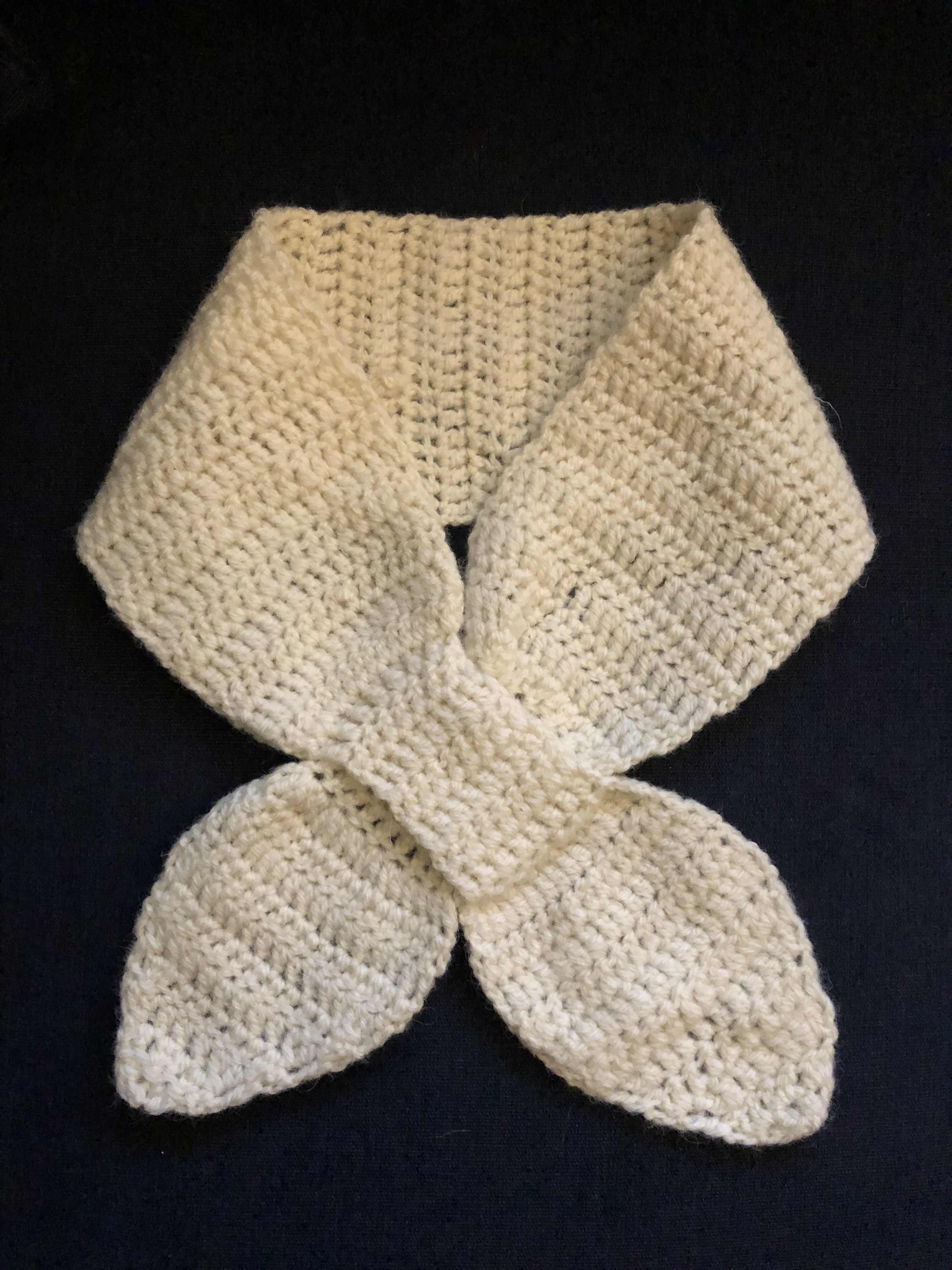
As I mentioned I recently gave up on a project I was working on because the yarn was just not working for me. It was a simple scarf, and I was following a pattern I had used before. I must have started the scarf 3 or 4 times each time casting on a different number of stitches in hopes that the scarf would start to look like what I had envisioned in my head. It never happened. So instead of giving it another go I decided to scrap it. I thought about saving the yarn, but it had annoyed me so much I ended up tossing it. Thankfully it wasn’t expensive. I tend to stick with yarns that I can purchase at my local craft stores so they are all affordable (especially when they are on sale, or I can use a coupon!). Hence me not being that upset about my yarn purge! I still had the itch to knit something, so I headed to a local craft store, and I found a different yarn that I had wanted to try was on sale. O’Go yarn! It’s been around for a few years, but it wasn’t until recently that this particular craft store started carrying more colors and varieties of it. What’s special about this yarn is that instead of it being wound into the typical ball/skein it’s shaped like an “O” and has a plastic string through it. When you open it, you just snip the fastener of the plastic, pull the yarn and start working. It’s a yarn that is tangle-free and provides a quick start. It you have ever had to stop mid project to work out a tangle or knot in your yarn you will greatly appreciate this yarn. It also eliminates the need to wind your yarn into a ball prior to working with it. I ended up picking up a few colors of the O’Go yarn since the sale was too good to pass up. I’ve been wanting to make an infinity scarf in a cream color (thanks to a blue coat I bought back in the Fall) and as luck would have it, I was able to get that color. I am still working on that scarf and probably won’t get to use it until next winter, but I did finish an infinity scarf in different shades of purple for a dear friend. When I am working on something for myself, I tend to drag it on for a bit since I know there’s no real rush in getting it done. Once I am finally done with my scarf, I will probably start working on some Fall projects, specifically Bobble Stitch Pumpkins. I’ve learned (the hard way) that it’s never too early to work on something for the following season.
Granny Square Cardigan

While I’ve been crocheting for over 10 years it wasn’t until recently that I learned how to make a granny square. A little backwards since learning how to make a granny square is usually one of the first things you learn to make when you start crocheting. When you are pretty much self-taught though you learn things as you go and as you need. So, why did I finally learn? Well, I was asked if I could make a granny square cardigan and since I am always up for a challenge and I like to learn new things I said yes.

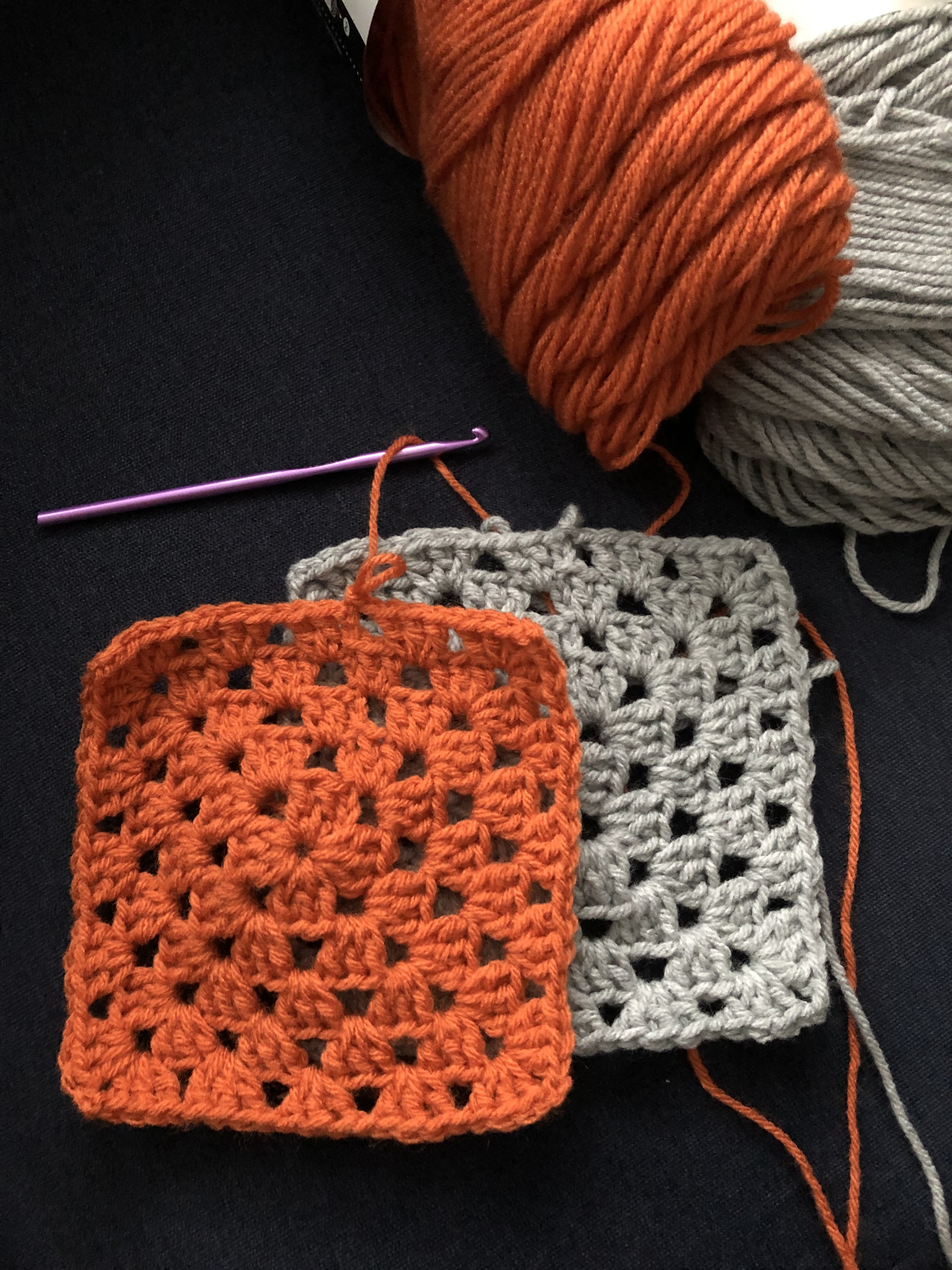
First though I had to learn how to make a granny square. Once I found a pattern that was simple enough to follow I used some extra yarn from my stash to test it out a few times to make sure I had the hang of it.

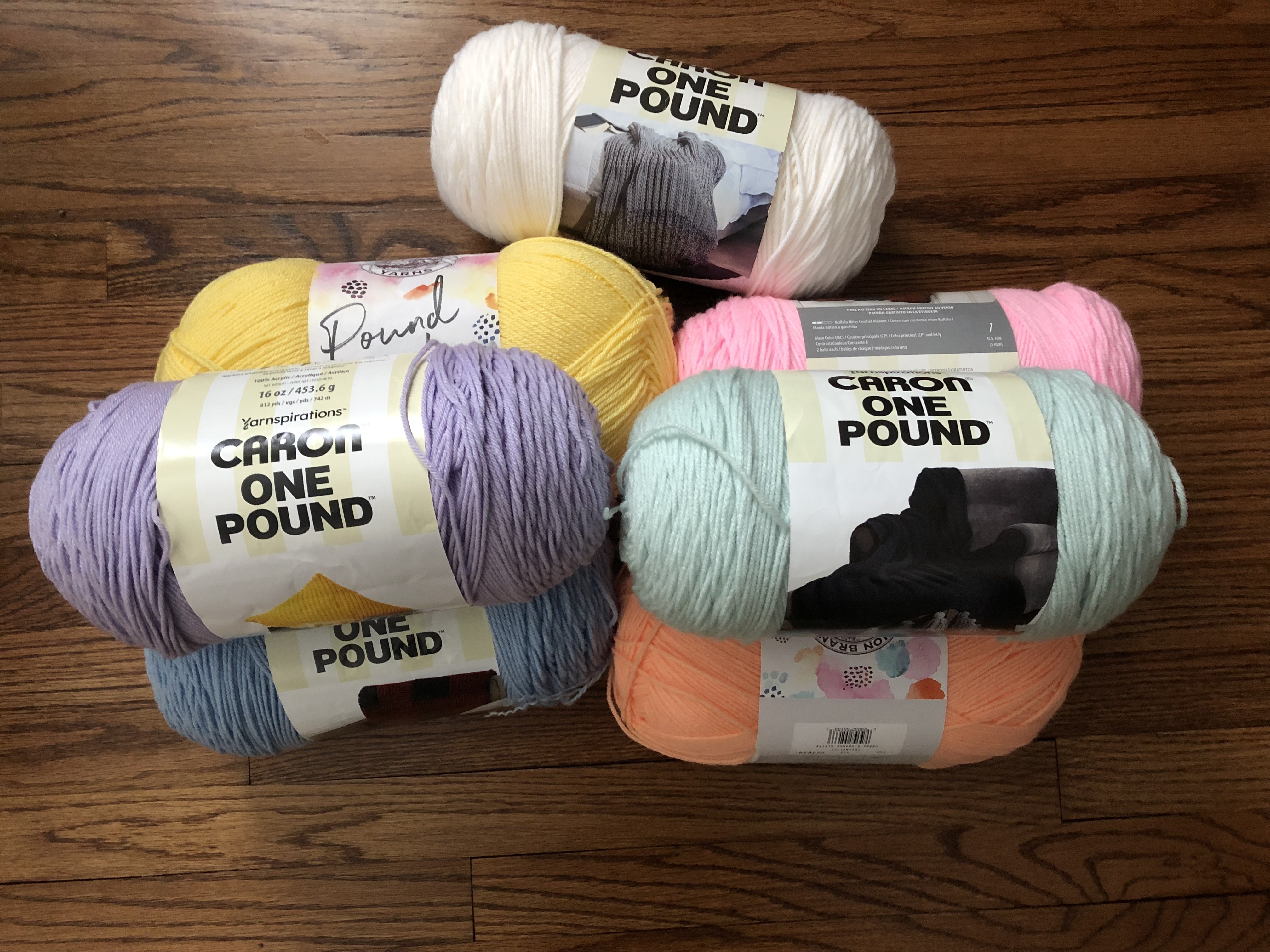
Next, I had to finalize the colors. The person who I was making it for had a color scheme in mind from a cardigan they already saw. They were looking for pastel colors so after going back and forth with different options she decided on the colors below.

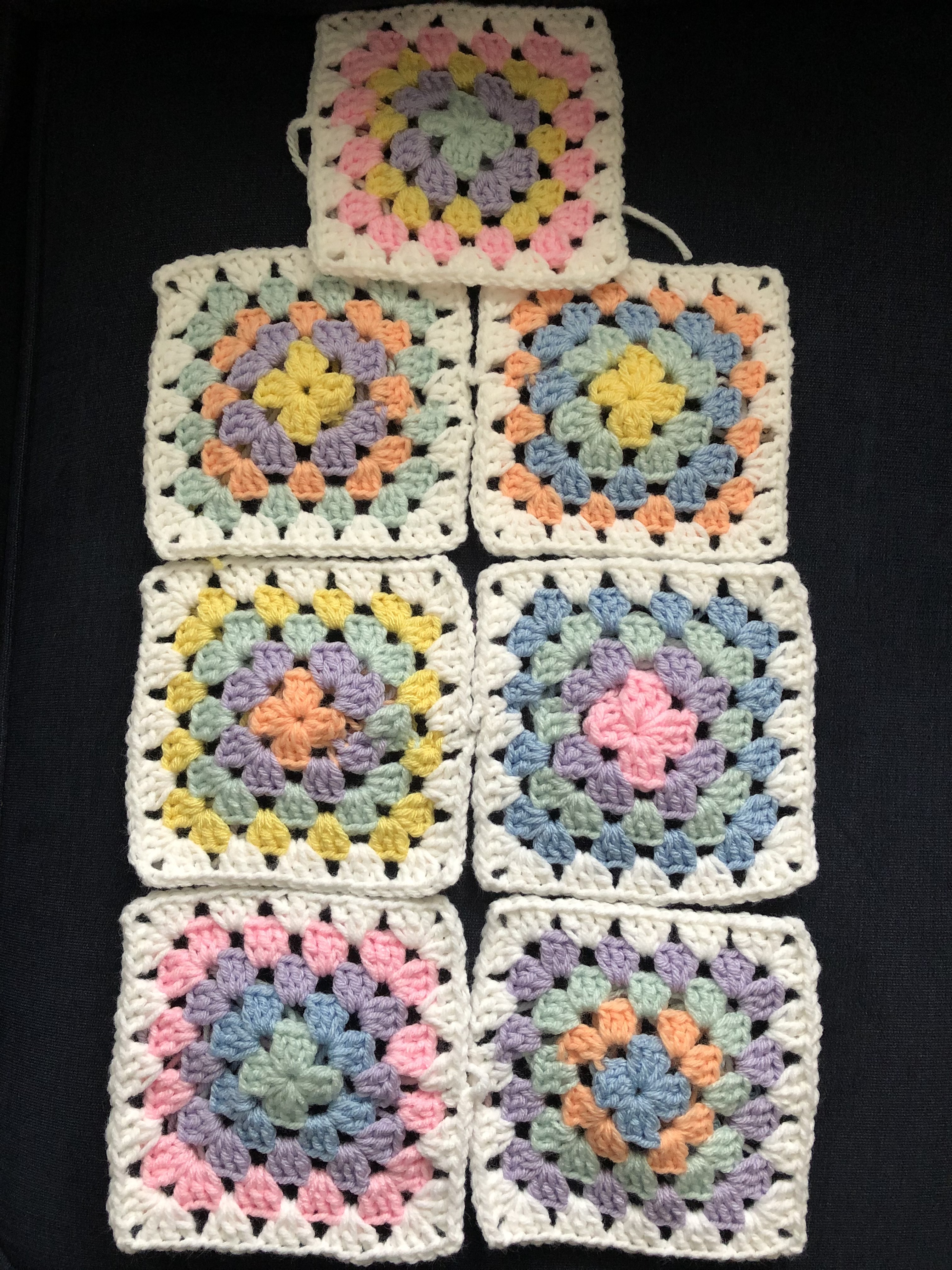
Now, the fun part. I started making the granny squares. I made a few and sent her a picture to make sure she liked the colors once they were all put together.

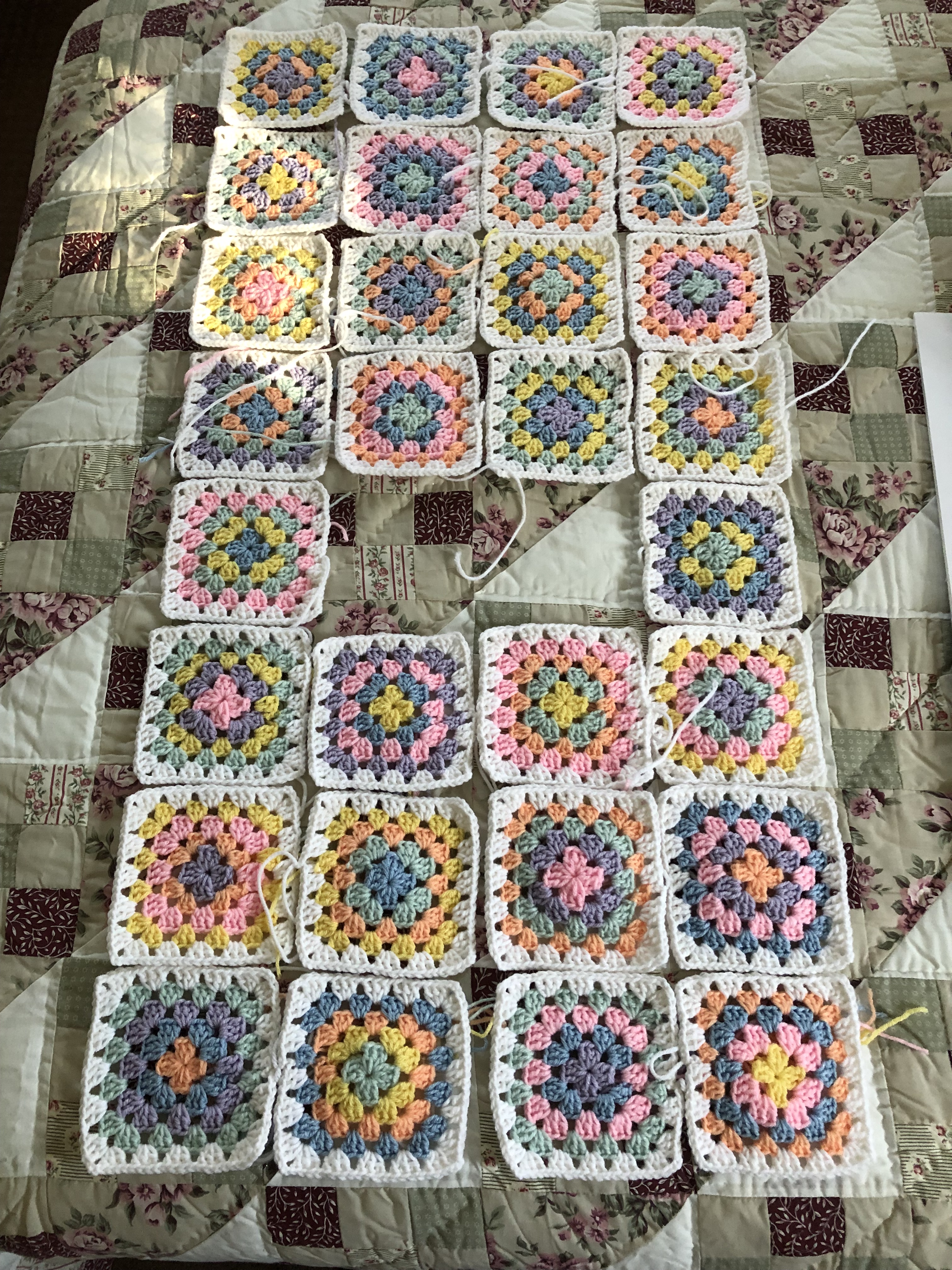
Once I got the greenlight that those looked good I went ahead and continued to crochet more. Truth be told I didn’t have an exact pattern to follow for how many squares I needed. I looked at various patterns and pictures to get an idea. I knew that I had to make the equivalent to a size medium. From doing my research I initially went with making 30 squares and I placed them in the layout below. I had a feeling that it wasn’t completely right but I decided to move on to another part of the cardigan… the sleeves.

Normally with granny square cardigans the sleeves are made using granny squares as well, but, the person I was making it for requested the sleeves to be solid white and they didn’t want them to be granny squares. So, more research. I knew that when it came to making sleeves they needed to be tapered to accommodate a wider upper arm to a narrower wrist. But, I didn’t want to just wing it and start crocheting. I was able find a sweater pattern that had the sleeves broken down exactly as I needed them. The width on top was perfect to be placed in the center of two specific granny squares. I also went ahead and crocheted two additional squares and placed them in the empty spaces I had.

I started seaming together the squares for the back of the cardigan but I still had my doubts about the layout. It just didn’t seem like it was going to fit correctly.

I ended up crocheting four more granny squares and added an additional row to the back of the cardigan so it would sit better. I then finished seaming all the other squares together and then attached the arms and seamed them together. I tried it on and it fit perfectly.

And finally, I crocheted a border around the entire cardigan to give it a more finished look.

I am happy to say that the person I made this for was very happy with it. I may make one for myself one of these days!

Crocheted Pumpkins

Come every September I want to learn how to make crocheted / knitted pumpkins. They start popping up on my Instagram feed and I think to myself “I want to make those.” But then it never happens. I look at patterns and they just seem way too complicated or I just lose track of time and I get into Christmas mode instead. This year I was determined though.

I initially found one pattern that I thought was going to be a winner. I am not sure if I did something wrong or maybe it was the yarn I used, but, when it came time to sew what I had crocheted into the pumpkin it was a fail. I had crocheted something that sort of resembled a piece of hard candy in a wrapper. Think, wide in the middle and then tapering off on both ends. I followed the pattern and sewed it together but when it came time to stuff it with the fiber fill there was no way to make that thing look like a pumpkin! I wasn’t throwing in the towel just yet though.

I read over some other patterns and watched a video or two and figured out the best way was to crochet a rectangle and then form that into a pumpkin.

What’s great about this pattern is that gauge doesn’t matter and you don’t have to count rows. I am going to show you a nifty way to know when you have crocheted enough rows. As for the crochet hook size you should use, I would go with the size that is suggested for the yarn you decide to use. That’s what I have been doing. Just realize depending on the yarn weight you use that will determine the size of your pumpkin. You could start with the same length of your foundation chain with a chunky yarn and medium weight yarn and end up with two pumpkins that are completely different sizes.

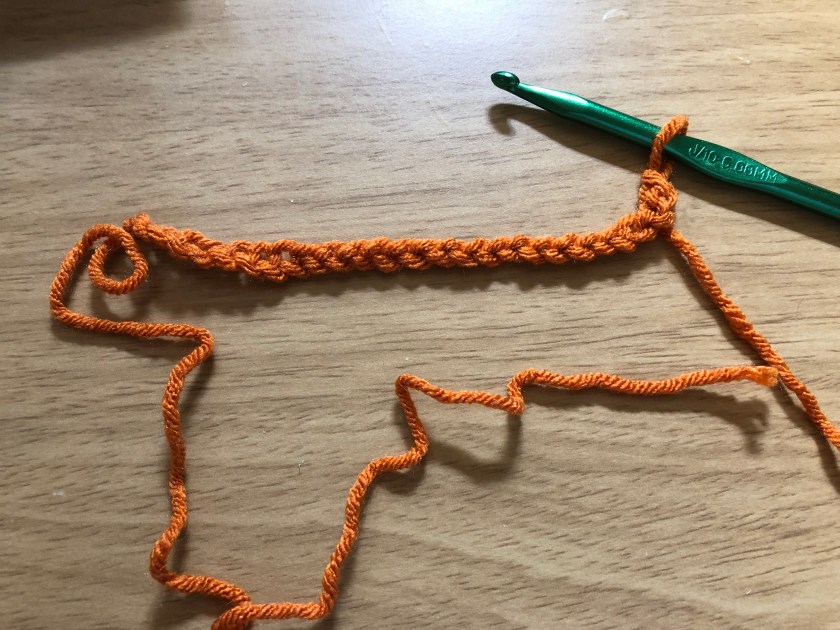
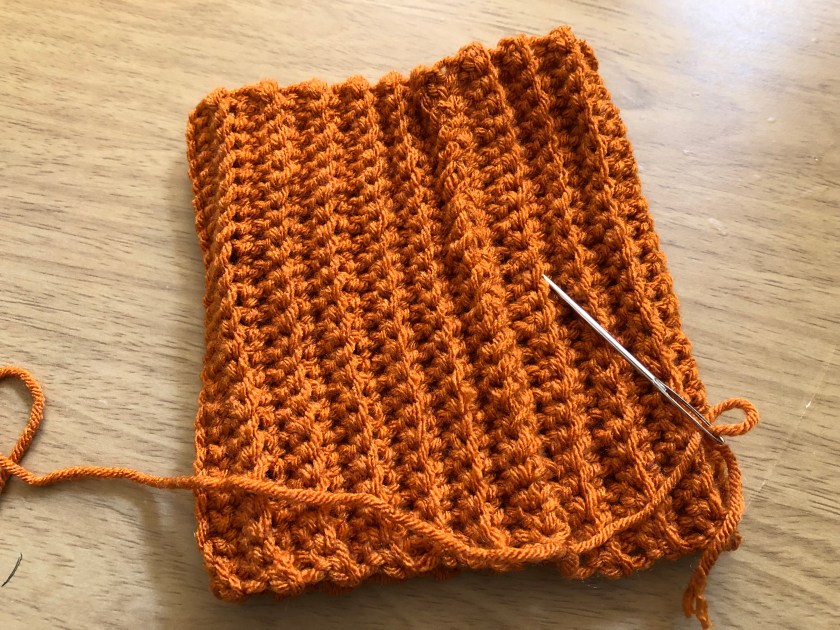
Start by crocheting your foundation chain. Since the yarn I was using was a medium weight and I wanted a decent size pumpkin I started with a foundation chain of 25. I left a long tail since the tail is used to seam the rectangle together.

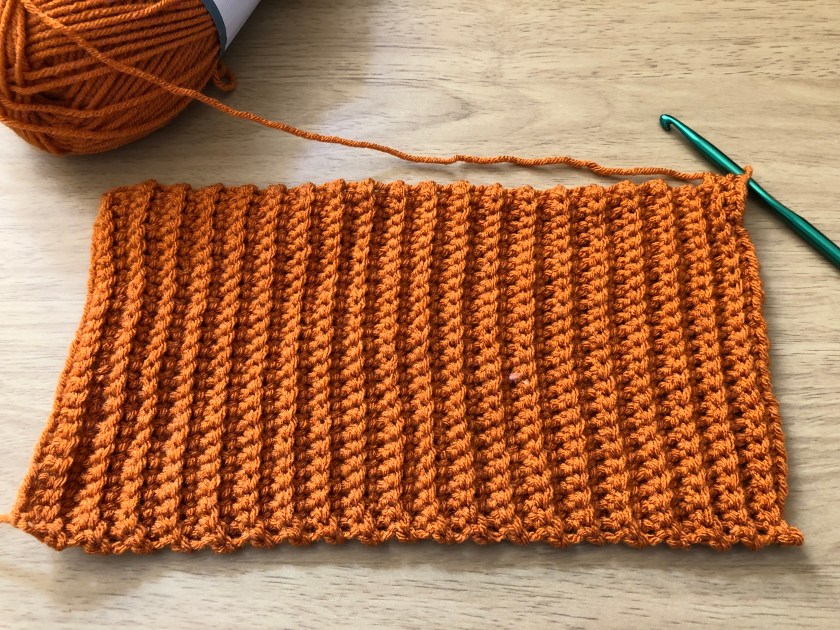
For the first row, starting with the second chain from your hook, single crochet in the back loops of each chain across the row.

For the second row and each subsequent row, ch1 and single crochet into each back loop across the row.

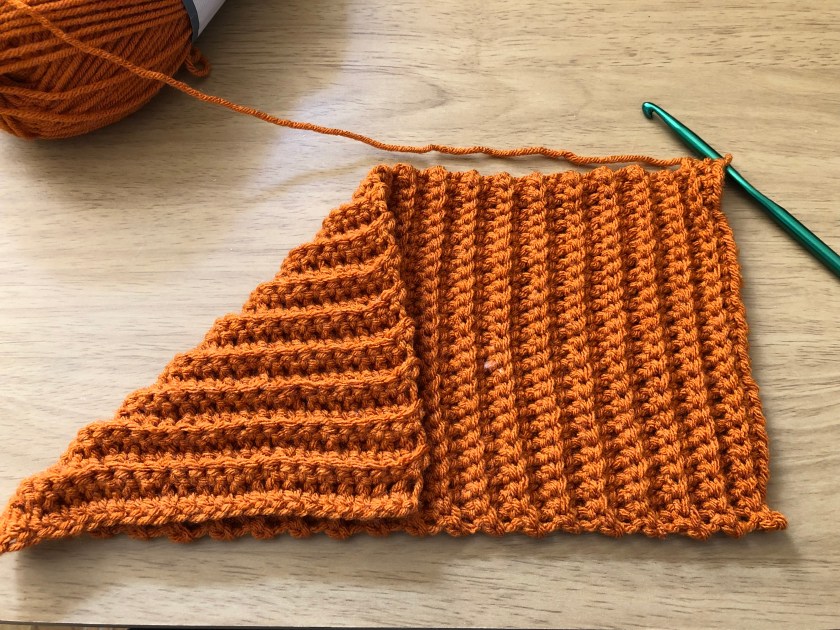
And, as I mentioned, there is no need to count your rows as you go. To determine if you have crocheted enough rows simply do this…

Lay your rectangle flat…

With your working row on the right, fold by bringing the top left corner of your work down to the bottom of your work to form a triangle.

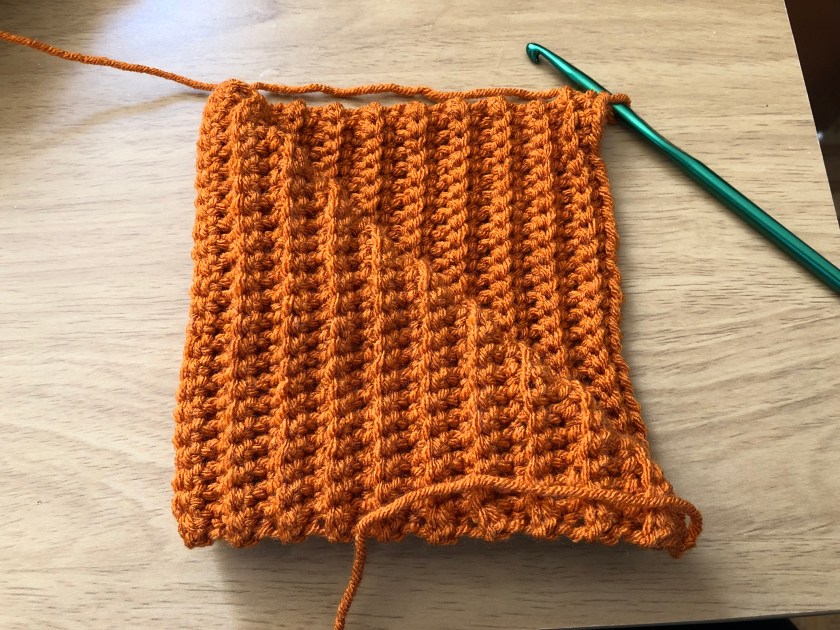
Next, fold the triangle piece to the right. Once the bottom corners of the two ends meet you have crocheted enough rows. At this point you can end your row, but, be sure to leave a long tail as this tail will be used to seam the pumpkin. This tail should be longer than the tail you have from your foundation row.

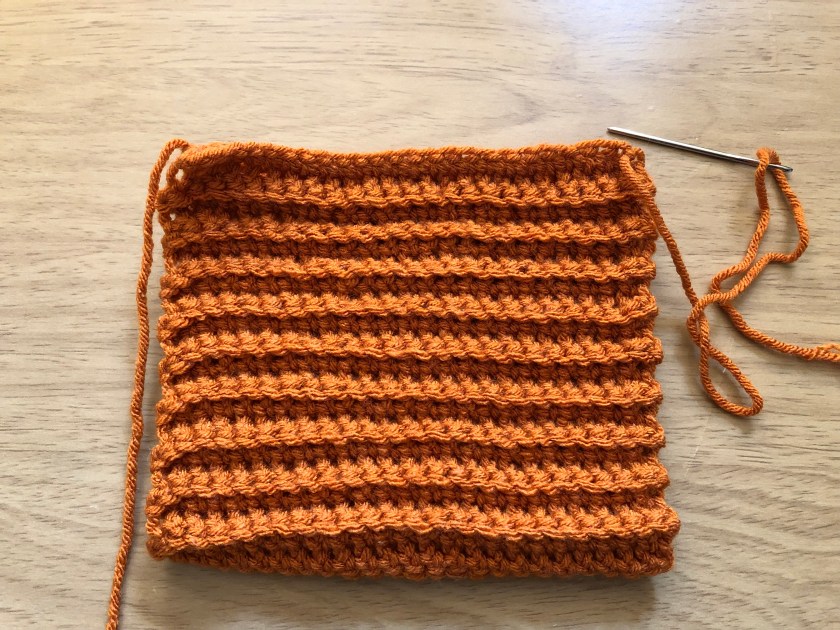
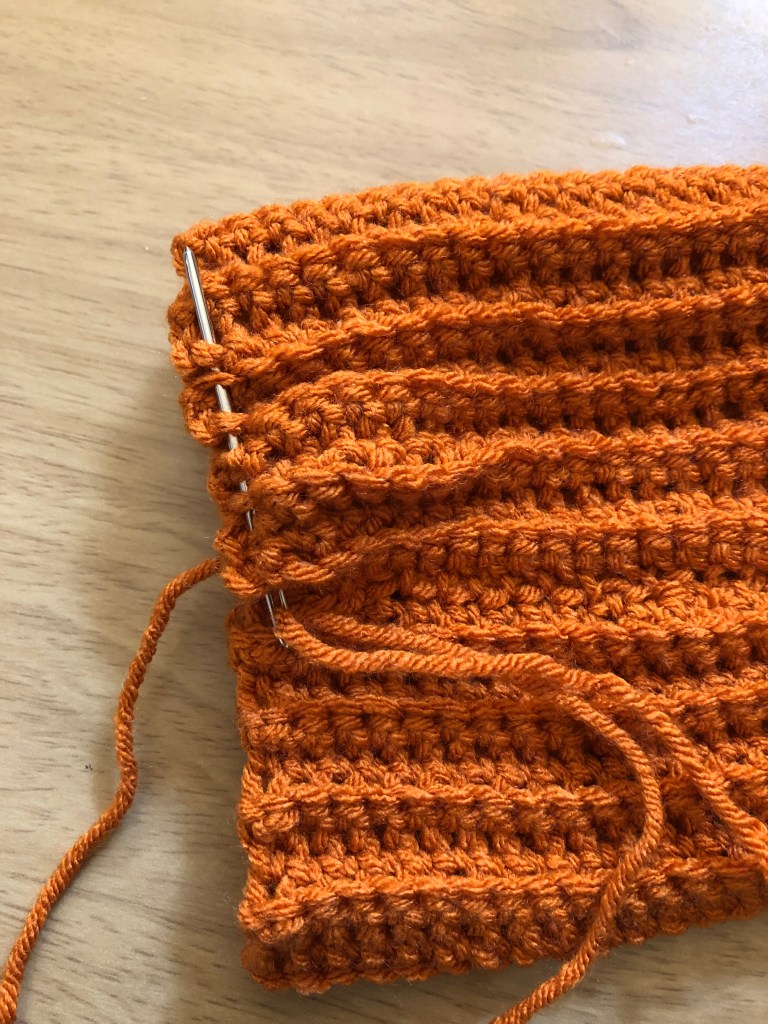
Now that you have your rectangle it’s time to make your pumpkin. Fold the rectangle in half with the short ends meeting, and thread a needle on the tail from your foundation chain. Or, the shorter of the two tails. And just seam up the two sides. Make sure as you are seaming the edges that they are meeting up at the corner you are working towards. Once you are done, weave the tail through the work and end it. Since you want to hide this seam, you want to turn your project inside out for the finishing steps.

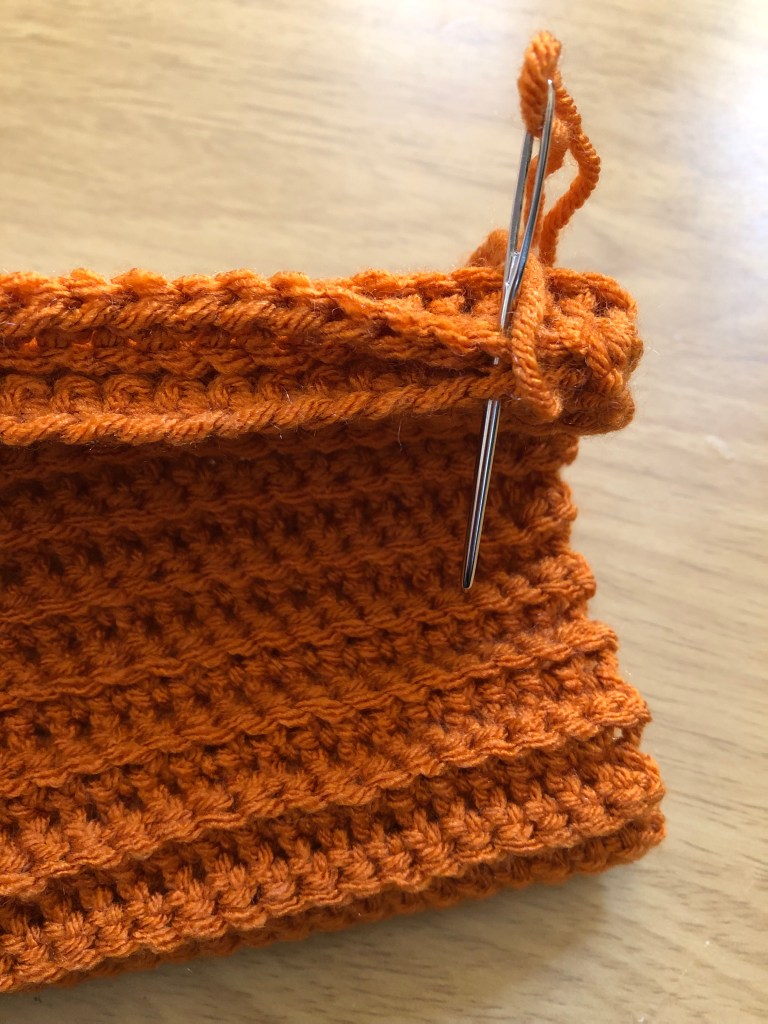
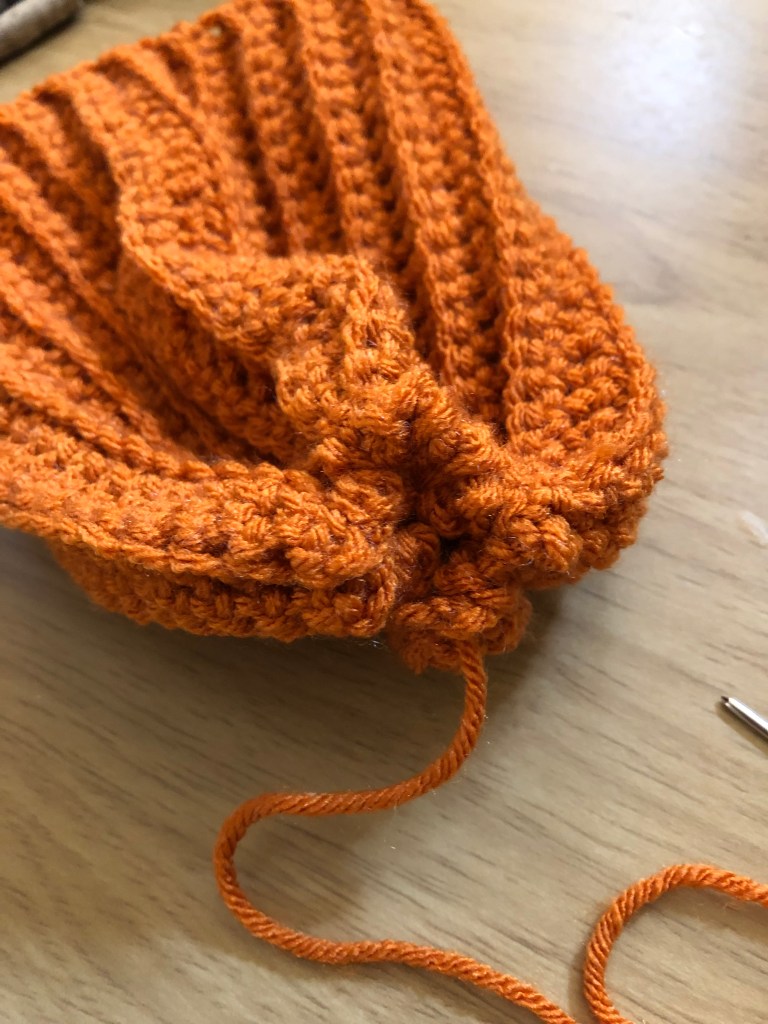
Thread your needle on the other tail and you are going to weave the yarn near the top edge to essentially create a drawstring to cinch the opening. Once you have weaved the yarn around the entire edge pull the yarn tight to close the hole. You will still have a slight opening. To close it you are just going to stitch the yarn from one side to the other to make sure the hole is completely closed. Do not end the tail.

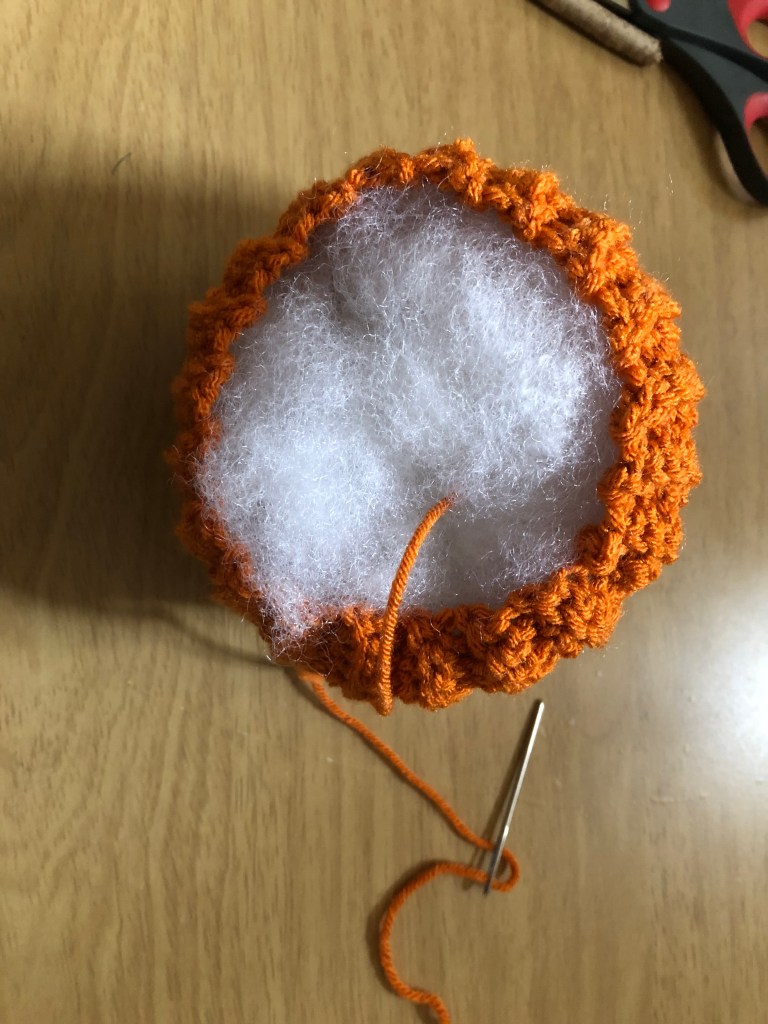
With one end stitched closed you can now fill the pumpkin with fiber fill. Stuff it with a good amount so your finished pumpkin is firm and full. Pass your needle with the working tail through the center of the pumpkin and through the fiber fill.

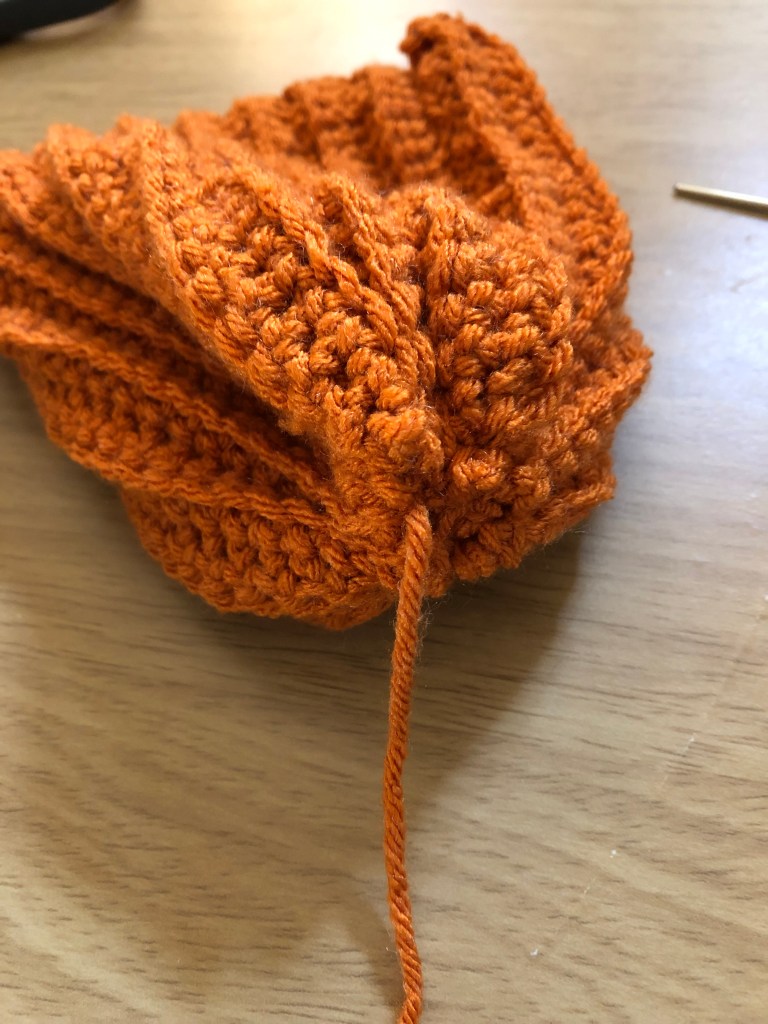
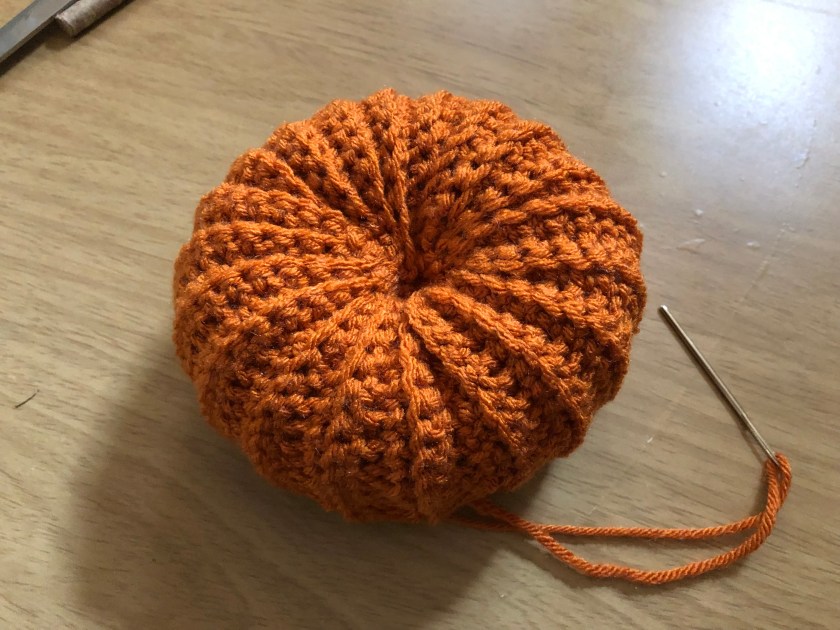
Stitch the top of the pumpkin in the same manner as you did the bottom to close it.

You can leave your pumpkin like this, or, to give it a more “smooshed” look you can stitch the working tail through the center from the top of the pumpkin to the bottom a few times, ending with the bottom and then weave the tail through a few stitches on the bottom and end it.

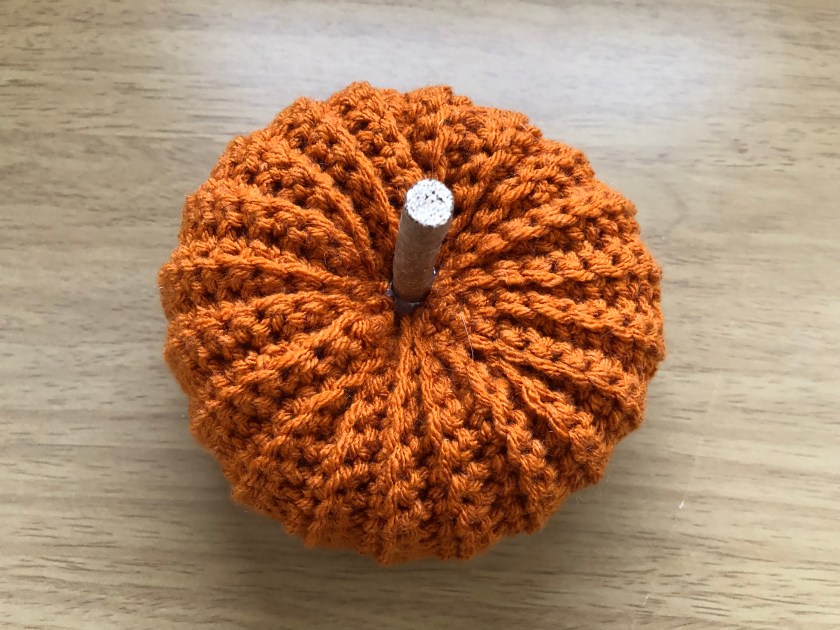
Finally, your pumpkin needs a stem. You can either use decorative stick, that you can pick up at your local craft store, or a cinnamon stick. Just stick it in place with a small dab of hot glue.

And there you have it, a simple handmade pumpkin.

I had so much fun making these that I ended up making some to list in my Etsy shop.

Crocheted Heart Table Runner & Garland

I normally don’t decorate for Valentine’s Day. The most I do is hang a tinsel heart wreath on my front door. This year though, possibly from spending so much time at home I decided to do a little more than just hang a wreath.

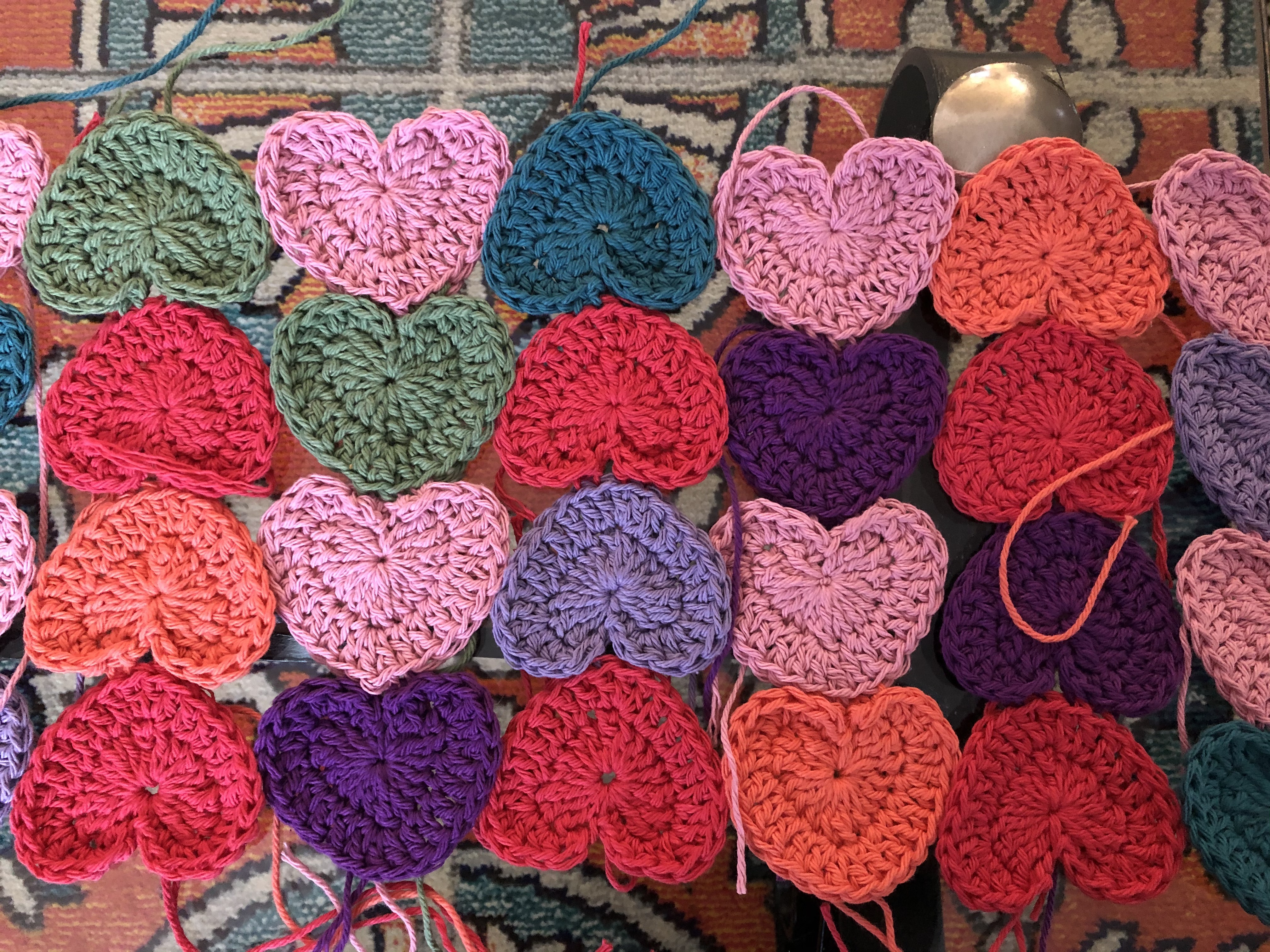
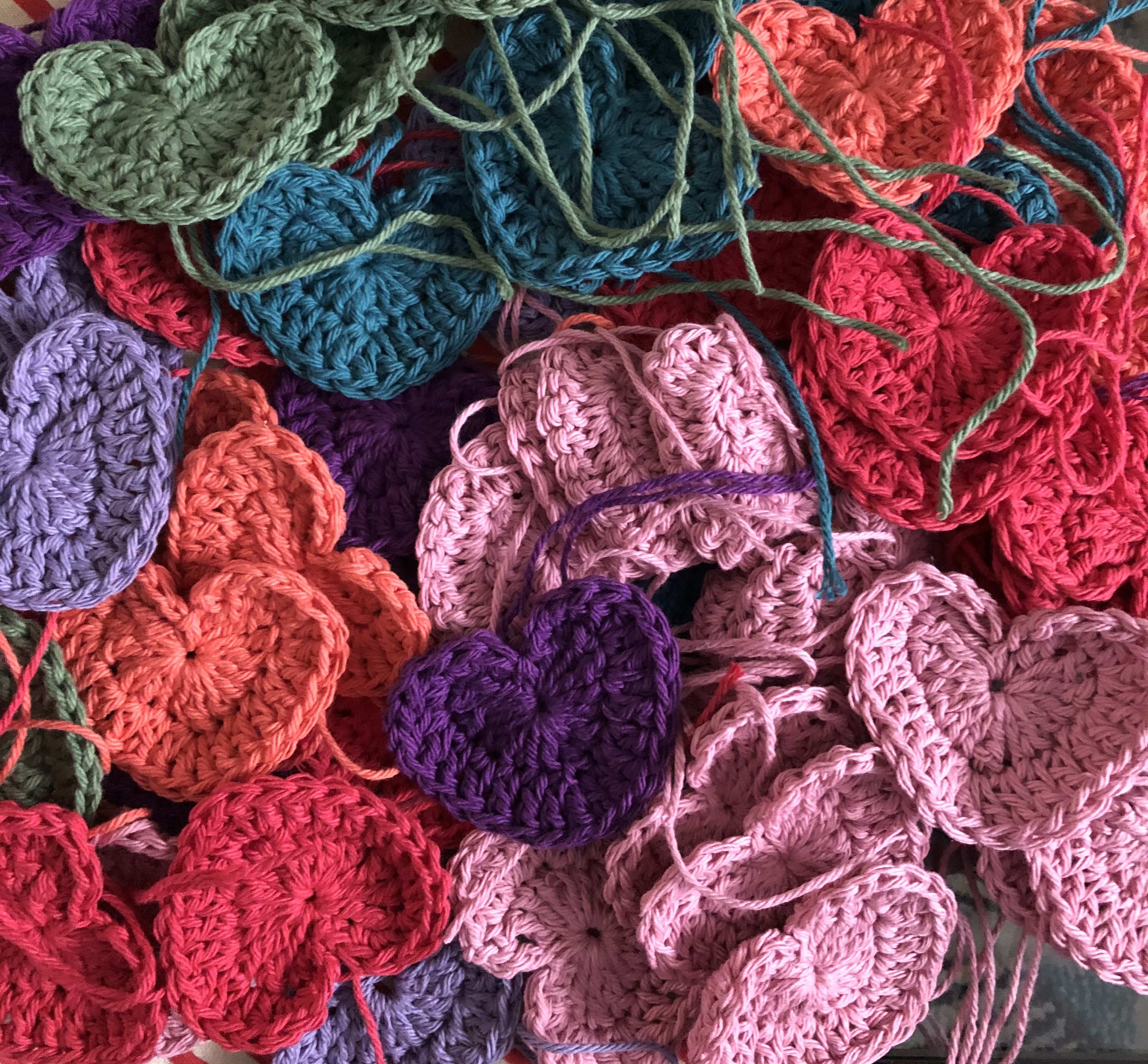
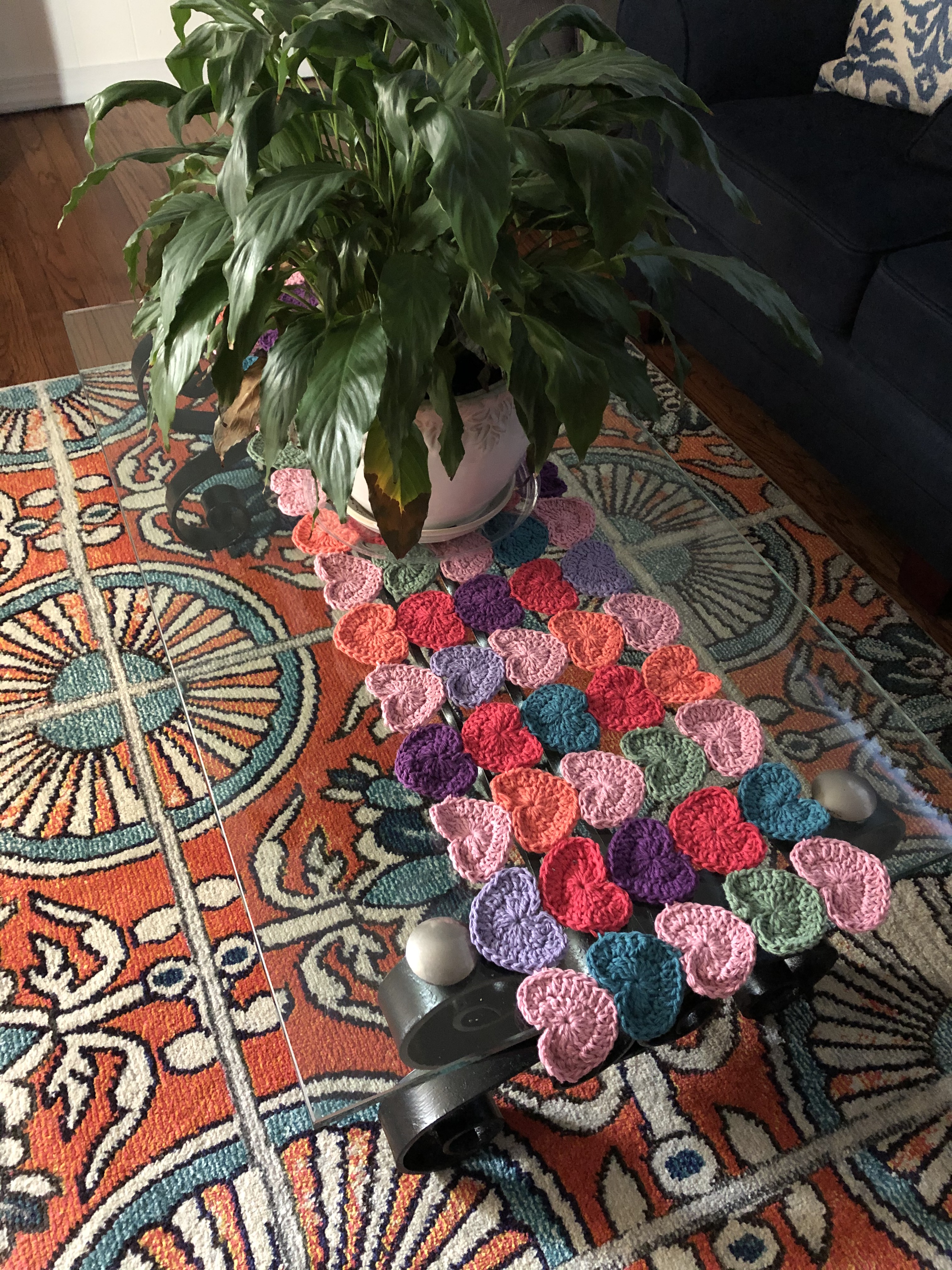
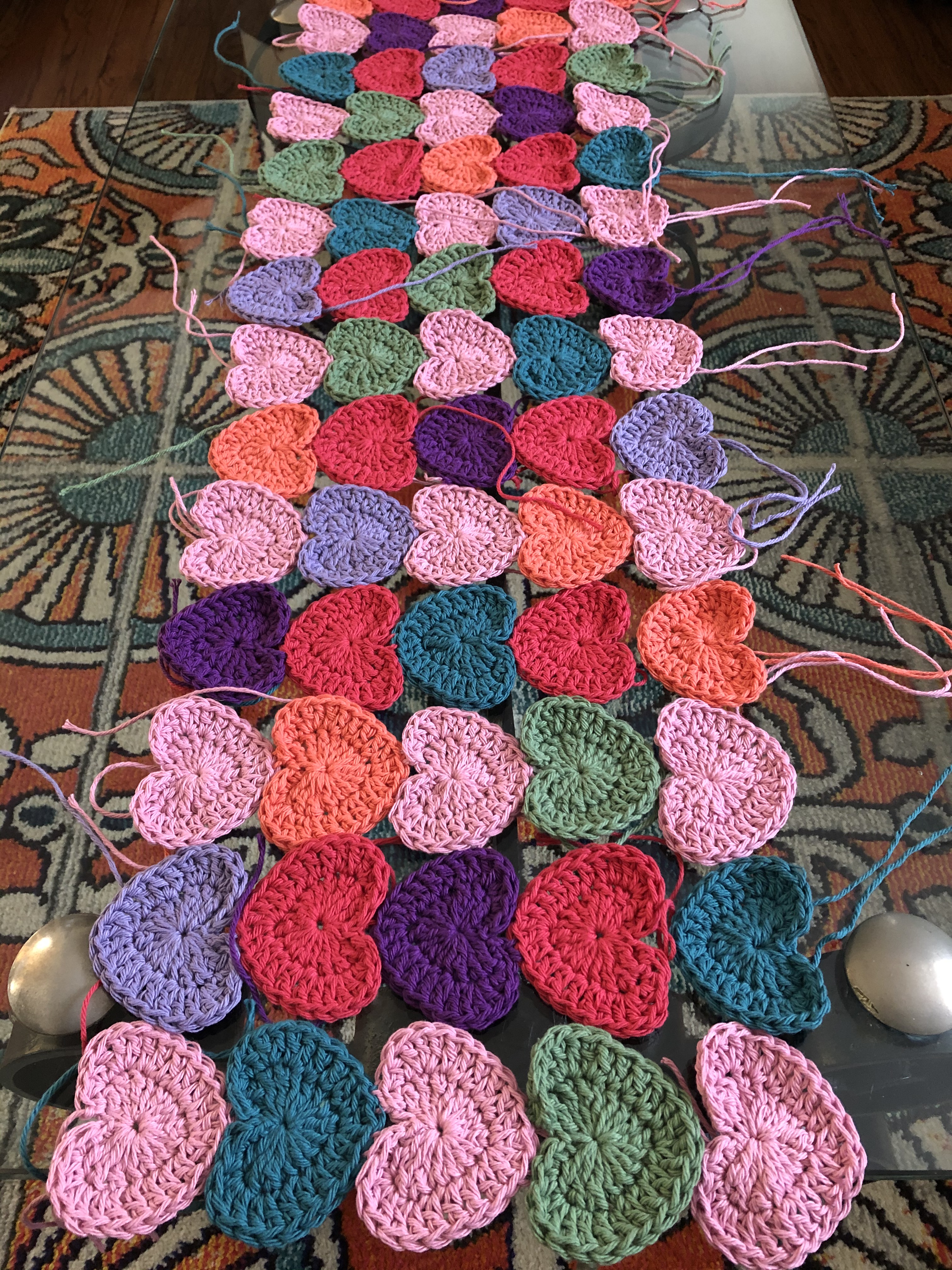
Initially I was just planning on making a crocheted heart garland. I started crocheting hearts in different colors reminiscent of the Conversation Hearts candy using Lily Sugar ‘n Cream yarn. Then I had the hearts I had completed on my coffee table in my living room and the idea came to me to make a table runner.

So, after measuring out another table runner I used on the table over the holidays I determined that I would need 60 crocheted hearts, 4 rows of 15 hearts (or 15 columns of 4 hearts.) Once I had them all crocheted it was time to settle on a pattern.

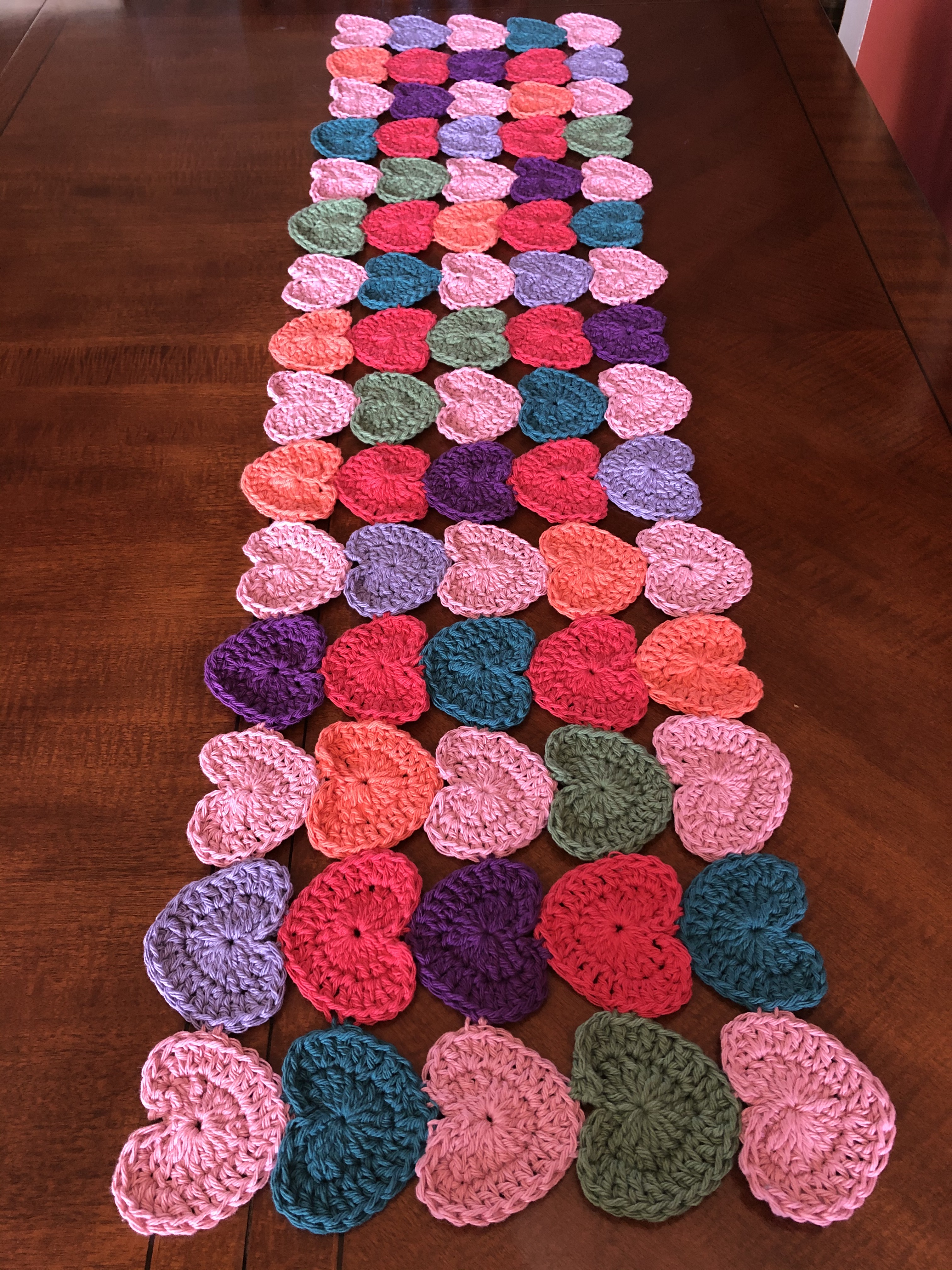
I ended up crocheting more of the lighter and darker pink hearts since I knew those colors were going to be the ones that would tie the table runner together. I went back and forth about what to do with the other colors but decided on placing them haphazardly. Doing my best to spread them out evenly. This is the pattern that I ultimately settled on.

And then the not-so-fun part… stitching the hearts together. I began by stitching the rows of 4 hearts together. Once I had finished stitching them, I laid the 15 4-heart columns out on my table and it became apparent immediately that I was going to need another row.

I crocheted 15 more hearts, thankfully they work up quickly, and placed them so I could stitch them onto the hearts I had previously stitched together. And instantly I could see that that additional row made my table runner the perfect width.

Next, I needed to stitch together all of the columns.

And finally, it was done. The finished size with the 75 hearts is 12.5” x 47”. This is the type of project though that you can completely customize to make it the size you need.

Also, this project is a great stash buster. While I used 7 different shades of Lily Sugar ‘n Cream yarn you could easily use any leftover yarn in your stash that has a similar weight (Medium/4) and use less or more colors depending on what you have on hand.

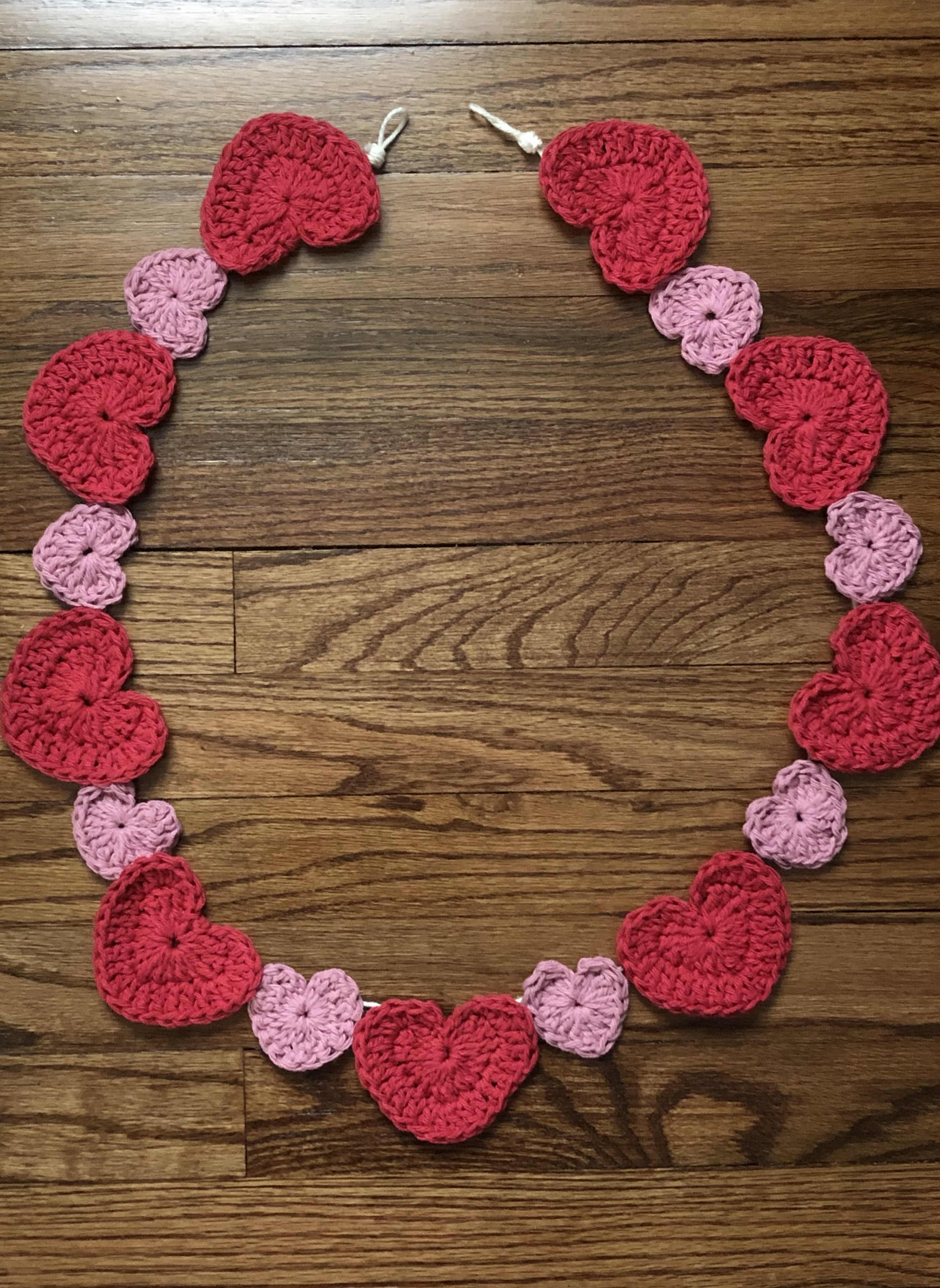
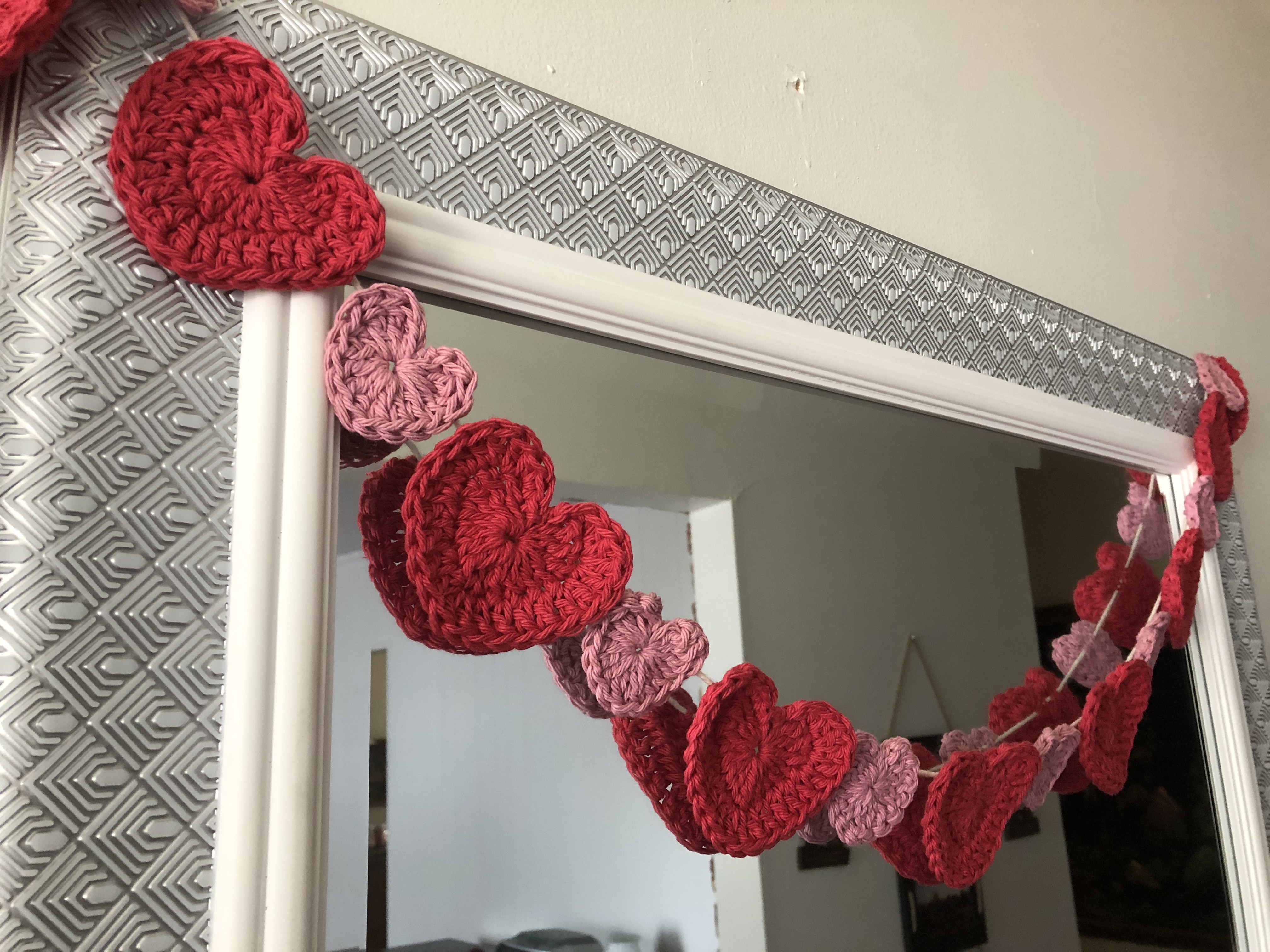
And I didn’t forget about that garland I wanted to make. To make the garland I crocheted 9 large hearts in Pretty in Pink and 8 smaller hearts in Rose Pink. Then using a long piece of yarn, I strung the hearts together. It ended up being just shy of 4 feet long. Just like the table runner though, you can adjust the length to fit your needs.

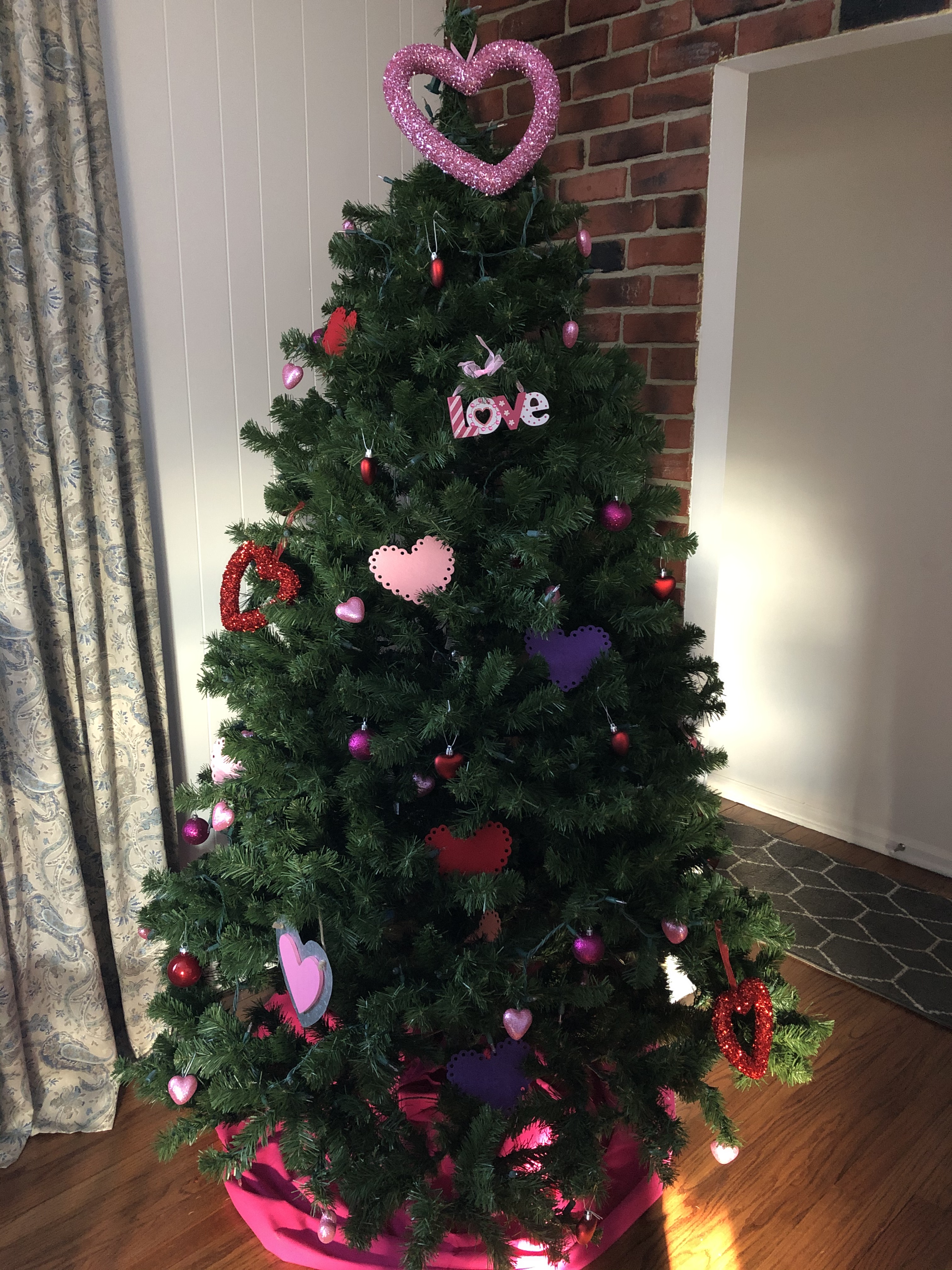
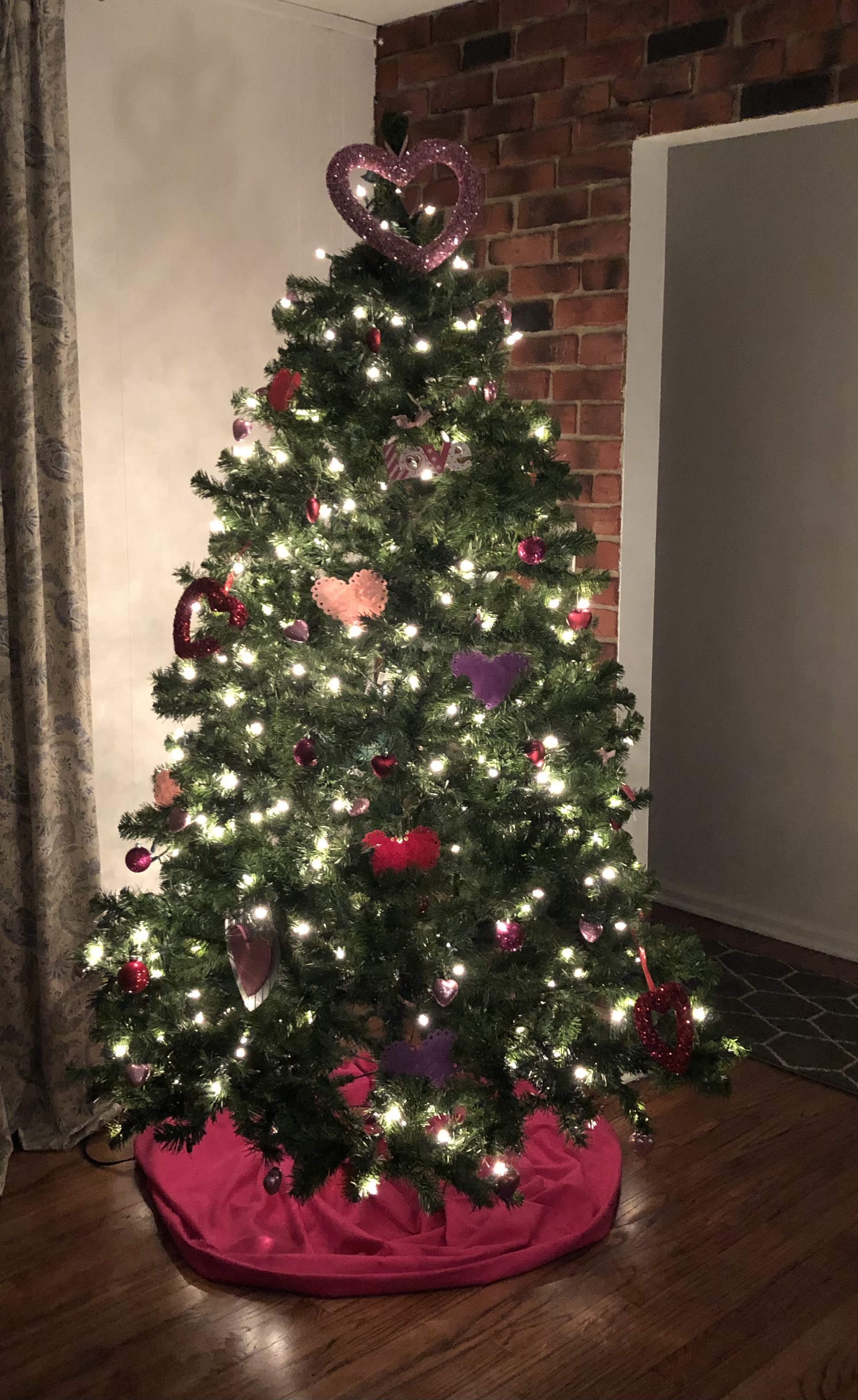
And there was one other thing I did to get my house into the Valentine’s Day spirit… I really didn’t feel like taking down my Christmas Tree, not because I was being lazy or anything, I just like how my tree looks, but, I didn’t want to leave the Christmas ornaments on it so I decided to make it into a Valentine’s Day Tree.


Crocheted Heart Table Runner & Garland

Lily Sugar ‘n Cream yarn in the following colors:

Sage Green – 2.5 oz ball

Tangerine – 2.5 oz. ball

Hot Purple – 2.5 oz. ball

Black Currant – 2.5 oz. ball

Teal – 2.5 oz. ball

Rose Pink – 4oz. ball (Super-Size Ball)

Pretty in Pink – 4oz. ball (Super-Size Ball)


Crochet Hook Size H-8 / 5mm


For the Table Runner I made 75 Larger sized hearts in the following breakdown:

24 Rose Pink, 14 Pretty in Pink, 8 Teal, 8 Tangerine, 7 Sage Green, 7 Hot Purple, 7 Black Currant


For the Garland I made 9 Larger hearts and 8 smaller hearts in the following breakdown:

9 Pretty in Pink, 8 Rose Pink


To make the smaller heart (1.5 inches long) only crochet Round 1, for the larger heart (2.5 inches long) crochet Round 1 & 2.

Magic Ring, Ch2

Round 1: Into the Magic Ring, 3 Treble Crochets, 4 Double Crochets, Treble Crochet, 4 Double Crochets, 3 Treble Crochet. Pull String, Ch2 and Slip Stitch into center. Pull string tight to close hole.

Round 2: Single Crochet in the side of starting Ch2. 2 half-double crochets in next stitch, 3 double crochets in next stitch, 2 double crochets in next stitch, Double Crochet in the next 4 stitches, 3 double crochets in next stitch, double crochets in next 4 stitches, 2 double crochets in next stitch, 3 double crochets in next stitch, 2 half-double crochets in next stitch. Single crochet and slip stitch in the side of last ch2 space.


To assemble the Table Runner:

Lay the hearts out in the pattern you wish and then stitch the hearts in the columns together first and then stitch all of the columns together


To assemble the Garland:

String the hearts, using a long piece of yarn, alternating between a large heart and a smaller heart, starting and ending with a larger heart. Tie a knot, or loop, on both ends of the yarn so the hearts will stay in place.

Knitted Tube Socks

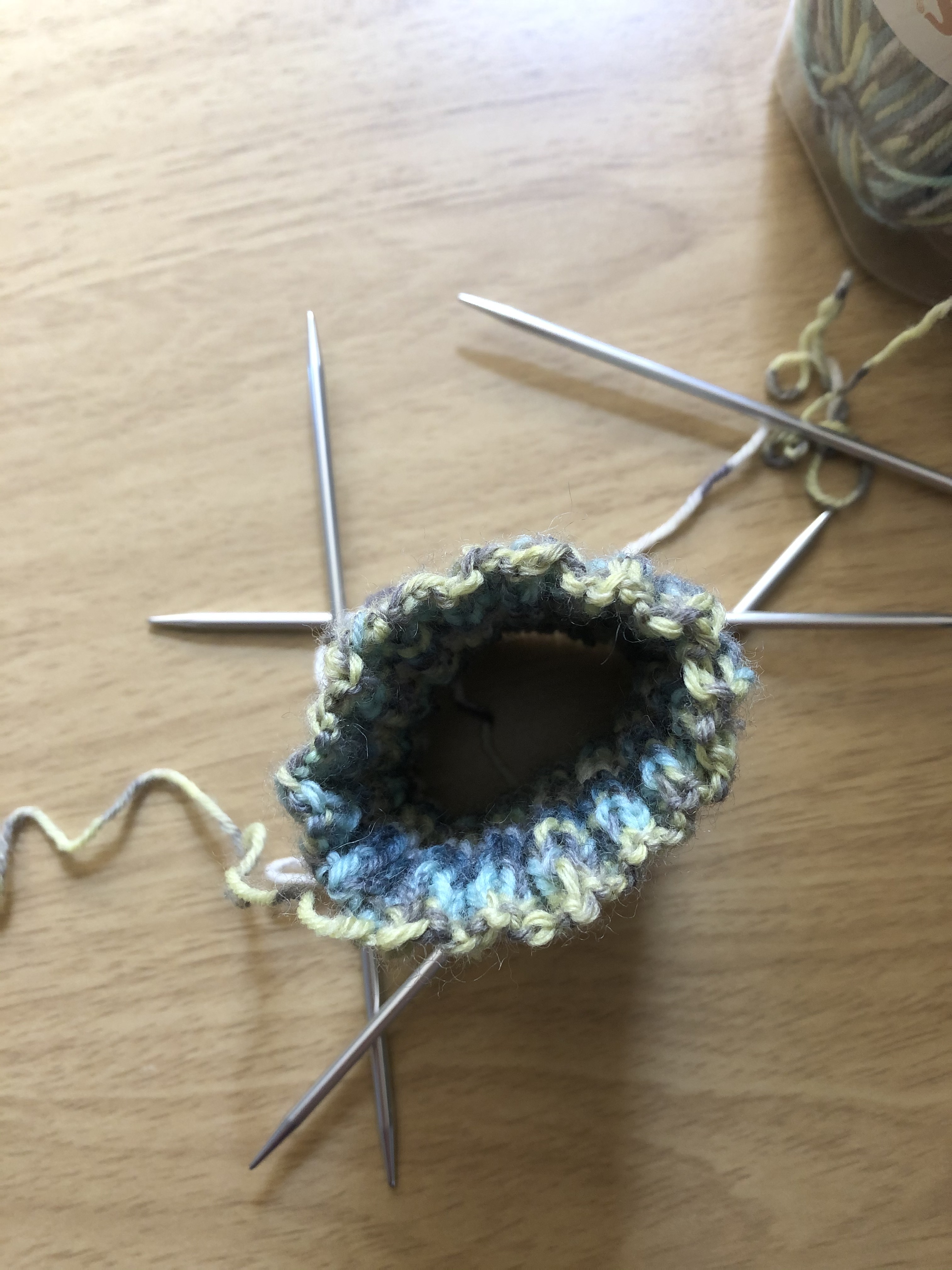
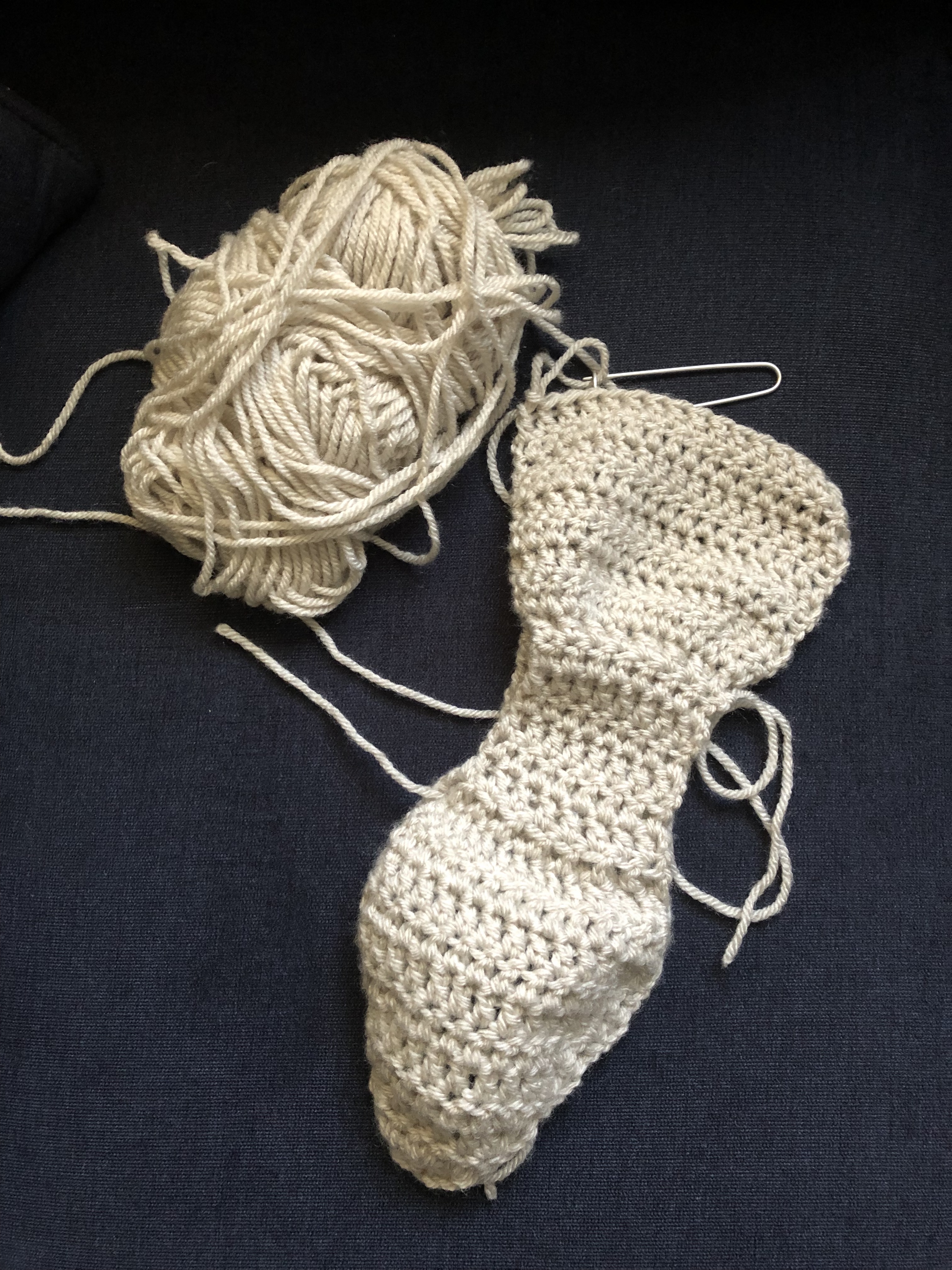
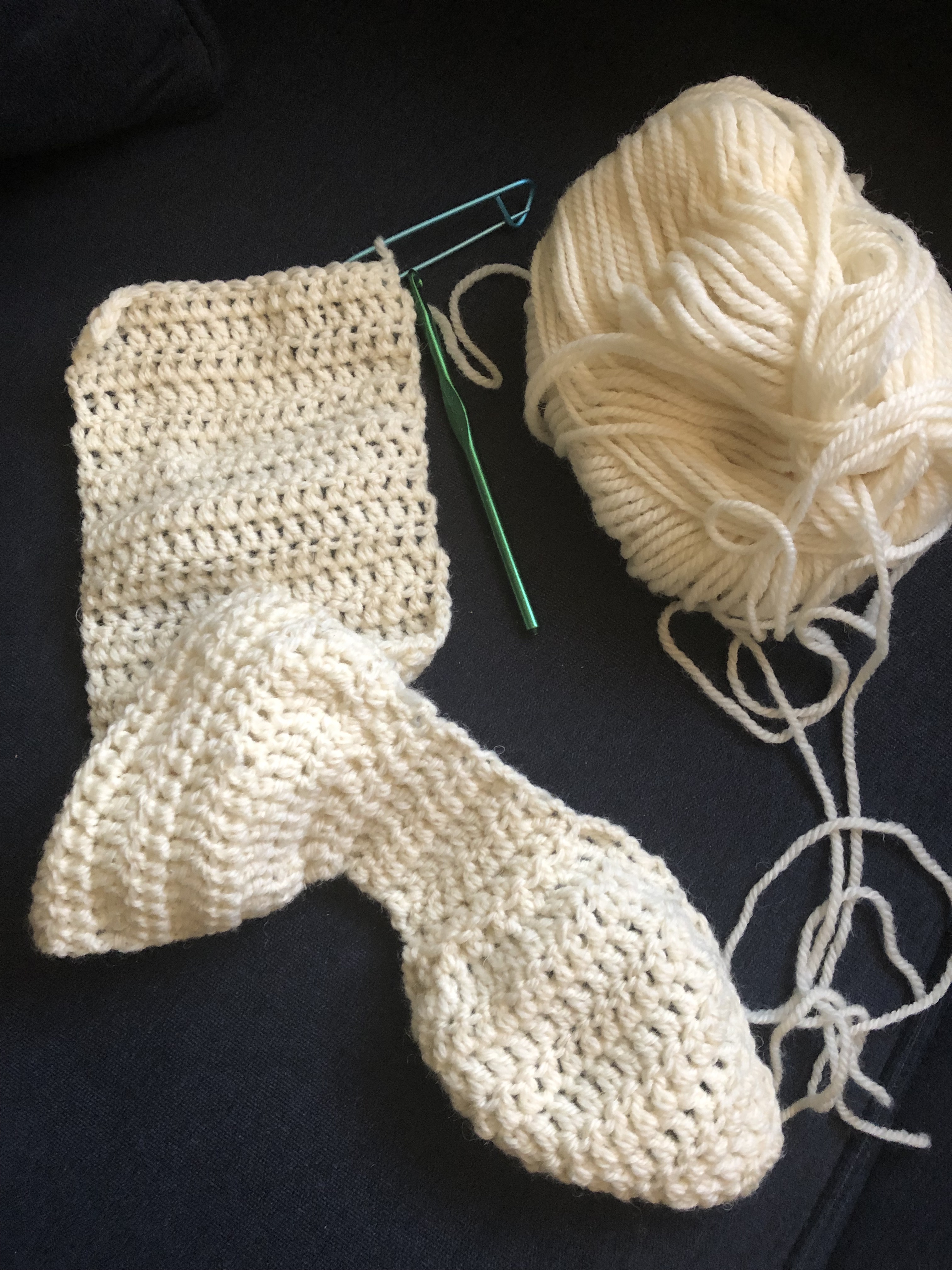
Before the pandemic started and everything shut down, I was taking crocheting/knitting classes at my local library to learn new patterns and get together with other yarn crafters. Before the pandemic ended the classes I learned how to make crocheted market bags and had just started a class to make a Knitted Keyhole Scarf. What I was excited about though was that I was finally going to learn how to knit socks. It’s something I have been wanting to learn for a while but whenever I read the patterns, they made absolutely no sense to me. I had unfortunately missed the class to learn how to make socks, but the teacher was willing to show me during one of the classes and gave me a pretty easy pattern to follow. A tube sock pattern that didn’t require me to knit a heel, which apparently is the hardest part of making socks. So, I bought the knitting needles I would need (size 3 9-inch circular) and already had the yarn and then classes ended, but I was still determined to learn how to make them.

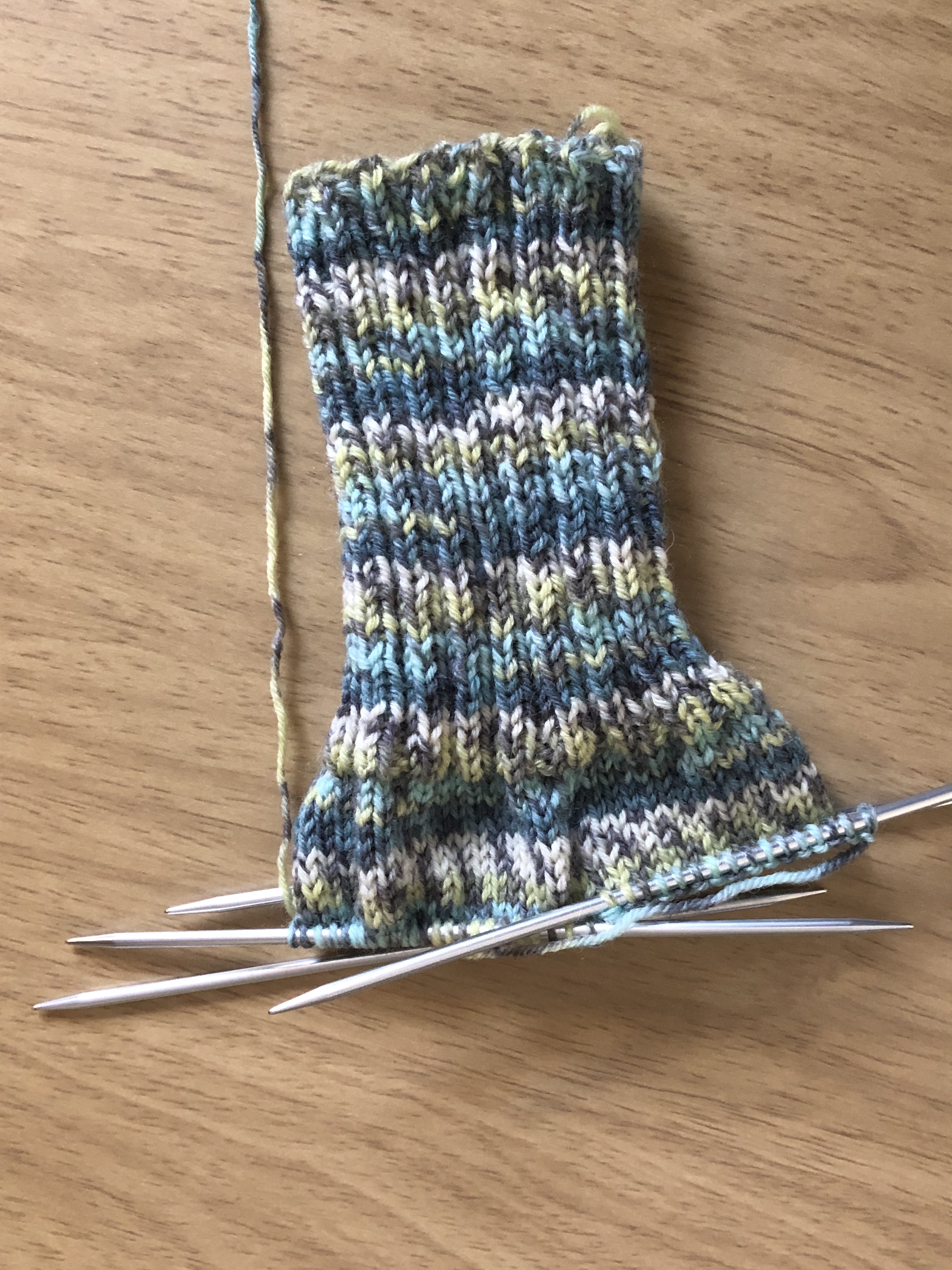
Thanks to YouTube, I was able to figure out how to start the socks. Using the short-cabled knitting needles I casted on 64 stitches and then divided those stitches among three double-pointed knitting needles. I then worked in a K2, P2 ribbed pattern for five inches to make the cuff of the socks.

Next, it was time to work on the body of the sock. And it couldn’t have been easier, I knit every row until the sock measured 13 inches from the beginning.

To finish the sock, I had to shape the toe. The directions on the pattern I had weren’t that easy to follow, but after a few Google searches I was able to find a toe shaping pattern that would work for the tube sock I made and was easy enough for me to follow.

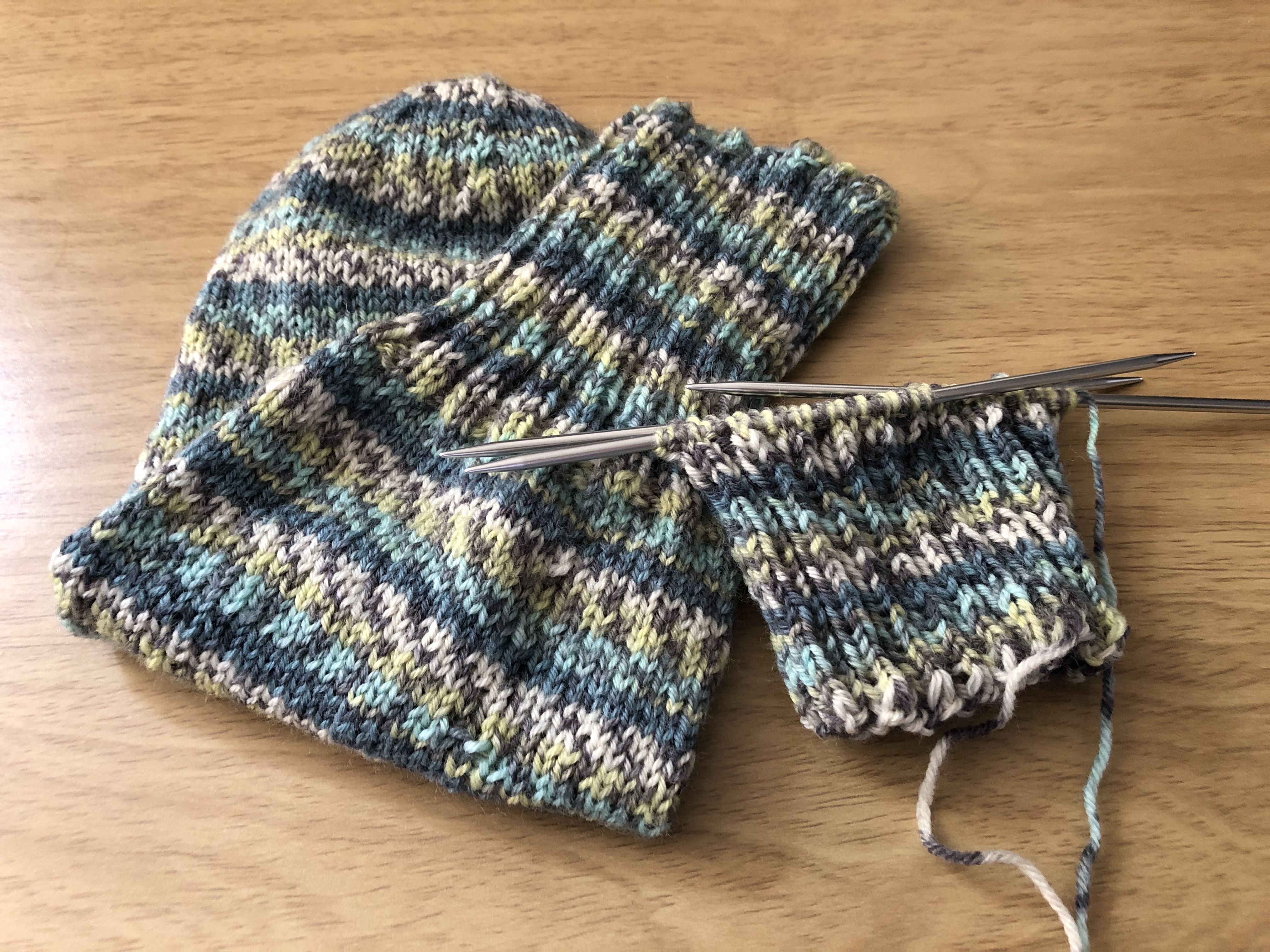
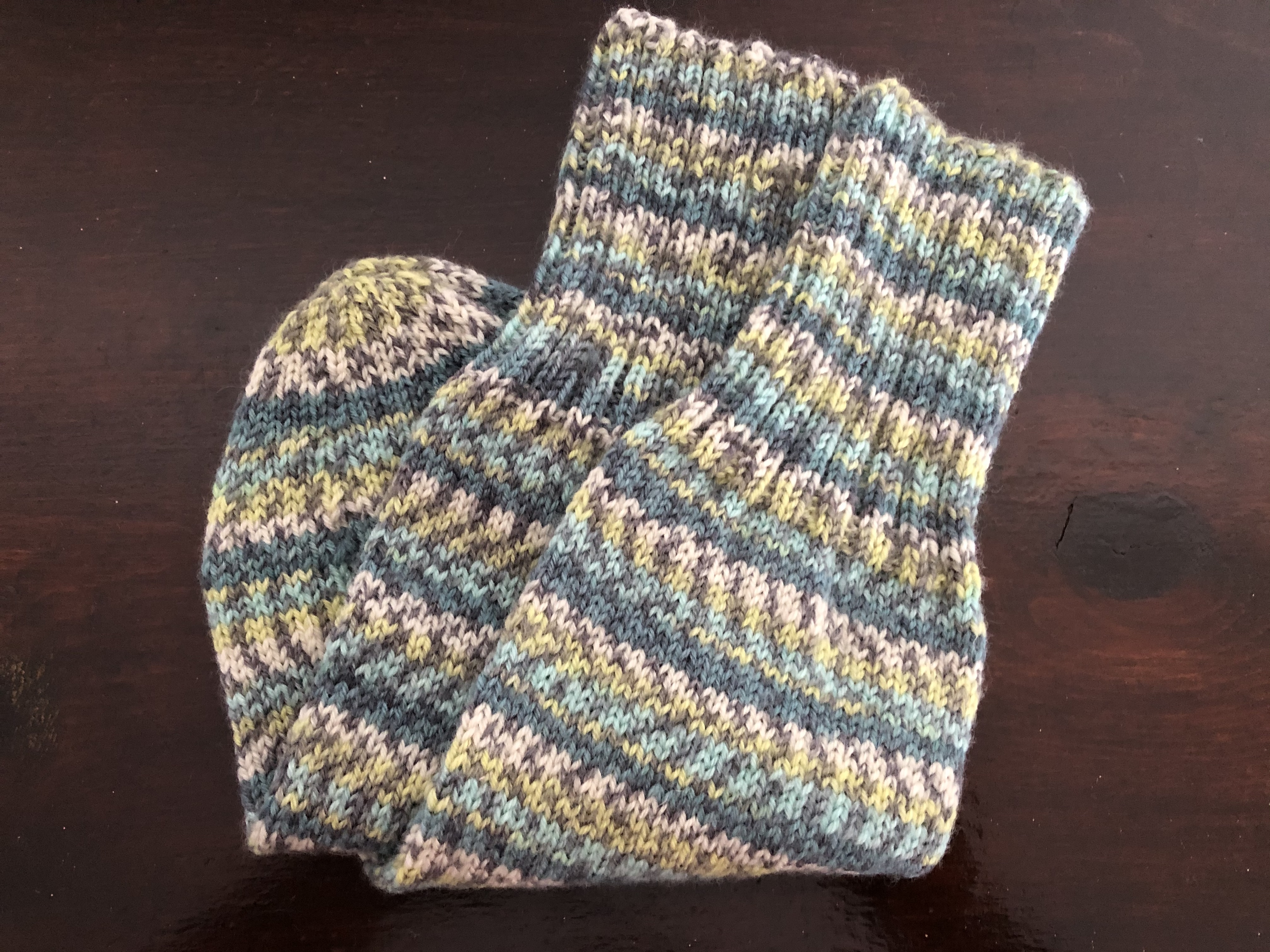
And once I finished, I had a cozy tube sock that will be perfect for the upcoming cold weather. And since I had worked out some of the kinks in the first sock, my second sock was a lot easier to work up.

My new pair of socks…

Knitted Tube Socks

Materials:

100 grams / 3.75 oz Sock Yarn*

Set of 4 US 3 Double Pointed Knitting Needles

Size 3 9-inch circular needles

*I used Patons Kroy Socks Yarn


Directions:

Using the circular needles cast on 64 stitches loosely.

Divide the stitches among three double-pointed needles: 24 stitches on the first needle, 24 on the second needle and 16 on the third needle. Join in round.

Using the 4th needle begin working in K2,P2 rib. Work the ribbing for 5 inches. You can make the ribbing shorter or longer based on your preference.

Knit every round until the sock measures 13 inches from the beginning.

Shape the toe as follows:

Round 1: K6, K2 Tog

Round 2-4: Knit 3 rows

Round 5: K5, K2 Tog

Round 6-8: Knit 3 rows

Round 9: K4, K2 Tog

Round 10-12: Knit 3 rows

Round 13: K3, K2 Tog

Round 14-16: Knit 3 rows

Round 17: K2, K2 Tog

Round 18-19: Knit 2 rows

Round 20: K1, K2 Tog

Round 21: Knit 1 row

Draw the yarn through the remaining stitches and fasten to secure. Weave in ends.

Wash and block to shape.


Crocheted Hexagon Christmas Tree Skirt

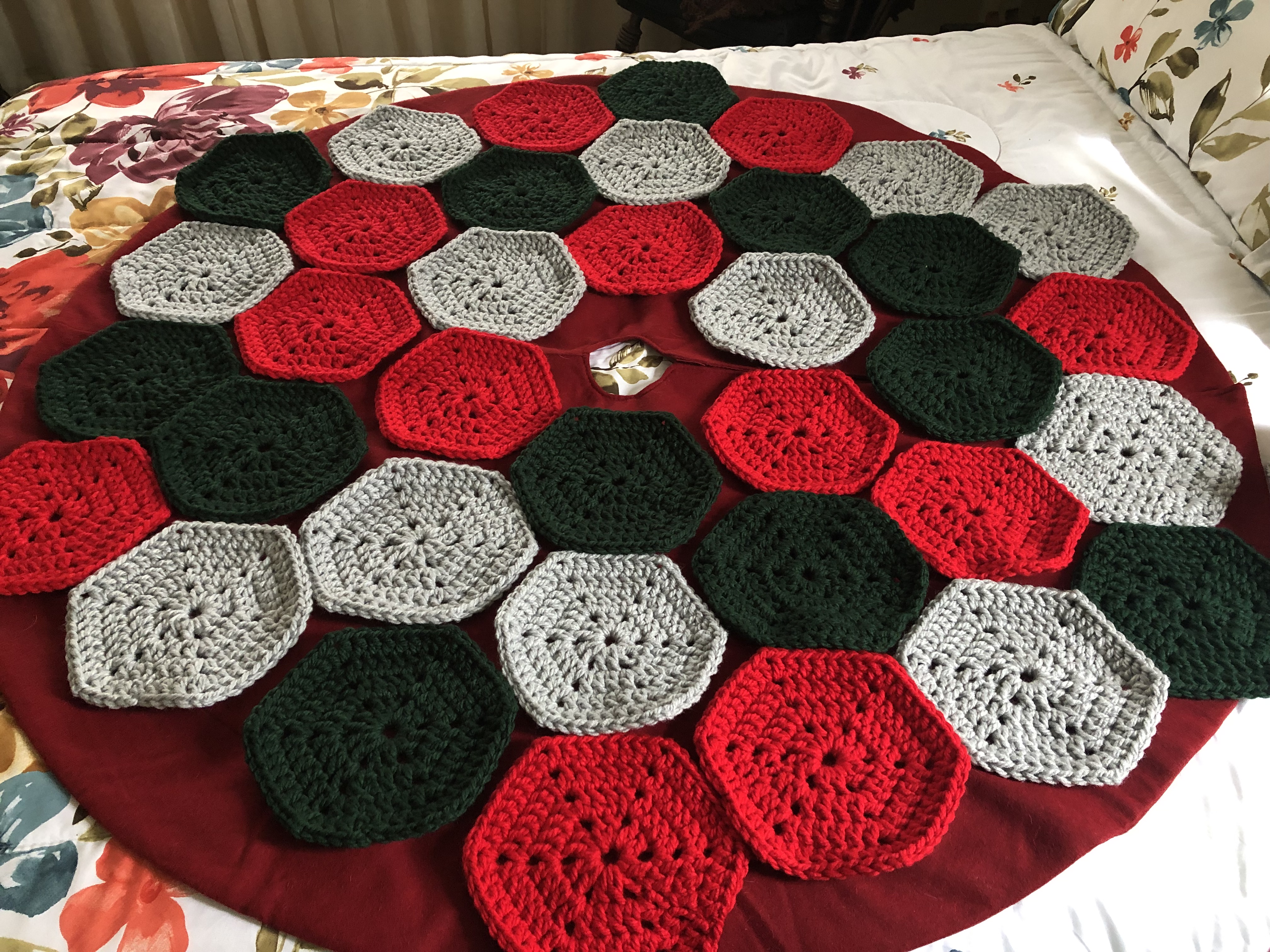
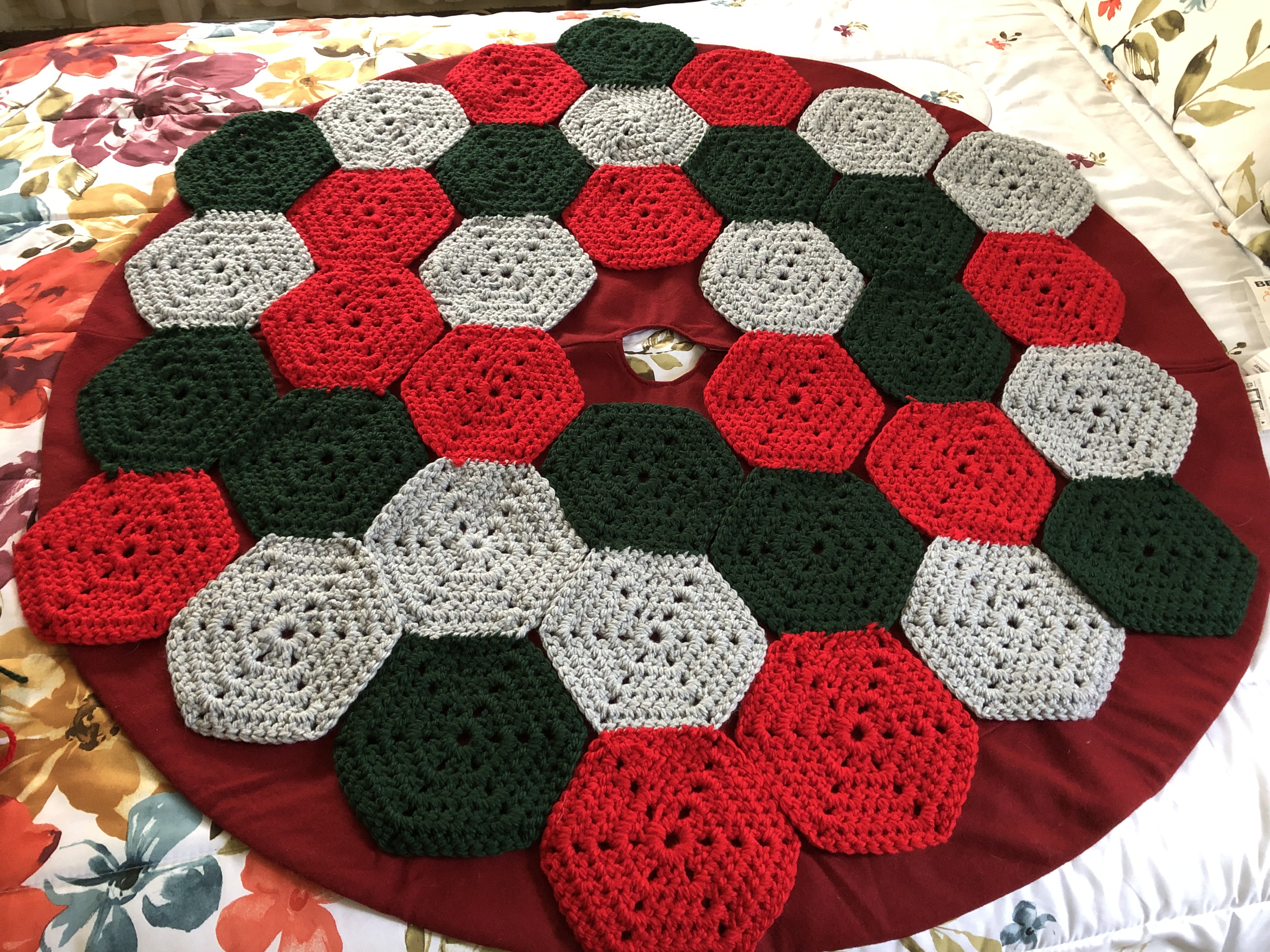
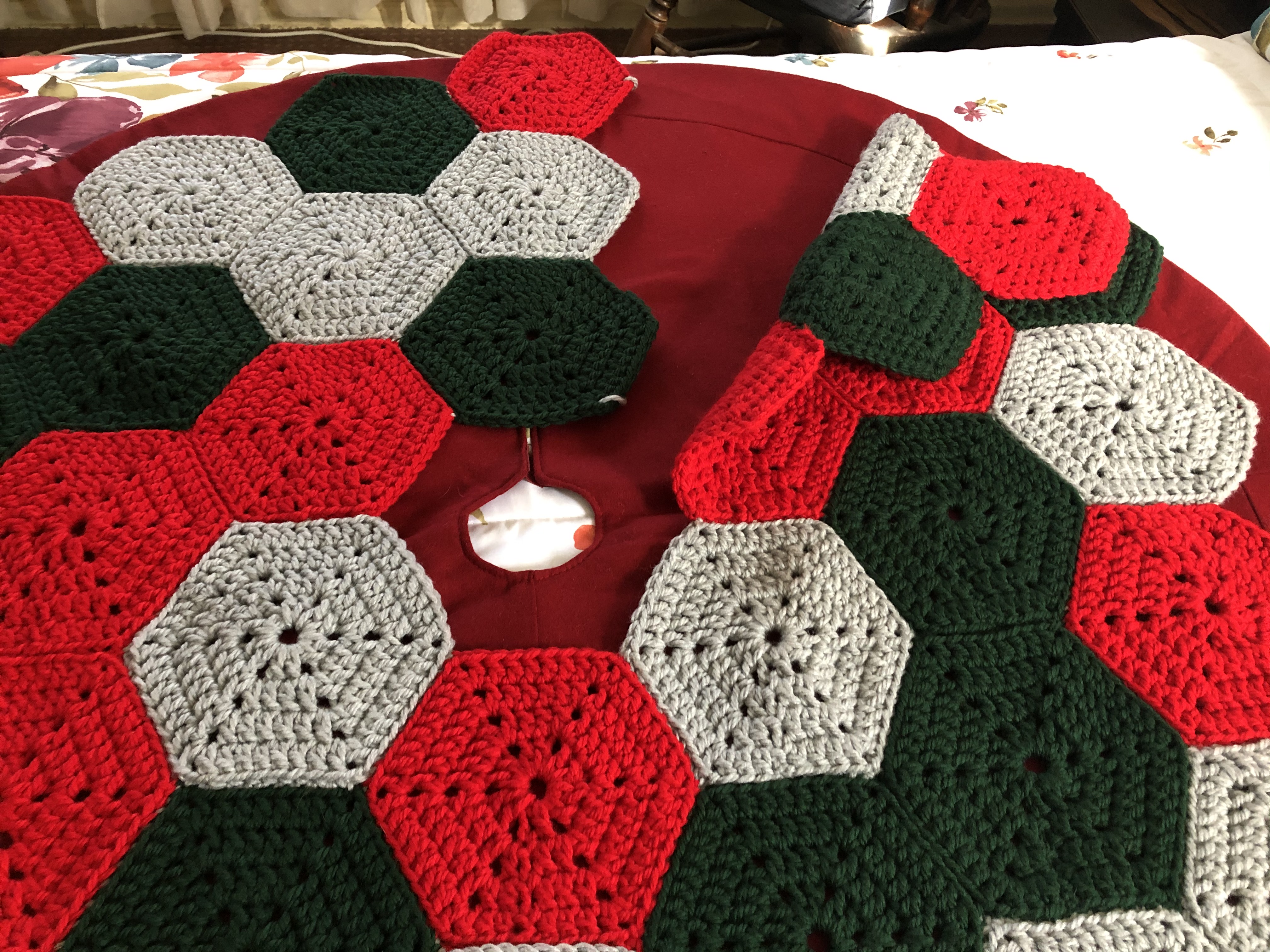
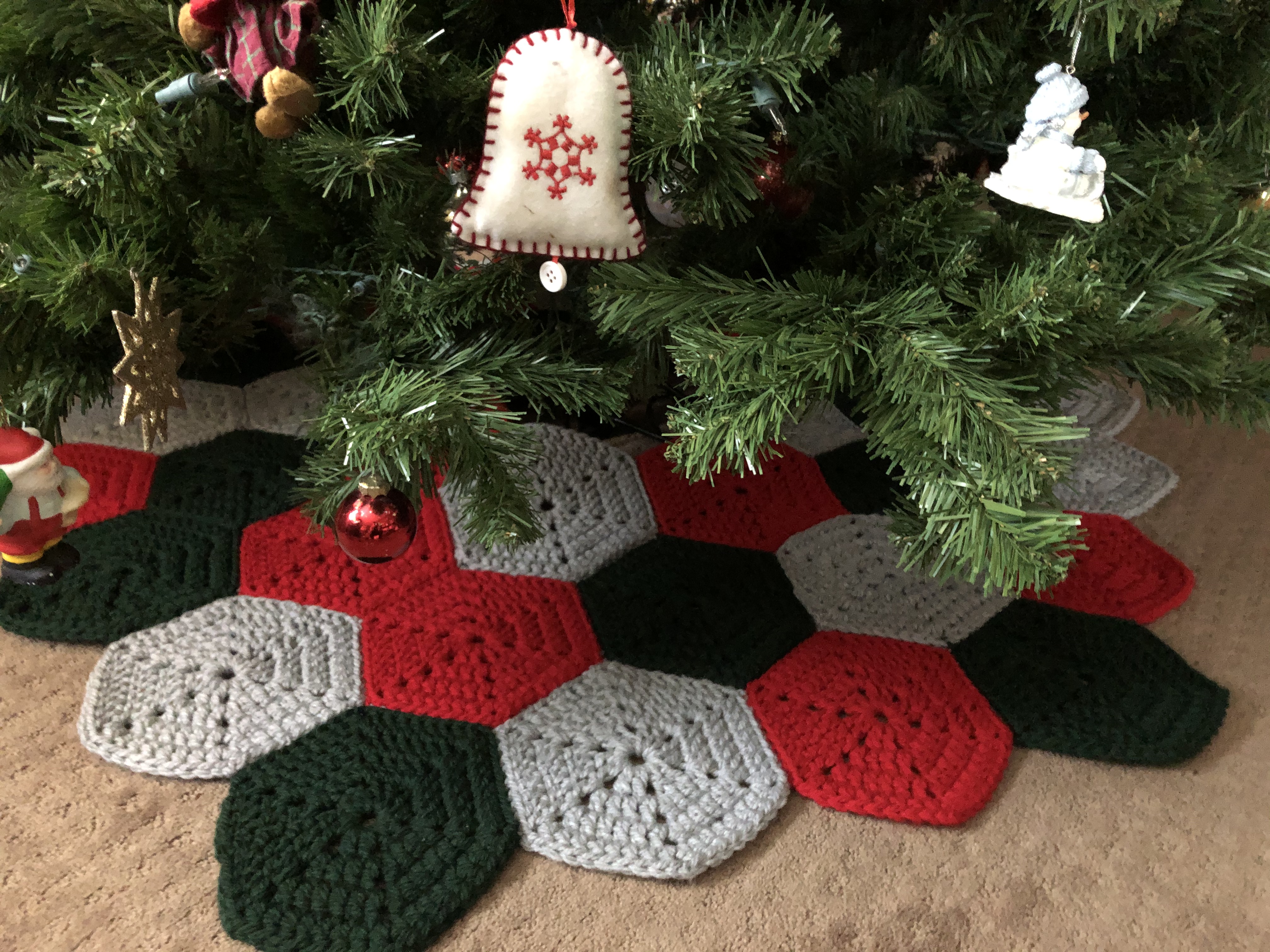
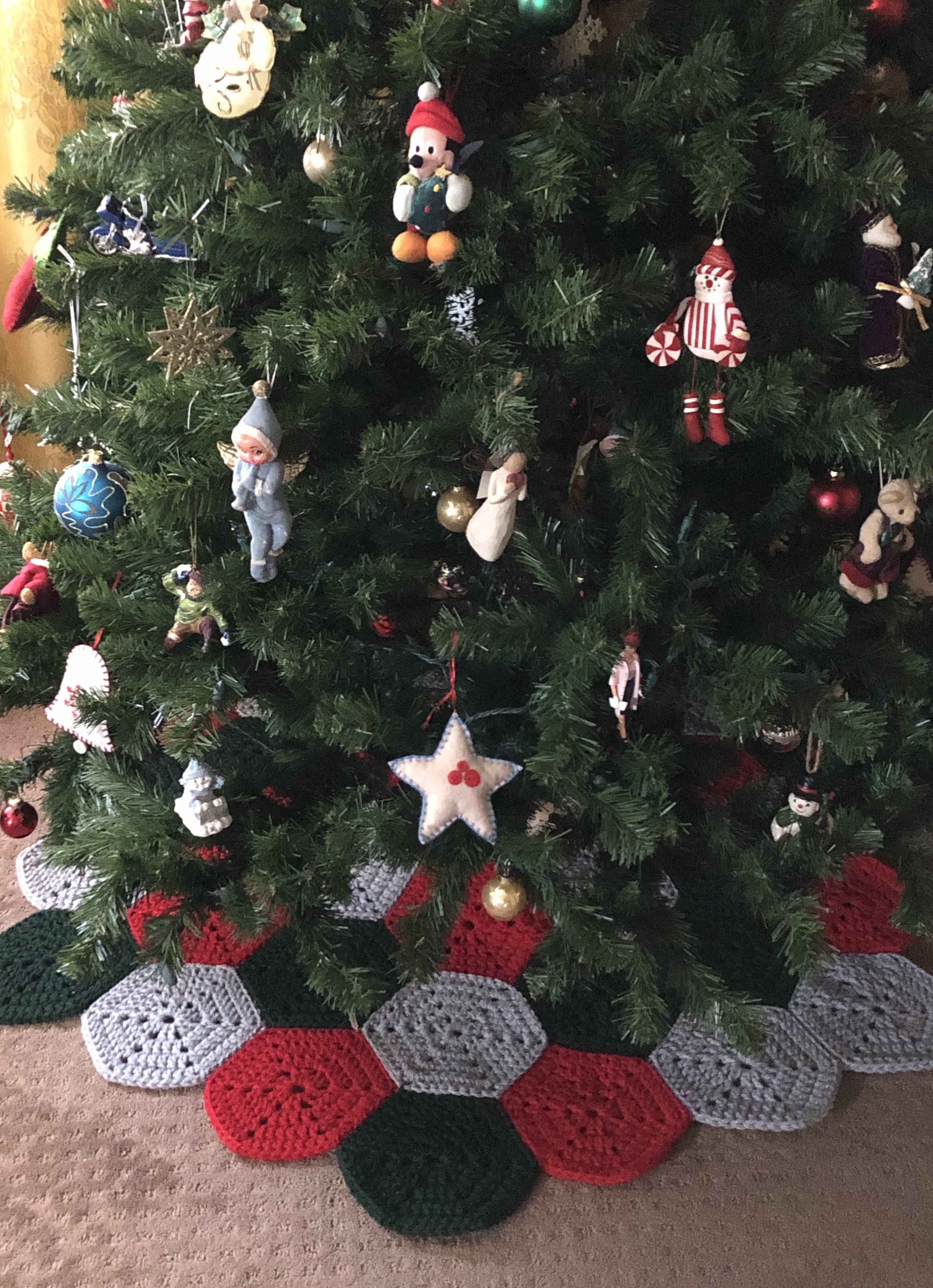
I started this project way back in January. I actually posted a little about it in my Elusive Magic Ring post. By the way, I still cannot do a magic ring, but, I am not letting it hold me back. I am sticking with my chain 6 and join with a slip stitch method to get around it. So, why did it take me so long for me to complete it? Well, while I easily found enough skeins of red & gray yarn in the same dye lot I was having trouble doing the same for the green I wanted to use. After a while I just gave up looking. But then September rolled around and I knew that if I wanted to finish my tree skirt for Christmas this year I would have to find it. And so, luckily one day at my local Michael’s I came across three skeins in the same dye lot and I picked up a fourth one that looked similar just in case. I crocheted 12 green hexagons and I finally had the 36 I needed to make my Christmas Tree Skirt.

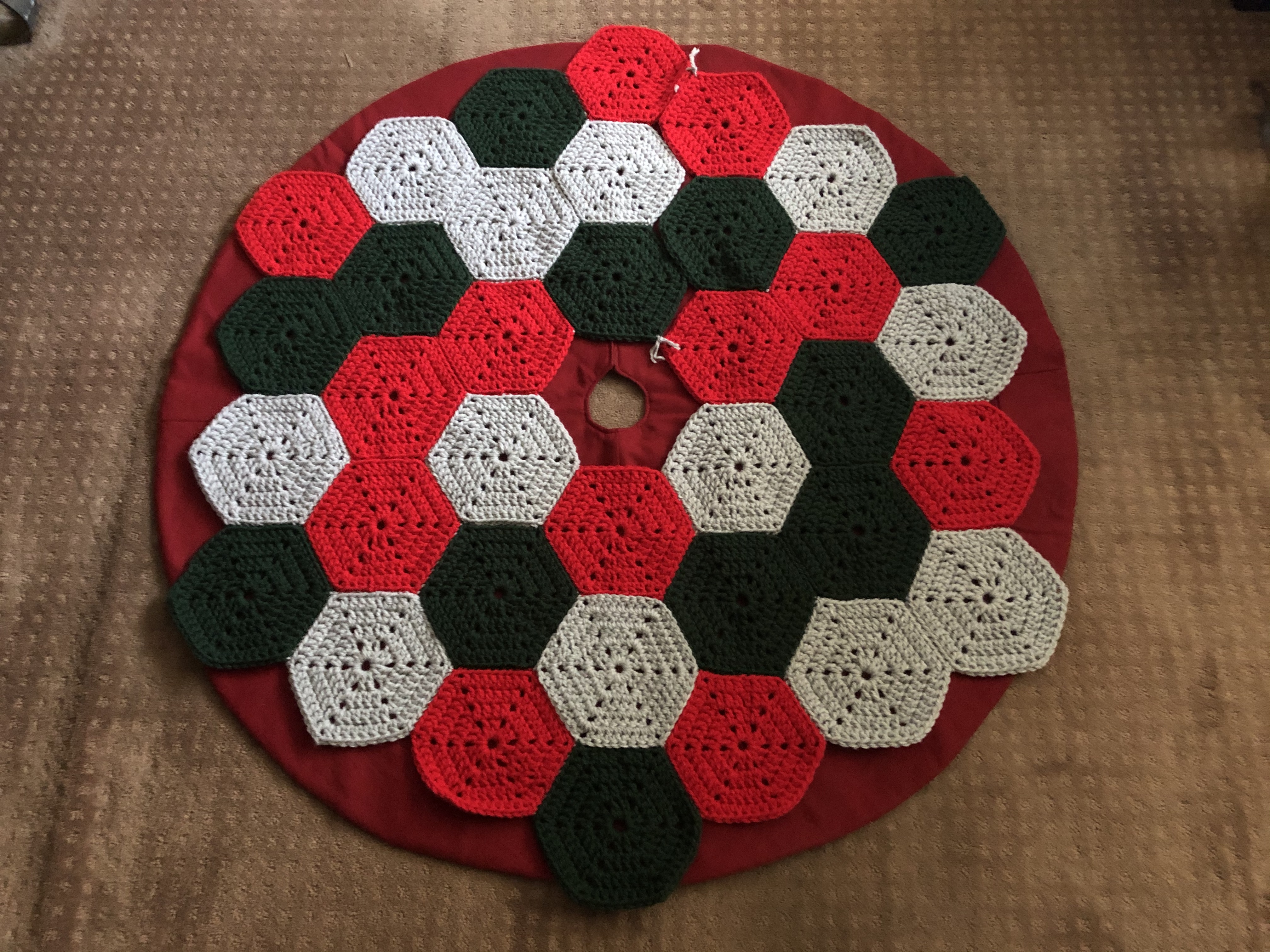
I began by laying out all of the hexagons on top of my old Christmas tree skirt to ensure that the 36 hexagons would be enough. It ended up being a little smaller than my old one, but not by much. I also wanted to make sure that I laid the hexagons out in a pattern that I liked. I basically placed them haphazardly but also made sure that there weren’t too many of one color in one area. I probably switched the hexagons around once or twice before finally settling on the design.

And once I did I began stitching the hexagons together to create columns.

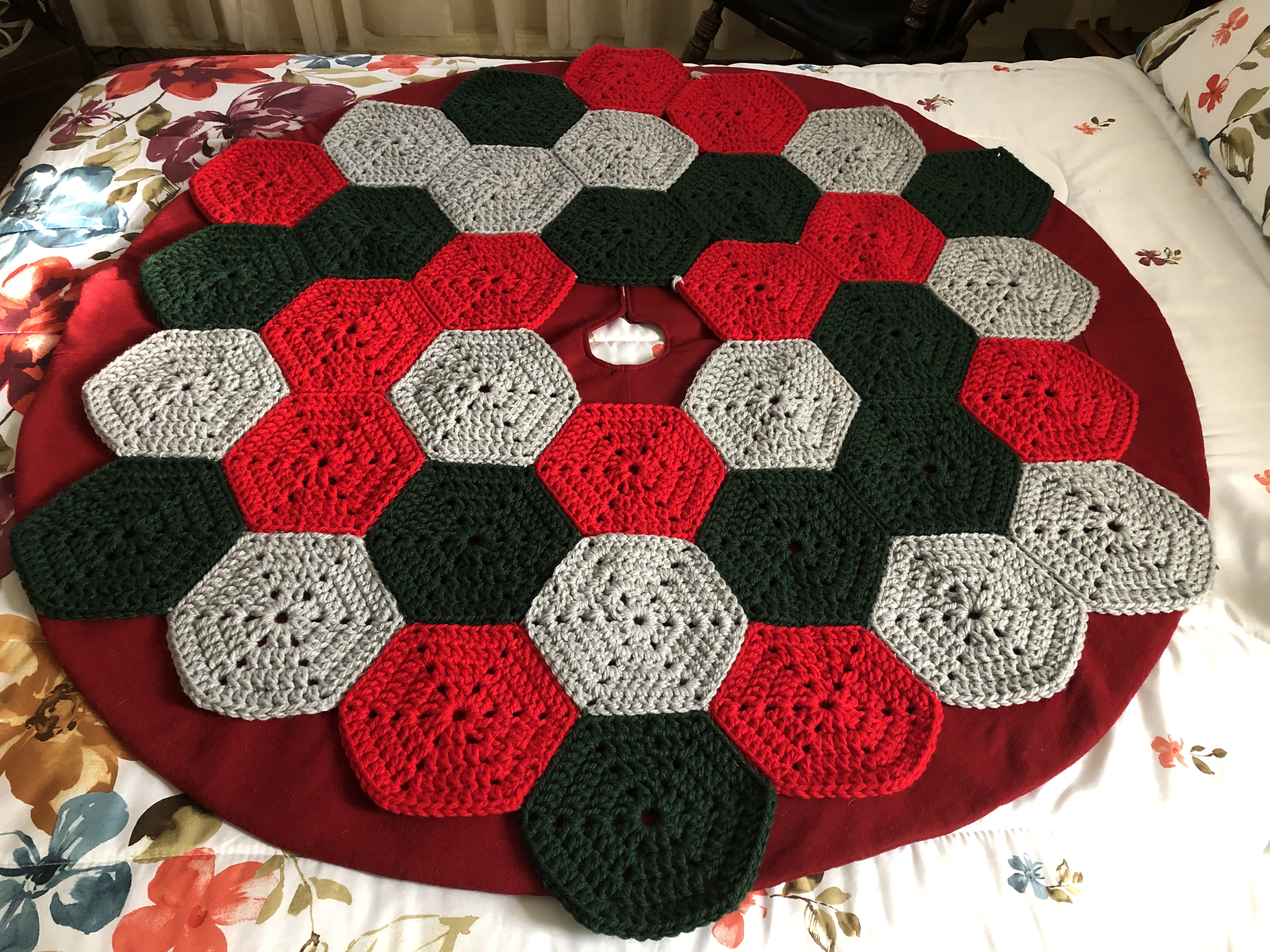
And then I stitched those columns together to form the tree skirt. As you can see, my new skirt isn’t that much smaller than my old one. I was initially think of adding 2 hexagons to each column (one on top and one of the bottom) but I decided against it because I felt that the skirt would be too big and it may take away from the overall design. Also, if I did that I would then need to add another column on each end consisting of 5 hexagons each to balance it out, and I just didn’t have enough yarn to do that. I only had 1 skein of each color left over and that would give me another 12 hexagons and with the added hexagons I was thinking of I would have needed an additional 24 hexagons… Eeek!

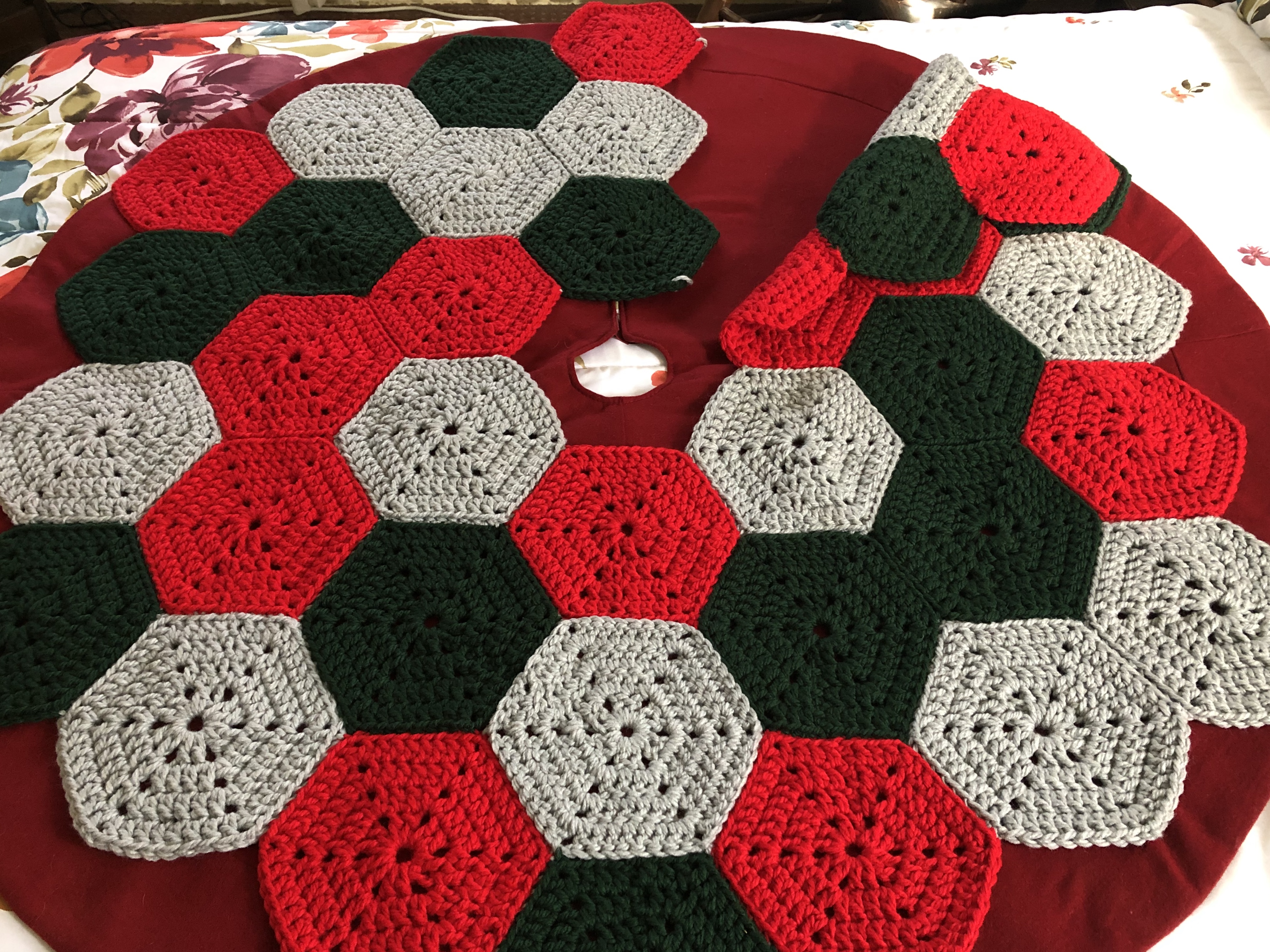
And to make sure I can easily place this around my Christmas tree I left two columns unstitched. Choosing one near the center just made the most sense.

I think it looks perfect under my tree…


Hexagon Christmas Tree Skirt

Yarn: Bernat Chunky Yarn (3 skeins each of Berry Red, Dark Green & Gray Heather – you should get 4 hexagons from each skein)

Crochet Hook: L / 8.0 MM

Hexagon Pattern:

Round 1: Ch6 and join with a slip stitch in the first chain*. Ch1 and then Ch2 more, dc in ring, ch2, *2dc, ch2* 5 times into ring. sl st to join last ch to the top of the first series of 3 ch. (You will have 6 sets of 2dc + 2ch. The 2 dc will become the sides of the hexagon and the 2 ch gaps will become the corners.

*Alternately you could start with a magic loop

Round 2: Ch3, dc in next dc stich, *[dc, ch2, dc in chain gap from previous round], dc in next 2 dc* (5 times). dc, ch2, dc in last corner gap. sl st to join last ch to the top of the first series of 3 ch. (Each hexagon side now has 4 dc stitches, separated by a ch 2 space)

Round 3: ch3, dc in next 2 dc, *[dc, ch2, dc in chain gap from previous round], dc in next 4 dc* (5 times). dc, ch2, dc in last corner gap. dc in remaining 1 dc. sl st to join last ch to the top of the first series of 3 ch. (Each hexagon side now has 6 dc stitches, separated by a 2 ch space)

Round 4: ch3, dc in next 3 dc, *[dc, ch2, dc in chain gap from previous round], dc in next 4 dc* (5 times). dc, ch2, dc in last corner gap. dc in remaining 2 dc. sl st to join last ch to the top of the first series of 3 ch. (Each hexagon side now has 8 dc stitches, separated by a 2 ch space)


sl st – slip stitch

ch – chain

dc – double crochet


Once you have all of your hexagons made lay them out in 7 rows. Your 1st and 7th row will have 4 hexagons each, your 2nd & 6th will have 5, your 3rd and 5th will have 6 each and the middle row (row 4) will also have 6, but, you will leave a space in the middle for your tree / tree stand to go through. The hexagons will be staggered so that the final skirt will somewhat look like a hexagon as well. You may have to use your imagination to see it.

Once you like the pattern, begin by stitching the hexagons together into columns.

Once you have your columns done, stitch them together to complete the skirt. When you have decided which half of your skirt will be the top and which will be bottom (or in terms of laying it down for the tree, which will be the back part and which will be the front part) be sure not to stitch one side of middle column to the adjacent column so you can easily place your skirt around your tree. You can use leftover yarn to tie the two columns together while the skirt is around your tree to prevent it from moving around.

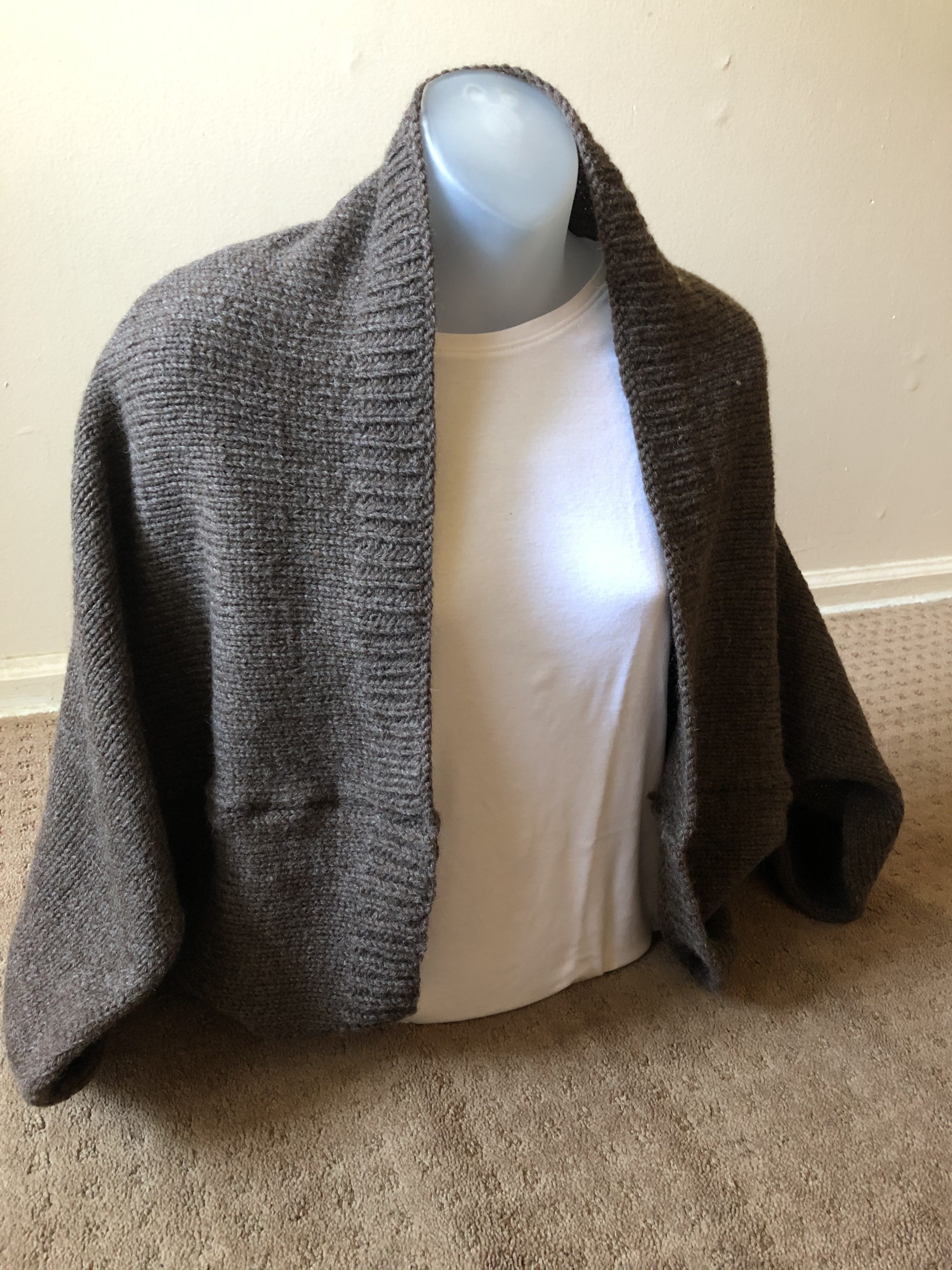
Knitted Cocoon Shrug

Have you ever completed a craft project and felt a bit disappointed with the outcome? I’m sure we have all been there… I know I have quite a few times. You kind of feel like you wasted your time and possibly money on the supplies.

For the longest (a few years to be sort of exact) I finished knitting a rectangle that would ultimately become a shrug – all that was left to do was seam it together. I folded it and placed stitch markers on the sides so I knew exactly where I needed to seam, but then I folded it up and placed it in a corner and kept reminding myself that I had to finish it. I would put it on my desk and in other places so that it would be in my line of vision, but, it just wasn’t working. Not really sure why I was procrastinating. I was possibly thinking that it was going to be more difficult than it really was. Truth be told, I enjoy crocheting and knitting, but I am just not fond of those projects that require seaming at the end to complete them.

But then I finished up another project that requires seaming (hexagons for a Christmas Tree Skirt) and I thought to myself that there was no way I could start seaming this project if I still hadn’t finished the one from years ago. So, I took the rectangle out of the corner and procrastinated for a few more days and then finally sat down and got to work. And guess what, I realized that all that procrastinating was for nothing. I seamed up the sides of the shrug in about an hour. I did one side while watching television and the other side laying in bed before going to sleep. Finishing it prompted me to get out of bed and try it on and that’s when the feeling of disappointment came over me. I tried it and my first thought was “Eh.” The pattern was one size fits all, but, I think if I was a little taller I would like the way it fit in the back better. And while the picture accompanying the pattern had the sleeves coming down about 3/4 of the way on the model’s arm, on me the sleeves end before my elbows. Maybe trying it on over my pj’s didn’t help give me the best impression of the shrug, but, considering that I was fussing with it so much to get it to look just right I don’t know if my thoughts will change. Ultimately, I ended up folding it back up and placing it in another spot. At least it’s done, so, I can to get to work on seaming the hexagons that I am determined to get done before my Christmas Tree goes up this year. I have some time so fingers crossed I will get it done.


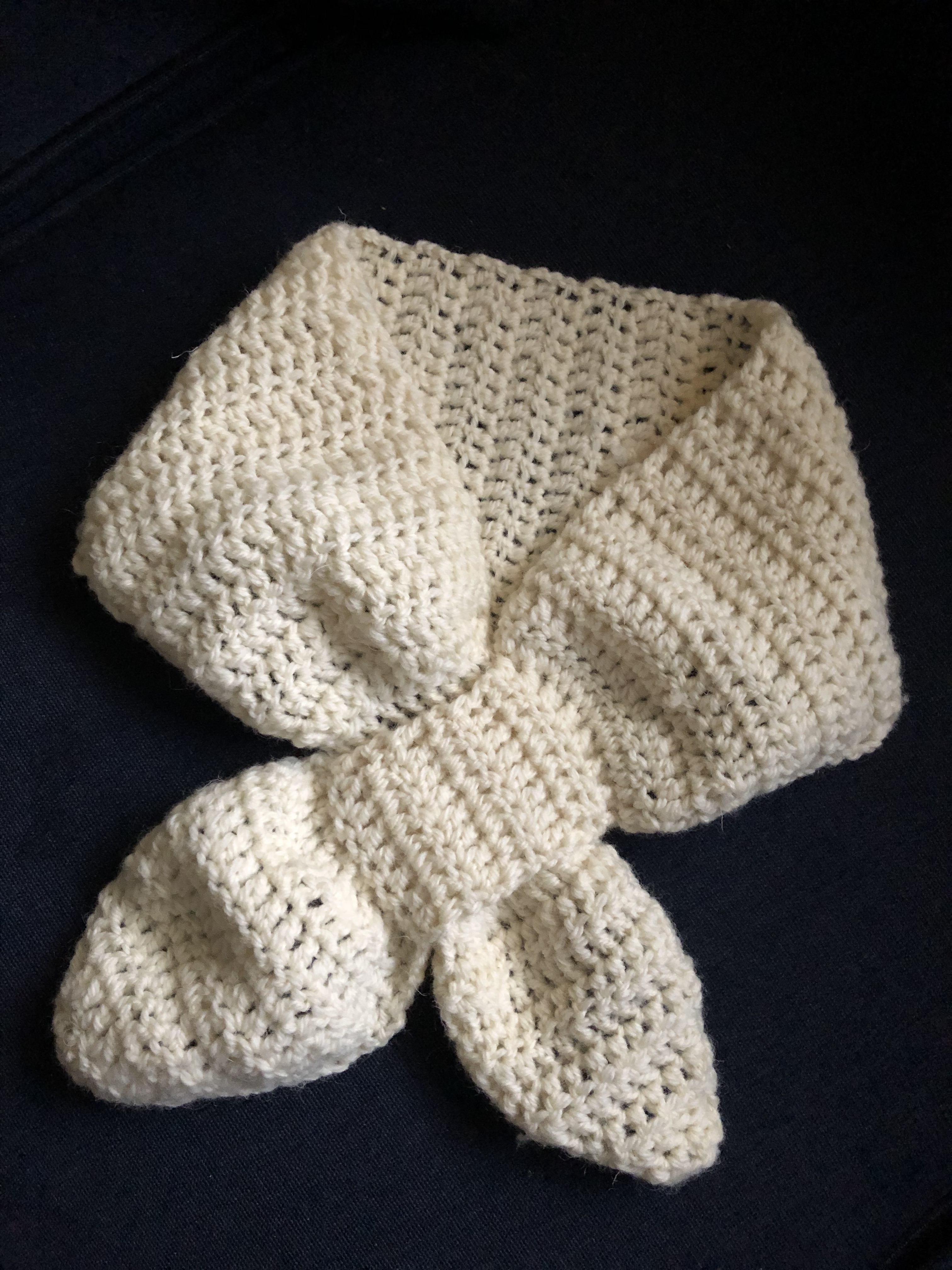
Crocheted Keyhole Scarf

Earlier this year I got a request to make a keyhole scarf (it can also be referred to as an Ascot scarf). It’s a short scarf that sits at the upper chest. As opposed to other scarves this style stays put because one end is inserted into the keyhole of the other. Since I truly had no clue how to make one I started looking for patterns online similar to the picture of the one requested. Once I found a pattern I set it aside figuring I would have time to make it by the deadline of September. Eventually I picked up the pattern to give it a good read over and instantly got worried. I wasn’t sure if I would be able to actually make it. The words leaf, keyhole and neck in the pattern through me for a bit of a loop. I decided though that I would practice on some extra yarn that I have stored away – I have a bin of yarn in my basement with remnants from past projects. I clean it out every now and then because I realized you don’t really need a few yards of random shades of yarn.

So, I picked a yarn that was similar in weight to the yarn I planned on using for the actual scarf. And I must say actually working on something with your hands as opposed to reading and imagining how to do it are so opposite. Once I had the yarn and crochet needle in my hand the pattern made sense and the scarf was a cinch to crochet. I decided to work thru the pattern from the first leaf, to making the keyhole and then a bit of the neck (all those words that through me for a loop at the beginning.) Once I got to a decent point I showed the sample to the recipient of the final product and they were happy with it. I then went and purchased the actual yarn.

And started working on it…

It took me less than a week (probably the quickest I’ve ever gotten a yarn project done – well, except for some ruffle scarves I made a few years ago. I was cranking out two a day after someone requested like 10 of them) and the scarf was done. This is a pic of the scarf just completed but before washing and blocking it.

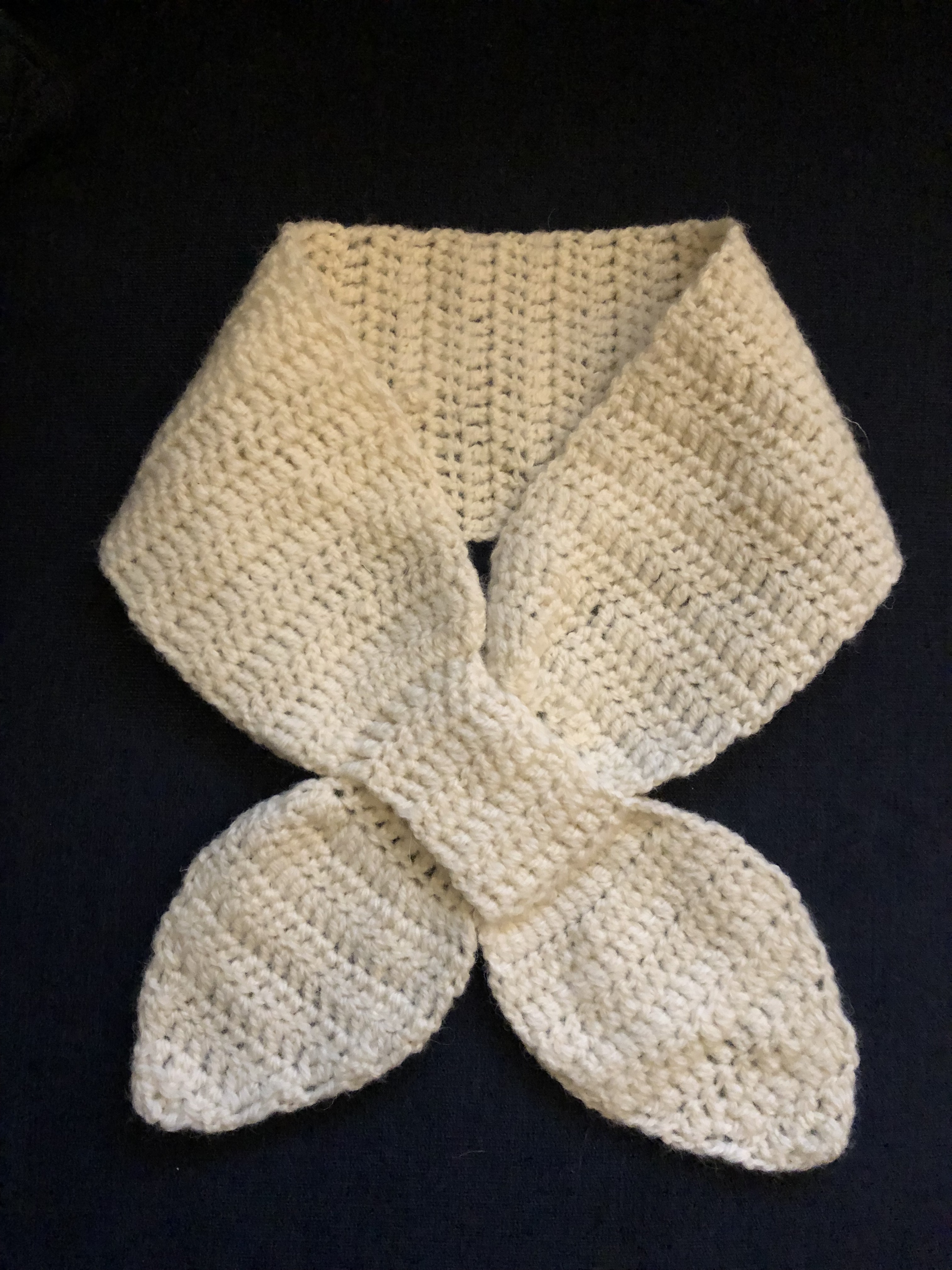
After washing and blocking the scarf it laid flat.

Here’s a pic of the keyhole…

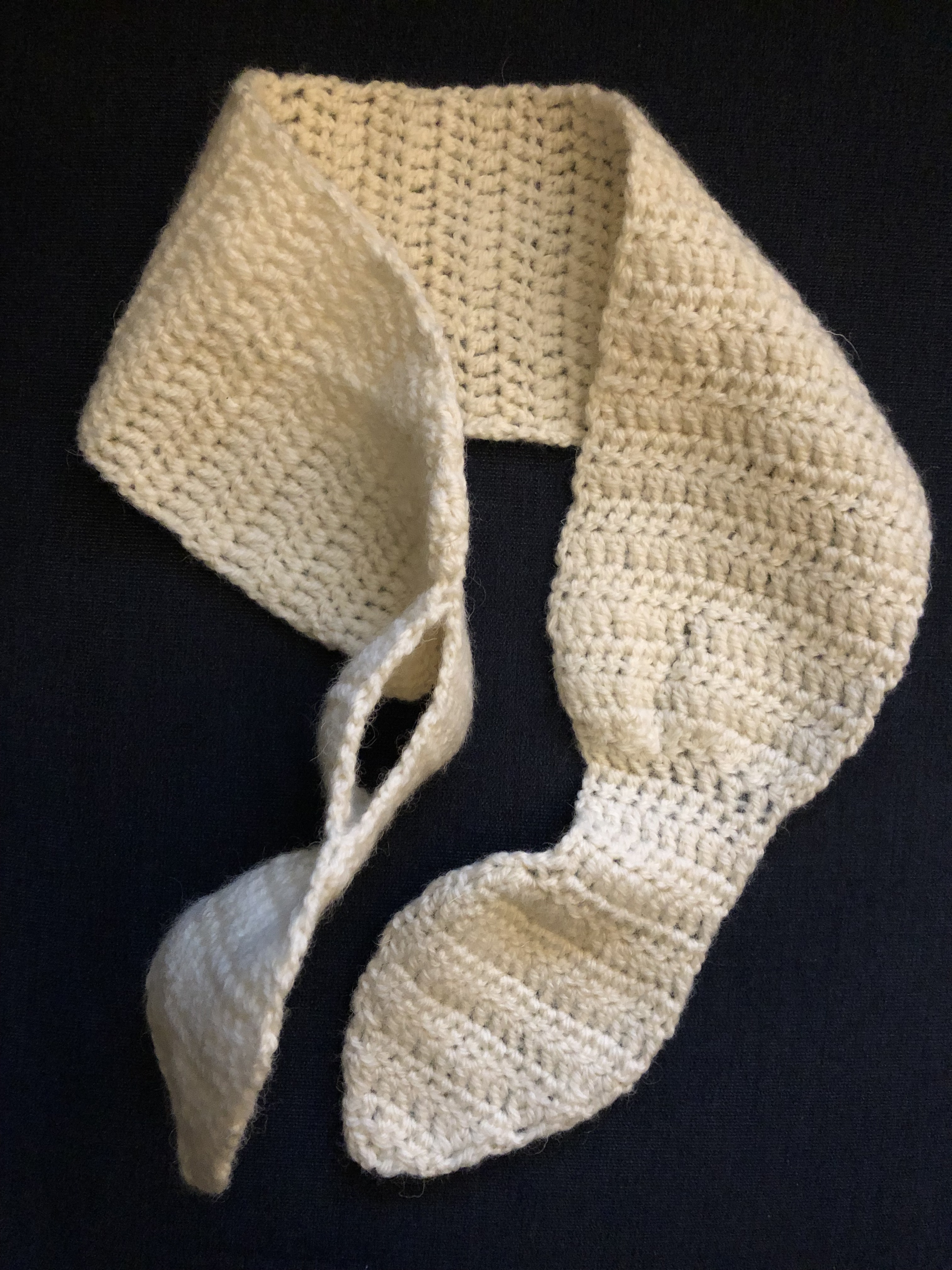
What the scarf looks like without one end being inserted into the other…

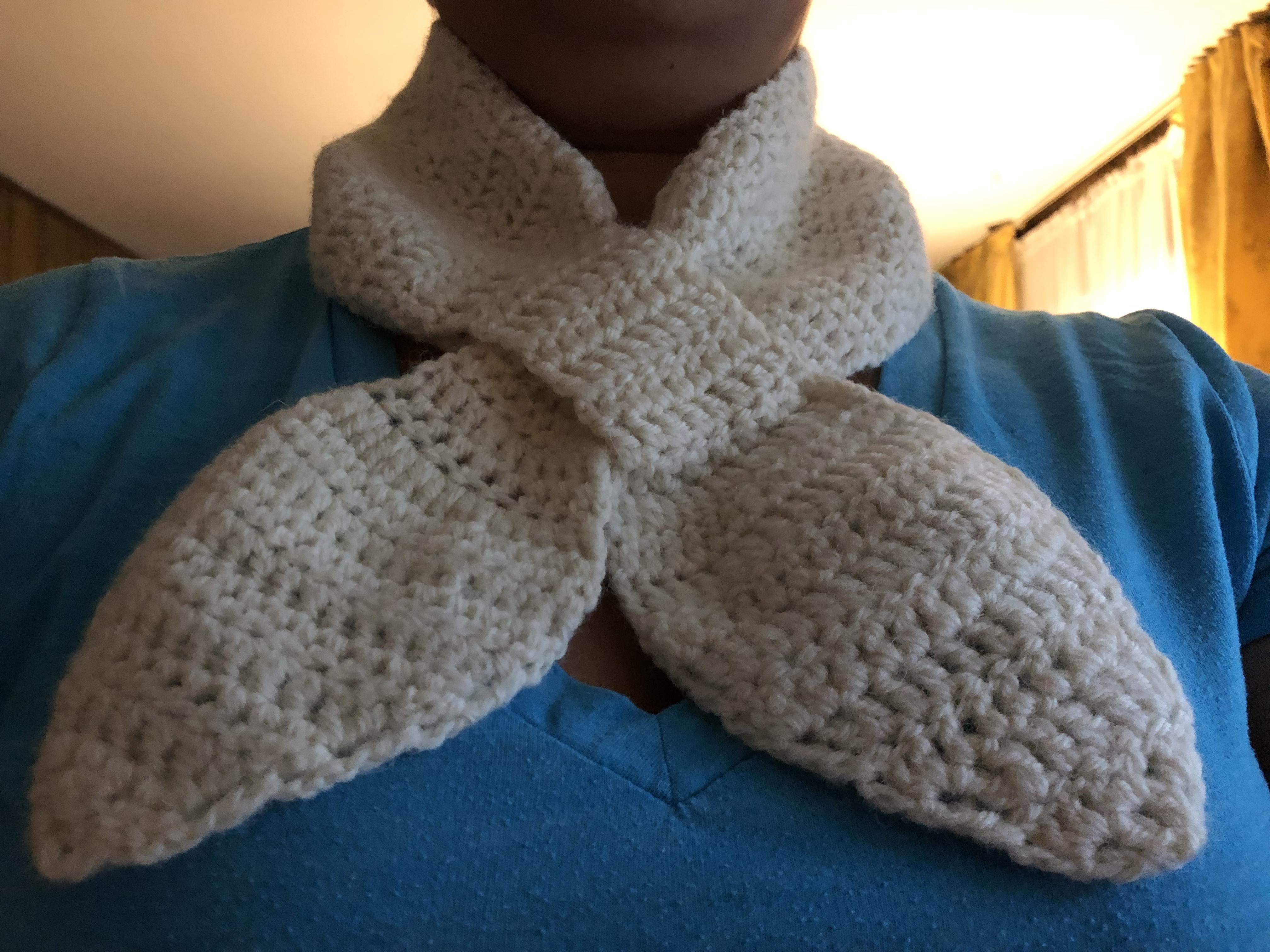
And a not so great shot of me wearing the scarf, but, it gives you an idea of how the scarf fits.

Most importantly, the intended recipient was delighted with it and is planning on wearing it on her upcoming Alaskan cruise!

Unfortunately I cannot share the pattern I used to make the scarf, but, if you would like to make it yourself the pattern I used was the Rita Ascot Scarf by Emily Johannes.