Granny Square Blanket

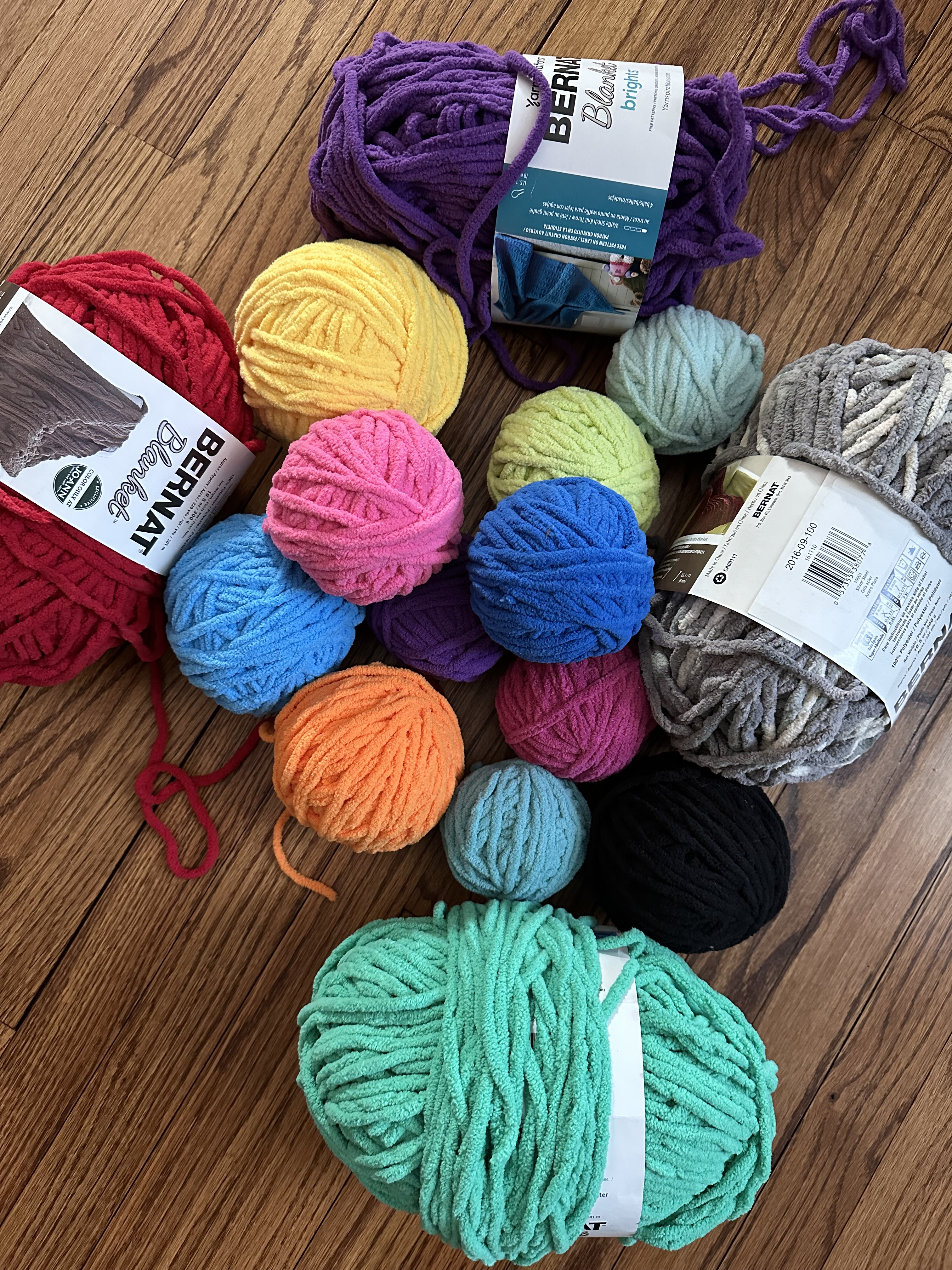
Recently I decided it was time to clean out my yarn stash. While some crocheters/knitters may save every bit of their scrap yarn, after a while I feel the need to purge it. Often, it’s not enough yarn to do anything with. I have thought about making a yarn ball wreath – I made one years ago for Christmas – but I just haven’t gotten around to it. I have a laundry list of yarn projects I want to make, and it just keeps getting longer.  While going through my yarn I noticed that I had quite a bit of Bernat Blanket Yarn leftover from numerous projects in an array of colors. Since it was so much, I thought to myself that there had to be something I could make with it. Of course, the best thing was a blanket. It is called Blanket Yarn after all.
At first, I wasn’t sure what pattern I wanted to use. I thought maybe doing a simple pattern and using each color haphazardly until it ran out and then moving on to the next color. But when I envisioned that it didn’t look very aesthetically pleasing. So, I decided the best way to use up the yarn and to make a somewhat cohesive looking blanket would be to make a bunch of granny squares and then stitch them together. Which I was a bit apprehensive about because I am like most crocheters… weaving in ends is my least favorite task when it comes to crocheting and there would be a lot of ends to weave in with this pattern. Which could have meant that this project could have sat for quite some time once the squares were done. Thankfully, I am trying to be more proactive when it comes to weaving in ends, so it doesn’t seem like such a daunting task at the end of my project. I’ve started to weave as I go.  Which has been helpful and has made some of my recent projects go a little quicker.

Initially I thought I would make some of the granny squares multicolor, but after making a few of them and laying them out with the solid color ones I made I didn’t like how it looked. So I decided to stick with making all the squares a solid color.
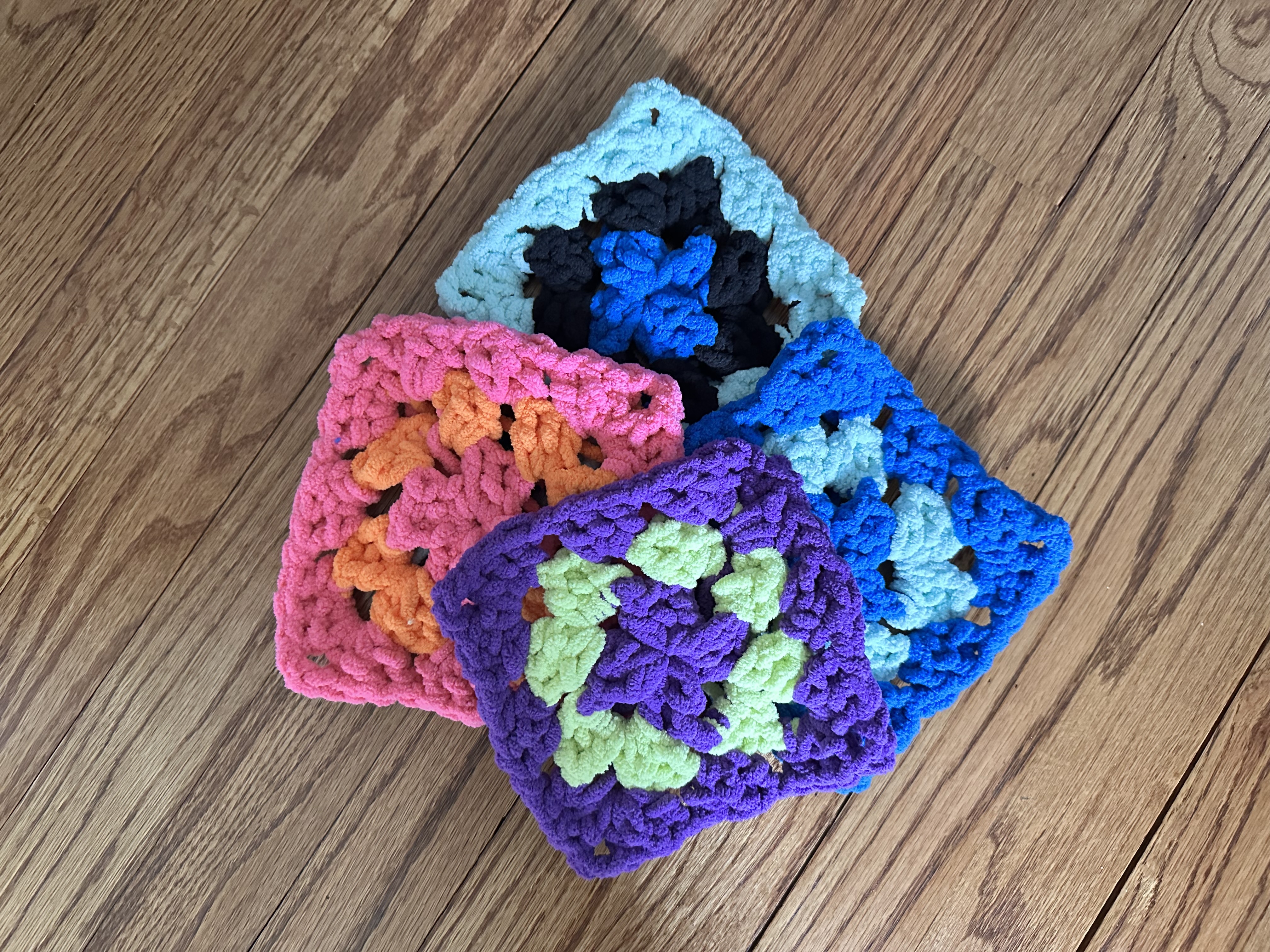
Which meant that I did have to buy a few skeins of yarn to make sure I had enough yarn to make all of the squares I would need. Thankfully (but unfortunately) I was able to get them at JoAnn’s during their going out of business sale at a discount. This also meant that it was easier for me to create a somewhat pattern with the squares.

So, once all my squares were done (and the ends weaved in) I began to lay them out to figure out the best position for each of them.
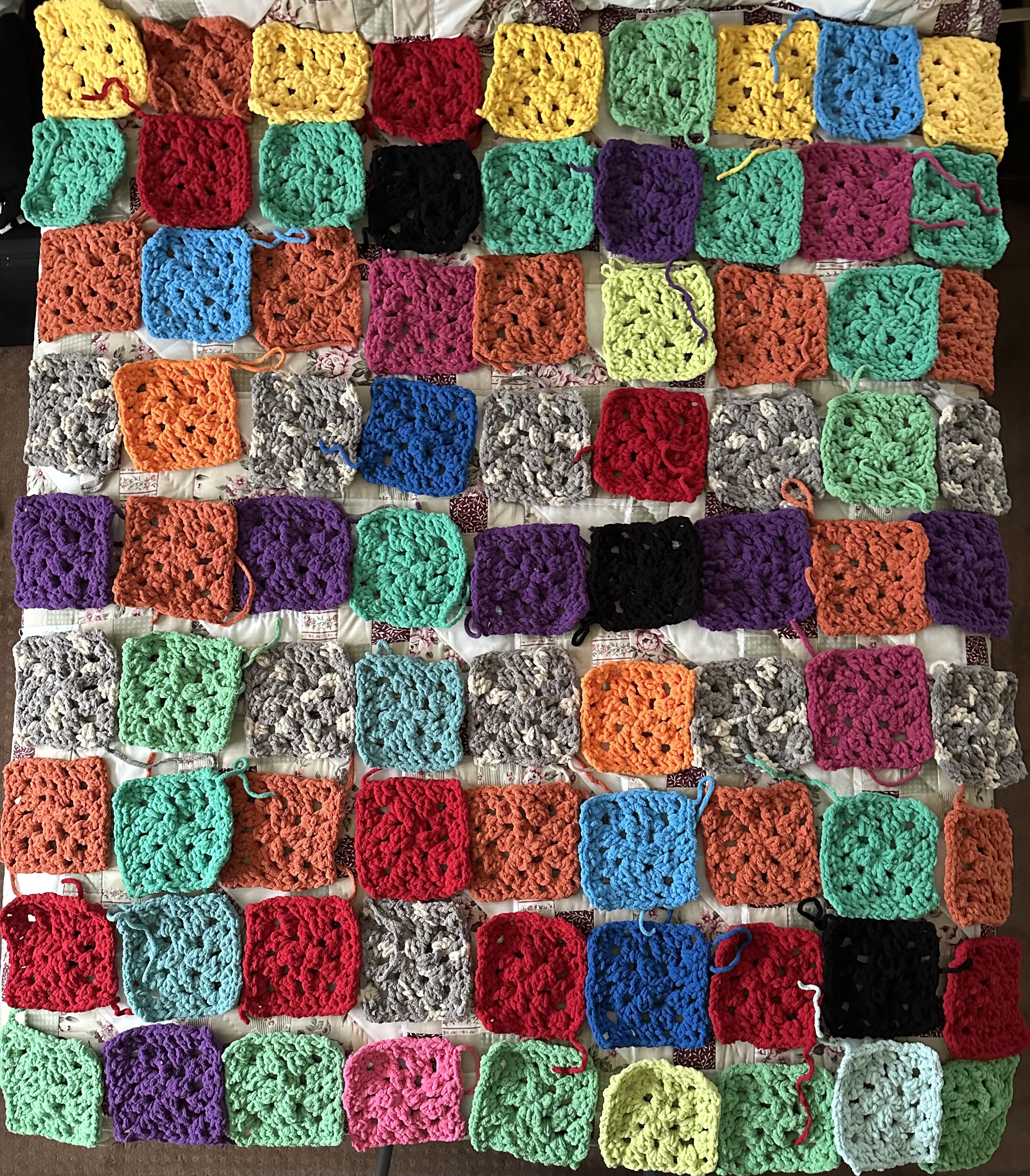
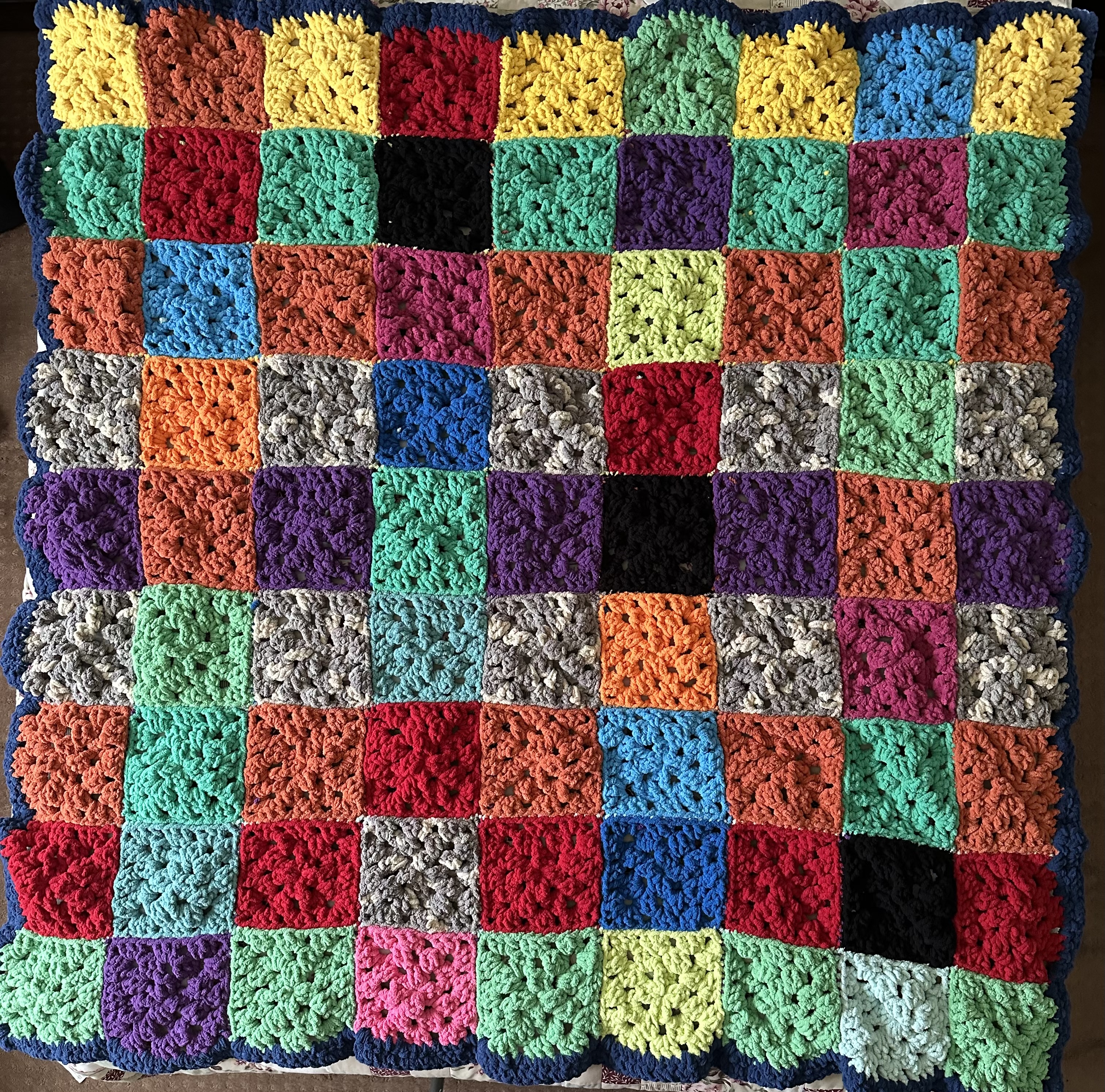
Once I was happy with the placement of all the squares, it was time to sew them together to form the rows and then sew all the rows together to finish the blanket. One thing I noticed about the yarn while making the squares was that even though they were all the same weight (Super Bulky) the texture was a bit different for some of the colors. Some of the yarn I’ve had for over 5 years, and I am thinking that over the years the manufacturer has made the yarn a bit smoother/silkier. Which kind of left the border of my blanket looking a little wonky and unfinished. So, after all the squares were sewn together, I decided to add a simple border in a contrasting color. I was very happy with the final product.
Crocheted Pumpkins

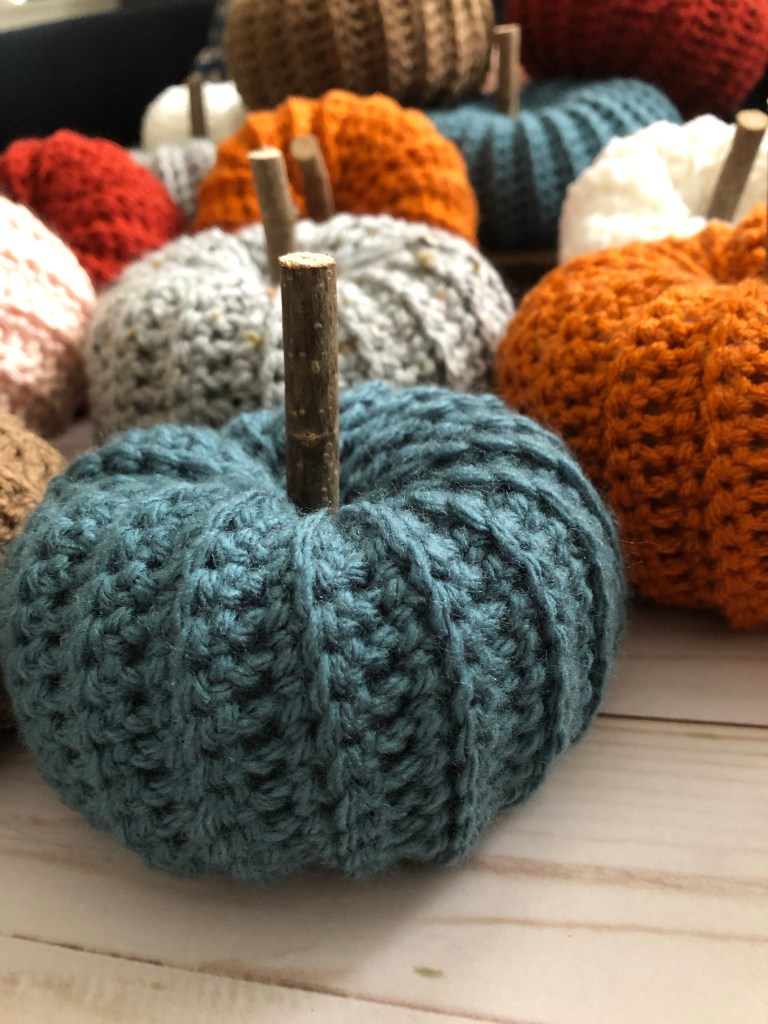
Come every September I want to learn how to make crocheted / knitted pumpkins. They start popping up on my Instagram feed and I think to myself “I want to make those.” But then it never happens. I look at patterns and they just seem way too complicated or I just lose track of time and I get into Christmas mode instead. This year I was determined though.

I initially found one pattern that I thought was going to be a winner. I am not sure if I did something wrong or maybe it was the yarn I used, but, when it came time to sew what I had crocheted into the pumpkin it was a fail. I had crocheted something that sort of resembled a piece of hard candy in a wrapper. Think, wide in the middle and then tapering off on both ends. I followed the pattern and sewed it together but when it came time to stuff it with the fiber fill there was no way to make that thing look like a pumpkin! I wasn’t throwing in the towel just yet though.

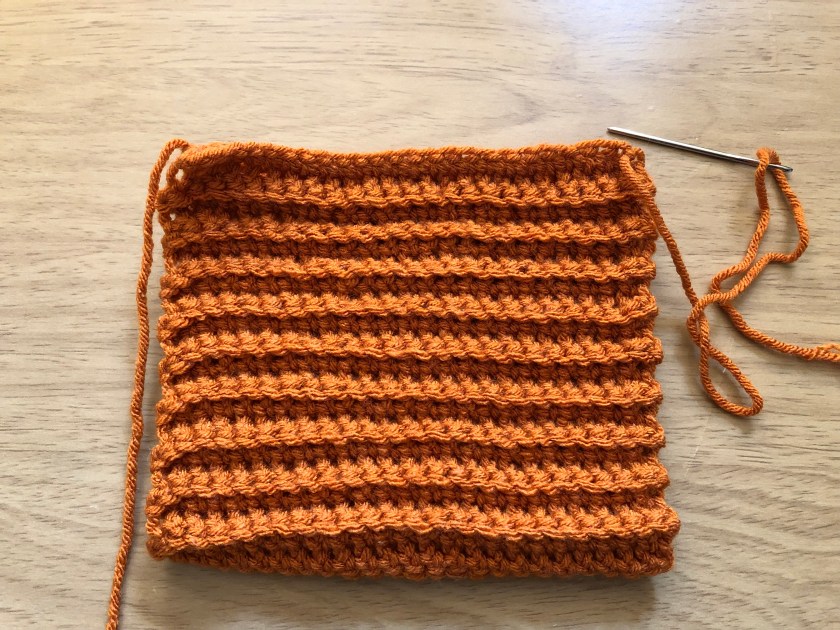
I read over some other patterns and watched a video or two and figured out the best way was to crochet a rectangle and then form that into a pumpkin.

What’s great about this pattern is that gauge doesn’t matter and you don’t have to count rows. I am going to show you a nifty way to know when you have crocheted enough rows. As for the crochet hook size you should use, I would go with the size that is suggested for the yarn you decide to use. That’s what I have been doing. Just realize depending on the yarn weight you use that will determine the size of your pumpkin. You could start with the same length of your foundation chain with a chunky yarn and medium weight yarn and end up with two pumpkins that are completely different sizes.

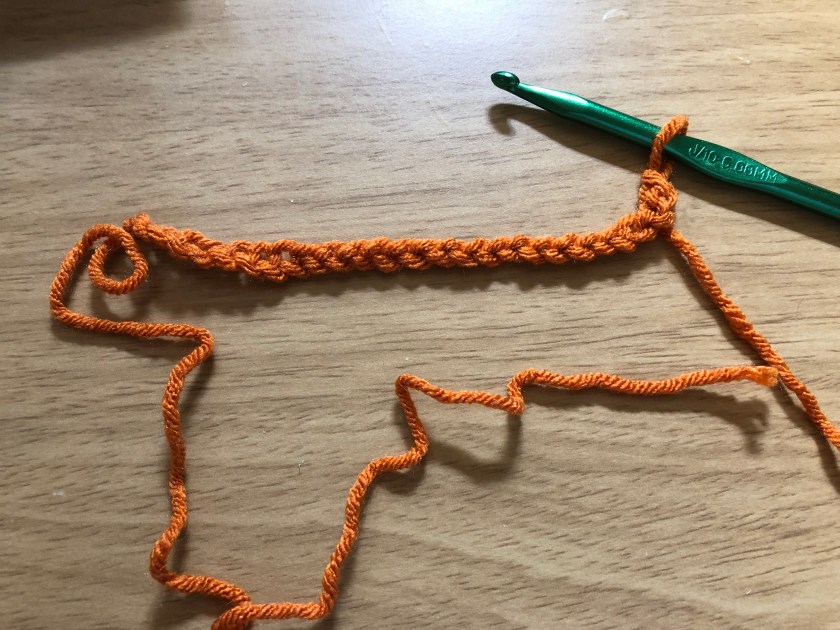
Start by crocheting your foundation chain. Since the yarn I was using was a medium weight and I wanted a decent size pumpkin I started with a foundation chain of 25. I left a long tail since the tail is used to seam the rectangle together.

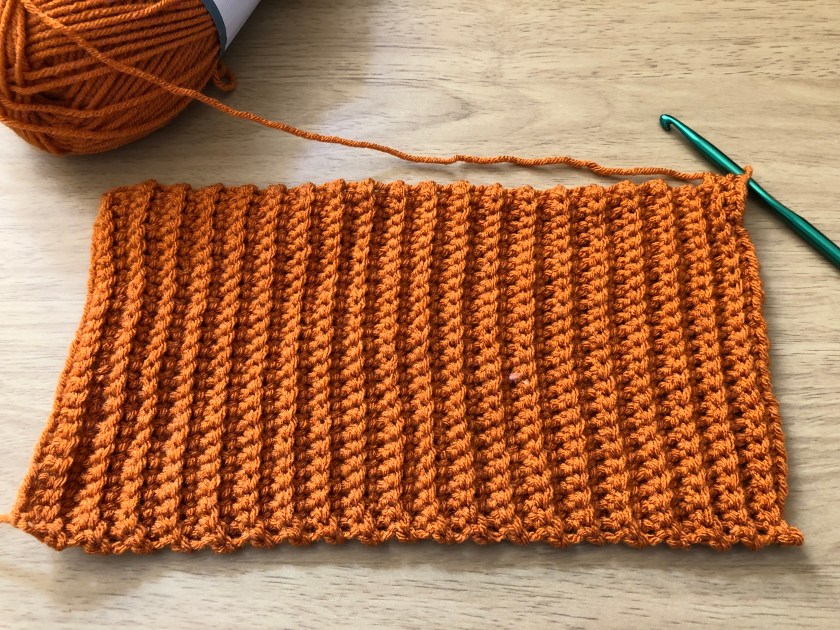
For the first row, starting with the second chain from your hook, single crochet in the back loops of each chain across the row.

For the second row and each subsequent row, ch1 and single crochet into each back loop across the row.

And, as I mentioned, there is no need to count your rows as you go. To determine if you have crocheted enough rows simply do this…

Lay your rectangle flat…

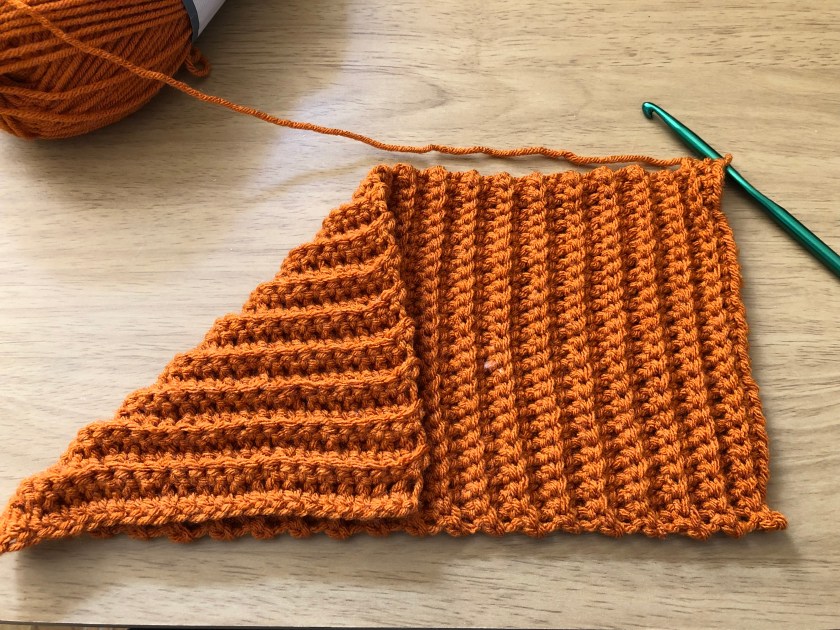
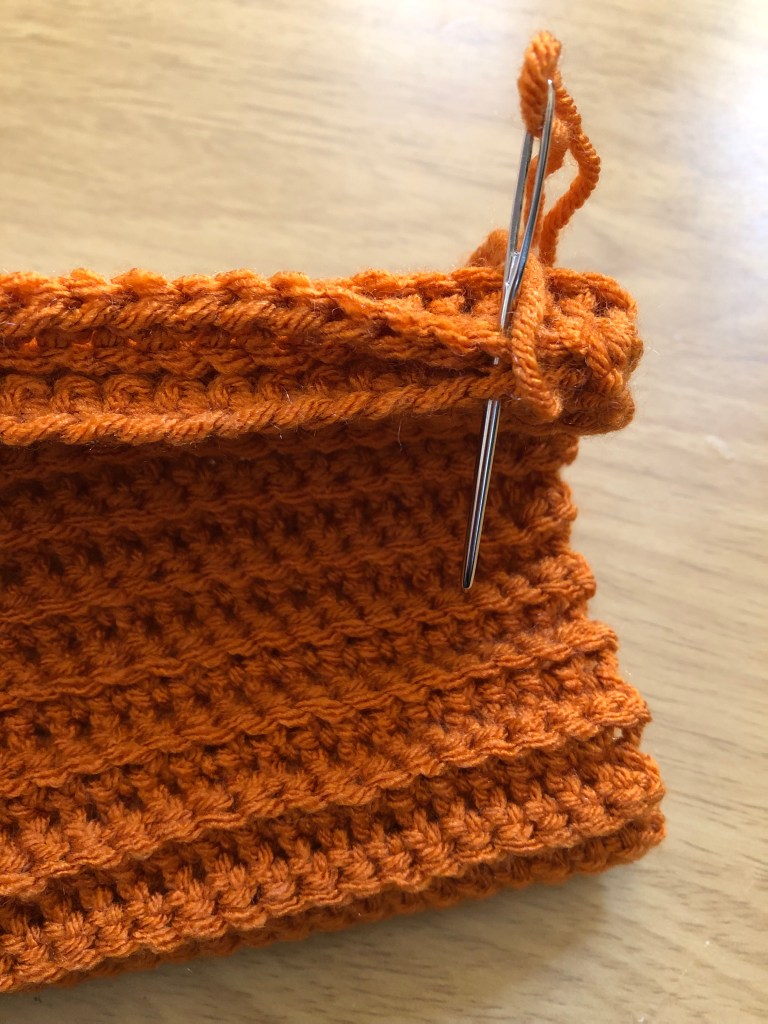
With your working row on the right, fold by bringing the top left corner of your work down to the bottom of your work to form a triangle.

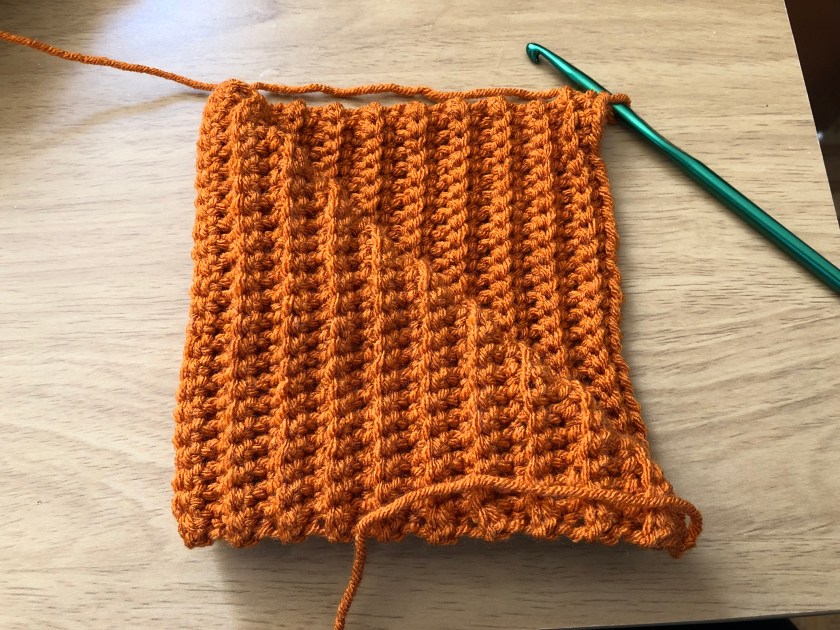
Next, fold the triangle piece to the right. Once the bottom corners of the two ends meet you have crocheted enough rows. At this point you can end your row, but, be sure to leave a long tail as this tail will be used to seam the pumpkin. This tail should be longer than the tail you have from your foundation row.

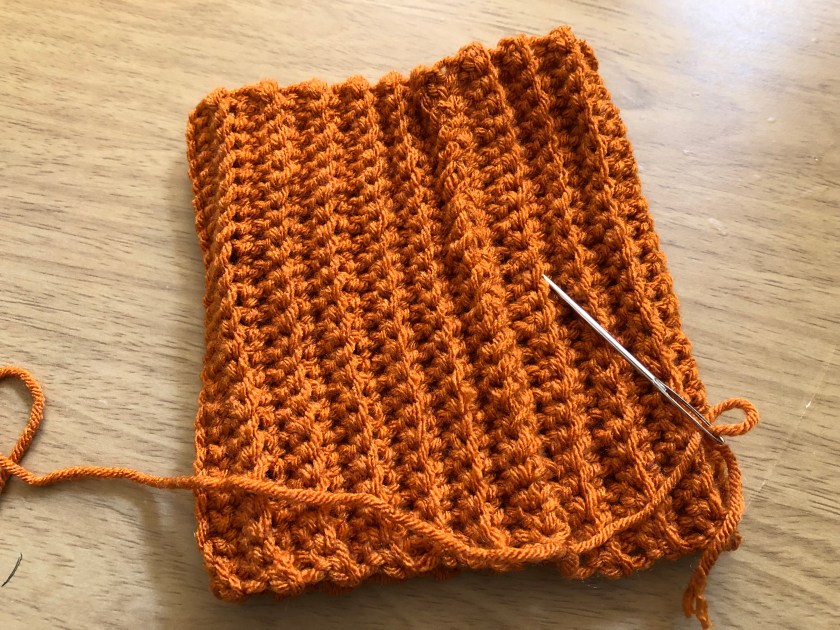
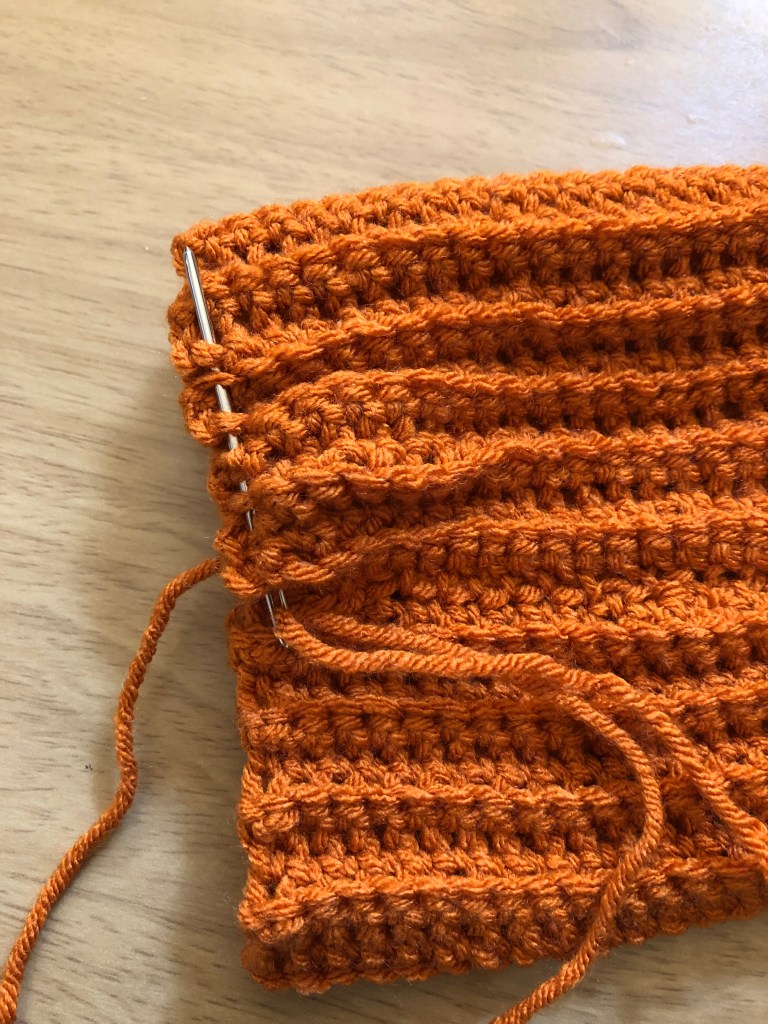
Now that you have your rectangle it’s time to make your pumpkin. Fold the rectangle in half with the short ends meeting, and thread a needle on the tail from your foundation chain. Or, the shorter of the two tails. And just seam up the two sides. Make sure as you are seaming the edges that they are meeting up at the corner you are working towards. Once you are done, weave the tail through the work and end it. Since you want to hide this seam, you want to turn your project inside out for the finishing steps.

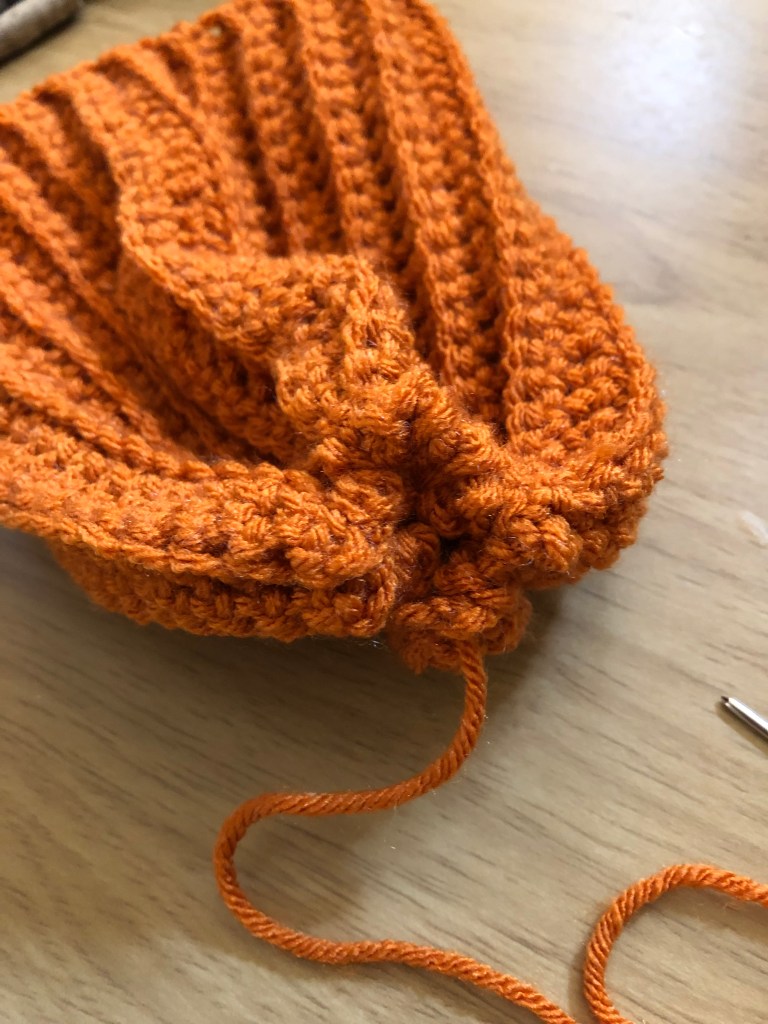
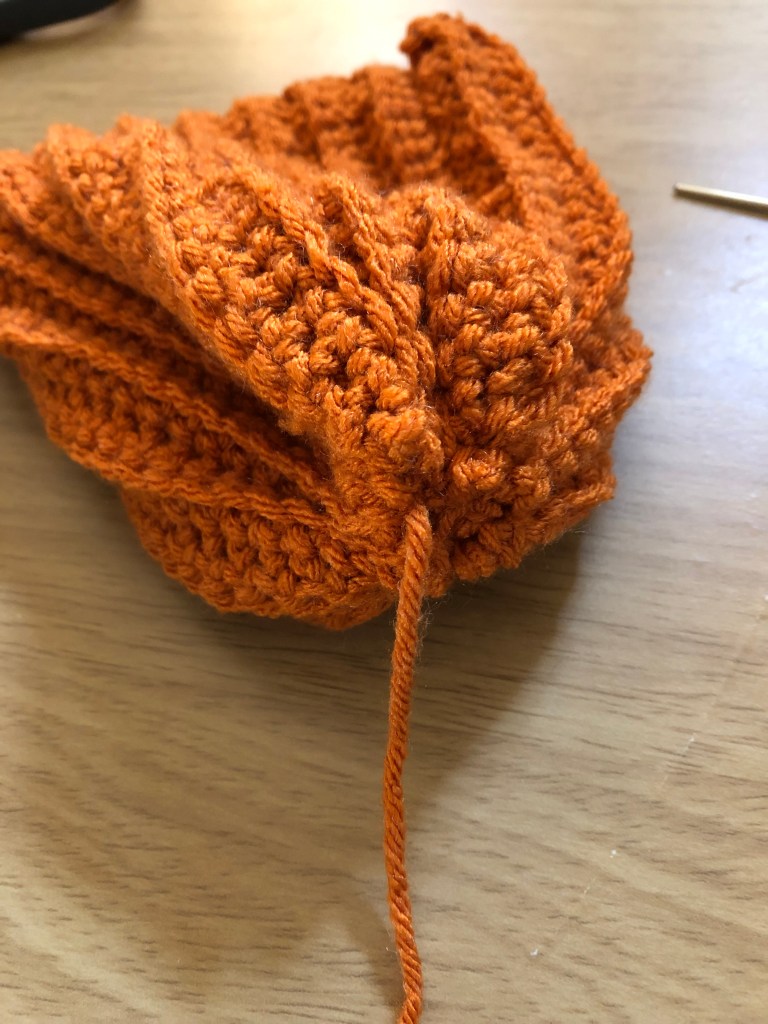
Thread your needle on the other tail and you are going to weave the yarn near the top edge to essentially create a drawstring to cinch the opening. Once you have weaved the yarn around the entire edge pull the yarn tight to close the hole. You will still have a slight opening. To close it you are just going to stitch the yarn from one side to the other to make sure the hole is completely closed. Do not end the tail.

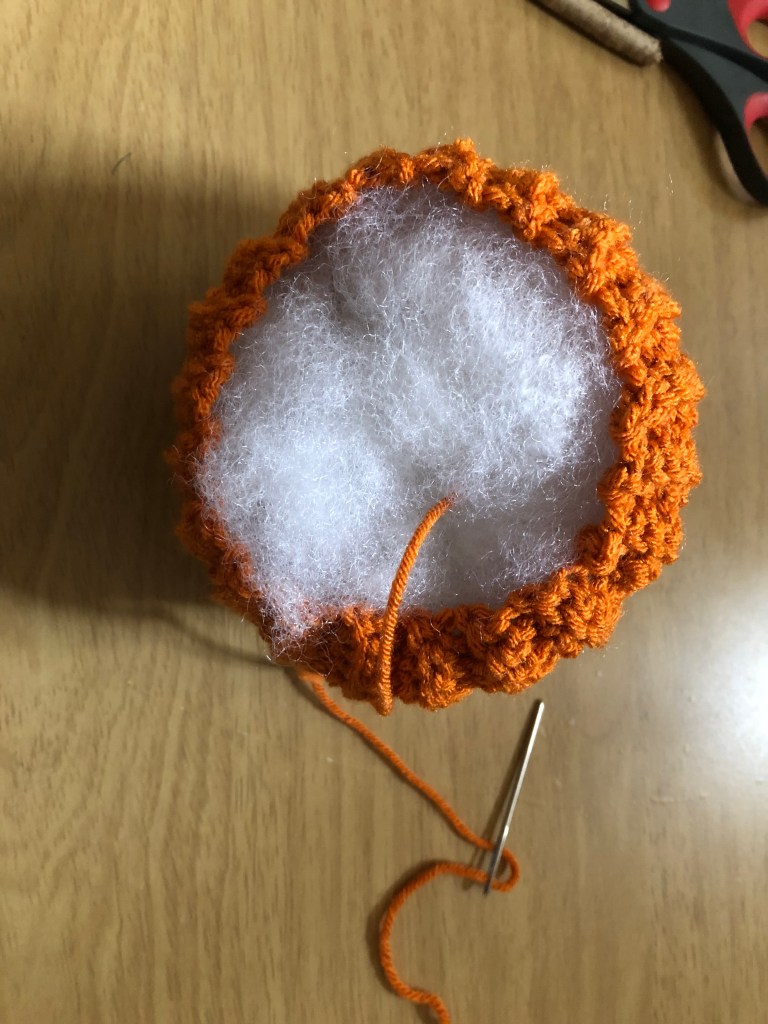
With one end stitched closed you can now fill the pumpkin with fiber fill. Stuff it with a good amount so your finished pumpkin is firm and full. Pass your needle with the working tail through the center of the pumpkin and through the fiber fill.

Stitch the top of the pumpkin in the same manner as you did the bottom to close it.

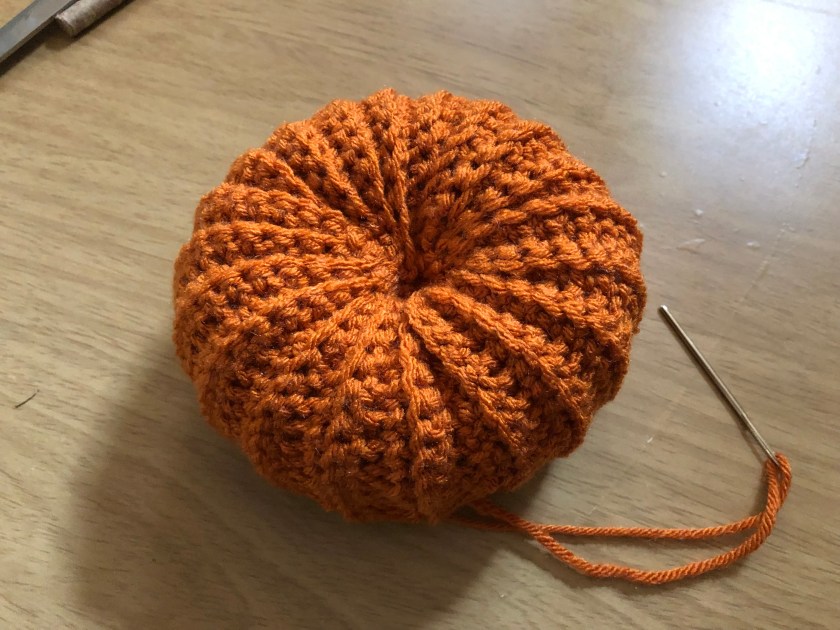
You can leave your pumpkin like this, or, to give it a more “smooshed” look you can stitch the working tail through the center from the top of the pumpkin to the bottom a few times, ending with the bottom and then weave the tail through a few stitches on the bottom and end it.

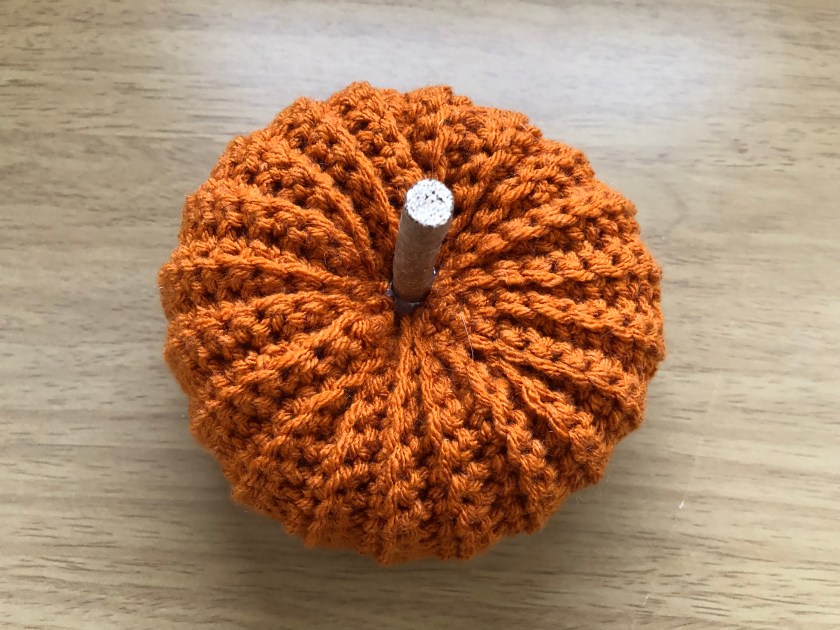
Finally, your pumpkin needs a stem. You can either use decorative stick, that you can pick up at your local craft store, or a cinnamon stick. Just stick it in place with a small dab of hot glue.

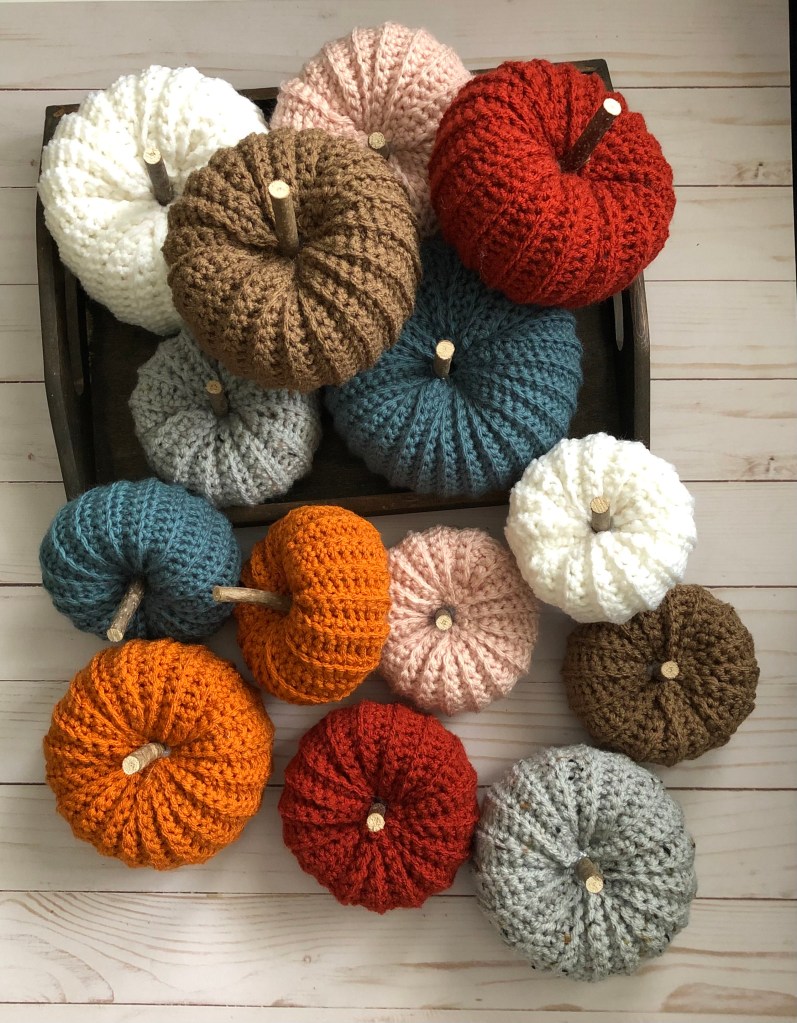
And there you have it, a simple handmade pumpkin.

I had so much fun making these that I ended up making some to list in my Etsy shop.

Knitted Tube Socks

Before the pandemic started and everything shut down, I was taking crocheting/knitting classes at my local library to learn new patterns and get together with other yarn crafters. Before the pandemic ended the classes I learned how to make crocheted market bags and had just started a class to make a Knitted Keyhole Scarf. What I was excited about though was that I was finally going to learn how to knit socks. It’s something I have been wanting to learn for a while but whenever I read the patterns, they made absolutely no sense to me. I had unfortunately missed the class to learn how to make socks, but the teacher was willing to show me during one of the classes and gave me a pretty easy pattern to follow. A tube sock pattern that didn’t require me to knit a heel, which apparently is the hardest part of making socks. So, I bought the knitting needles I would need (size 3 9-inch circular) and already had the yarn and then classes ended, but I was still determined to learn how to make them.

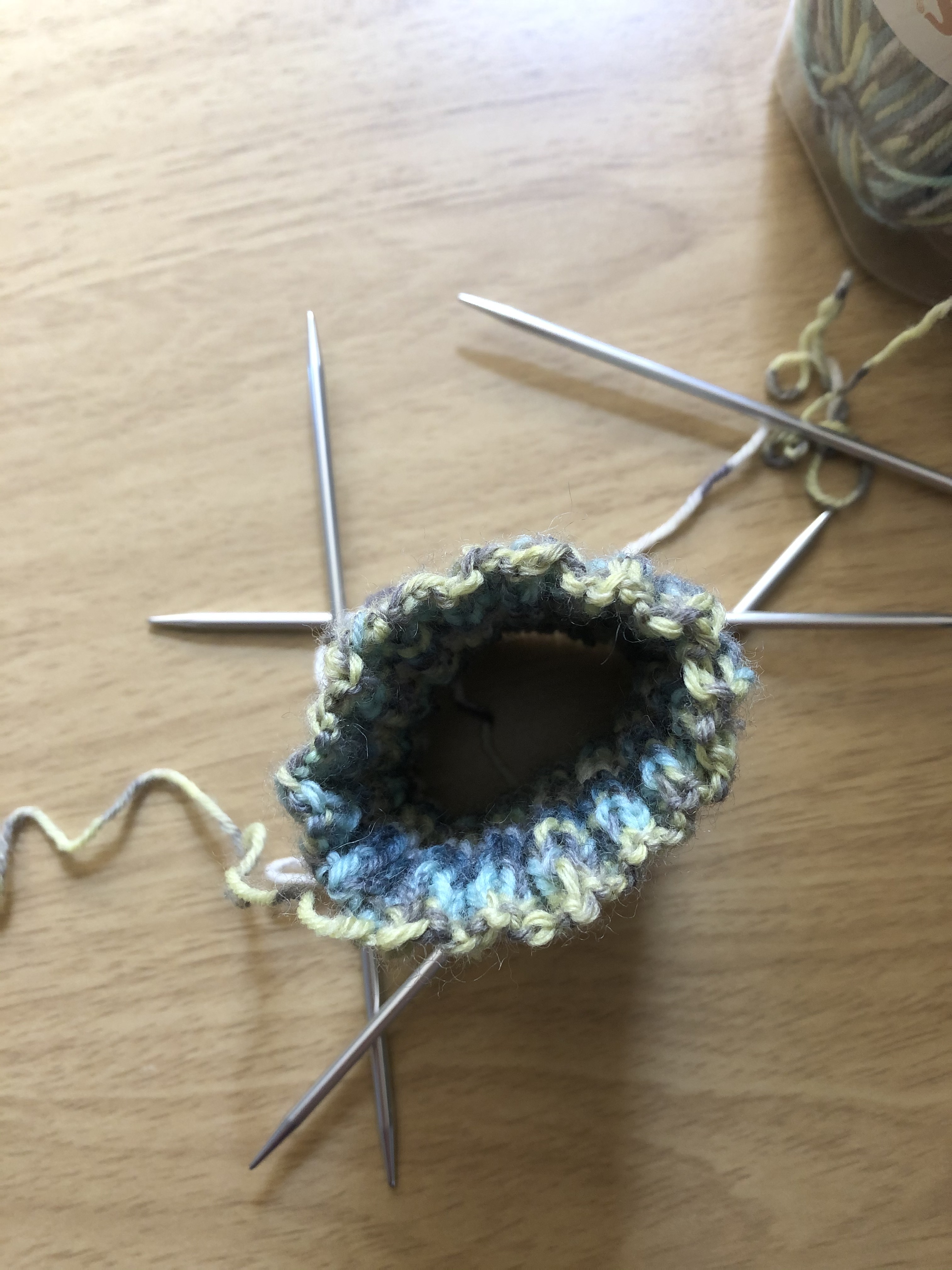
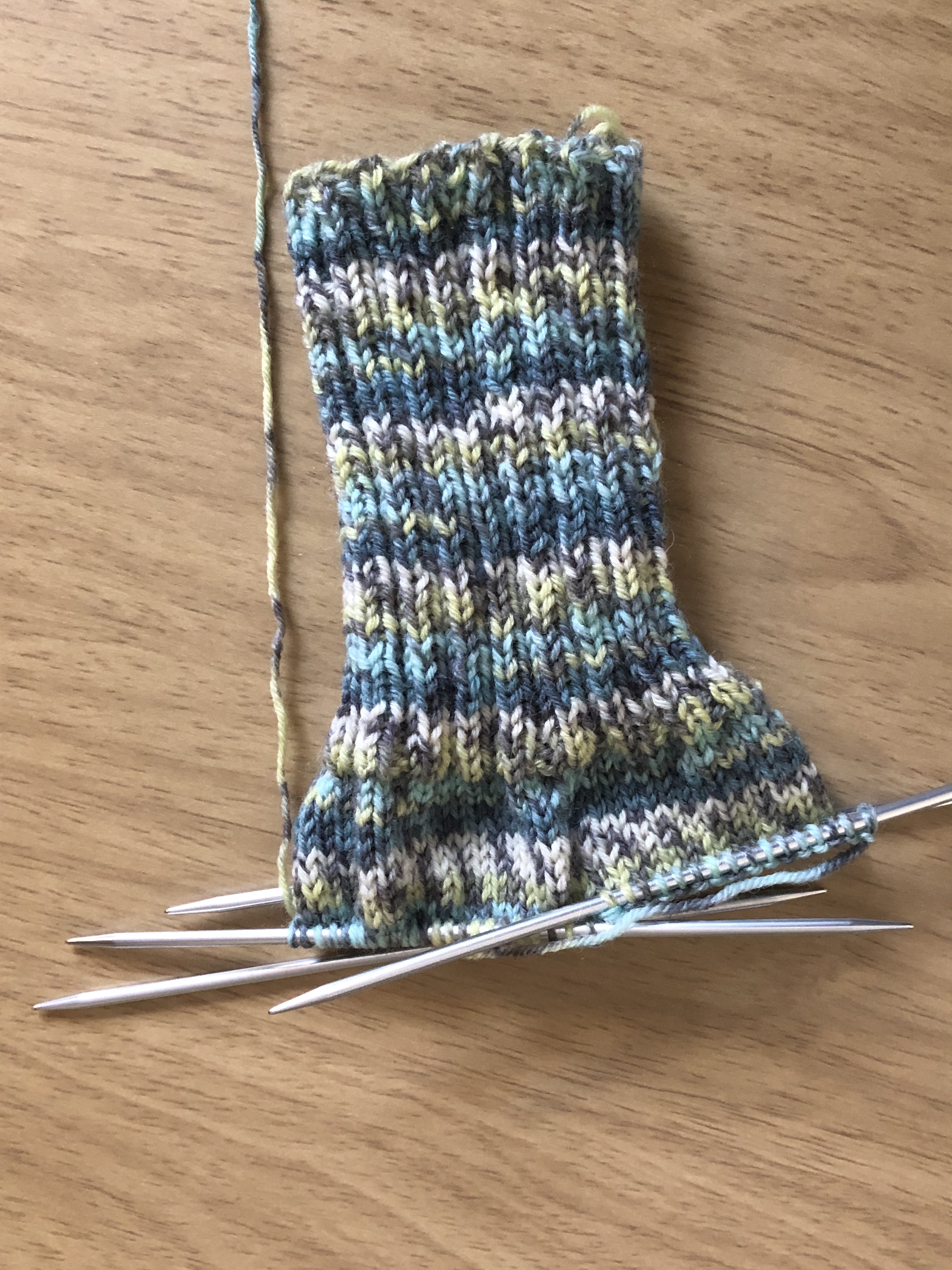
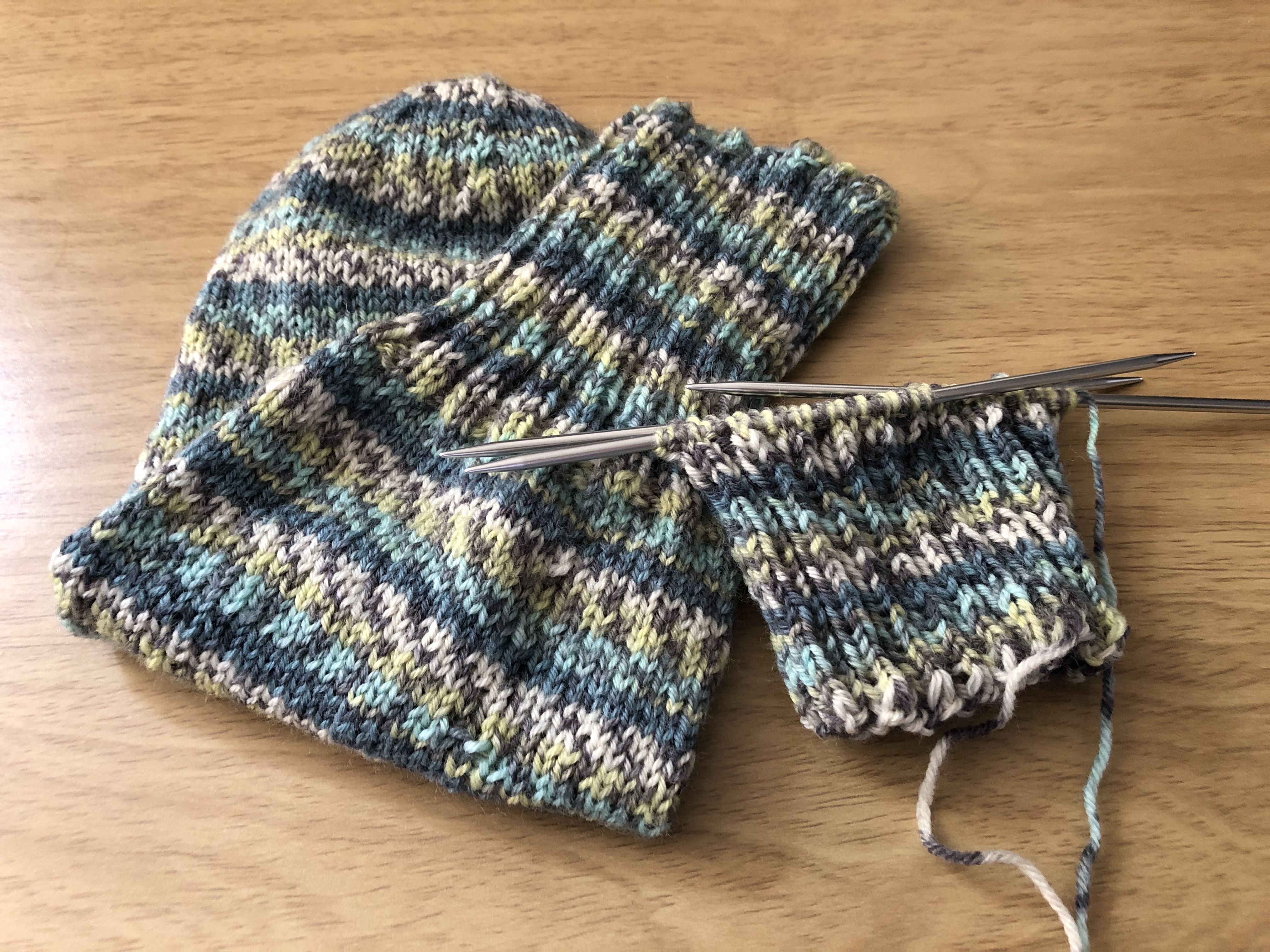
Thanks to YouTube, I was able to figure out how to start the socks. Using the short-cabled knitting needles I casted on 64 stitches and then divided those stitches among three double-pointed knitting needles. I then worked in a K2, P2 ribbed pattern for five inches to make the cuff of the socks.

Next, it was time to work on the body of the sock. And it couldn’t have been easier, I knit every row until the sock measured 13 inches from the beginning.

To finish the sock, I had to shape the toe. The directions on the pattern I had weren’t that easy to follow, but after a few Google searches I was able to find a toe shaping pattern that would work for the tube sock I made and was easy enough for me to follow.

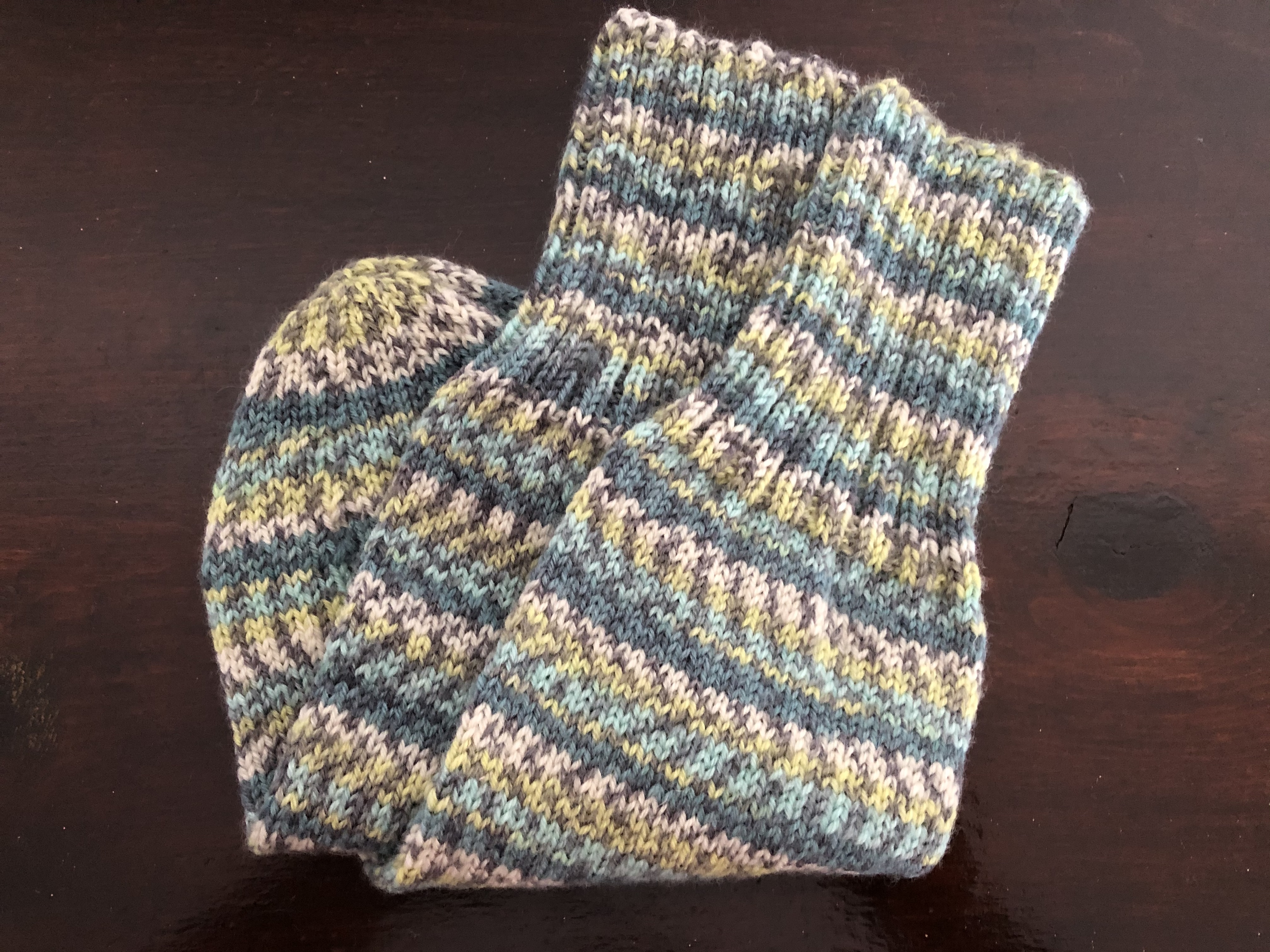
And once I finished, I had a cozy tube sock that will be perfect for the upcoming cold weather. And since I had worked out some of the kinks in the first sock, my second sock was a lot easier to work up.

My new pair of socks…

Knitted Tube Socks

Materials:

100 grams / 3.75 oz Sock Yarn*

Set of 4 US 3 Double Pointed Knitting Needles

Size 3 9-inch circular needles

*I used Patons Kroy Socks Yarn


Directions:

Using the circular needles cast on 64 stitches loosely.

Divide the stitches among three double-pointed needles: 24 stitches on the first needle, 24 on the second needle and 16 on the third needle. Join in round.

Using the 4th needle begin working in K2,P2 rib. Work the ribbing for 5 inches. You can make the ribbing shorter or longer based on your preference.

Knit every round until the sock measures 13 inches from the beginning.

Shape the toe as follows:

Round 1: K6, K2 Tog

Round 2-4: Knit 3 rows

Round 5: K5, K2 Tog

Round 6-8: Knit 3 rows

Round 9: K4, K2 Tog

Round 10-12: Knit 3 rows

Round 13: K3, K2 Tog

Round 14-16: Knit 3 rows

Round 17: K2, K2 Tog

Round 18-19: Knit 2 rows

Round 20: K1, K2 Tog

Round 21: Knit 1 row

Draw the yarn through the remaining stitches and fasten to secure. Weave in ends.

Wash and block to shape.


Crocheted Tote Bag

You may recall a little over a month ago I posted about having trouble mastering (really just figuring out) the Magic Ring in Crochet. I was making a bunch of hexagons – which by the way has been put on hold as I haven’t been able to get 4 skeins of the shade of green I want from any of my local craft stores, seems like I will have to order it online – and the starting point was to make a magic ring and it just wasn’t working out for me. So, I ended up bypassing this step and in lieu of it made a short chain and joined it with a slip stitch to get my hexagons going. Well, fast forward a week or two and once again I was faced with a pattern that required a magic ring as the starting point. The thing is though, I couldn’t crochet a chain and join it with a slip stitch as this project was for a tote bag and a small hole in the bottom of a tote bag could prove disastrous for any small items in the bag. So, I had to bite the bullet and figure this out once and for all. It’s really not as serious as it sounds to be honest, but, the thing is with crocheting (and knitting) the more stitches and techniques you learn the more items you are able to make and the easier it is.

So, I attempted the magic ring once again and guess what… I actually got it. And, I figured out why I was having issues with it before, the yarn I was using was too thin. Not for the project, but for me to figure out how to make the magic circle. Maybe I wasn’t holding the yarn with enough tension or something, but, I just couldn’t get it before. The yarn I used this time was Lion Brand Wool-Ease Thick & Quick Yarn. A super bulky yarn that comes in an array of colors and one that I have used quite a few times before to make scarves and blankets.

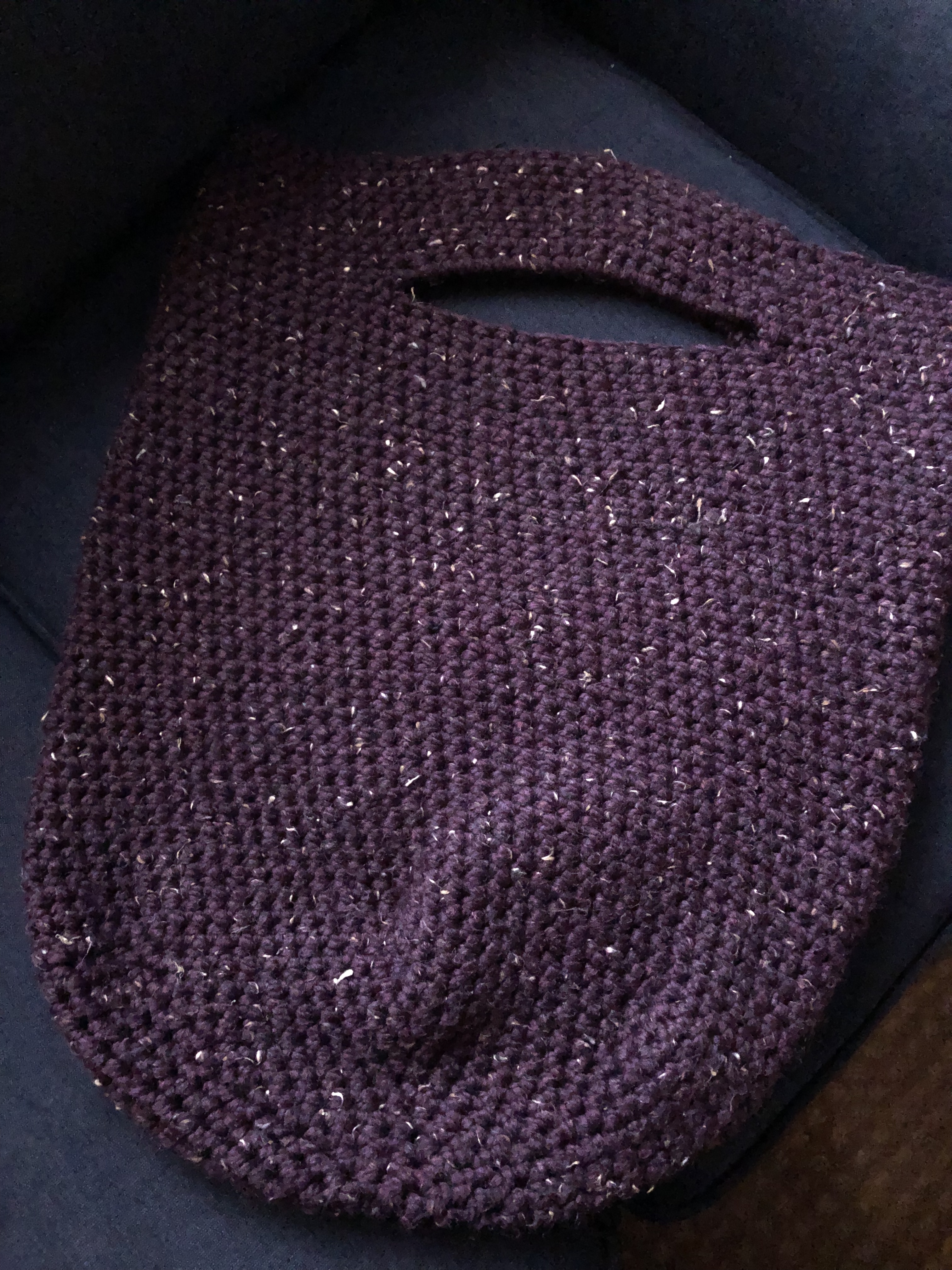
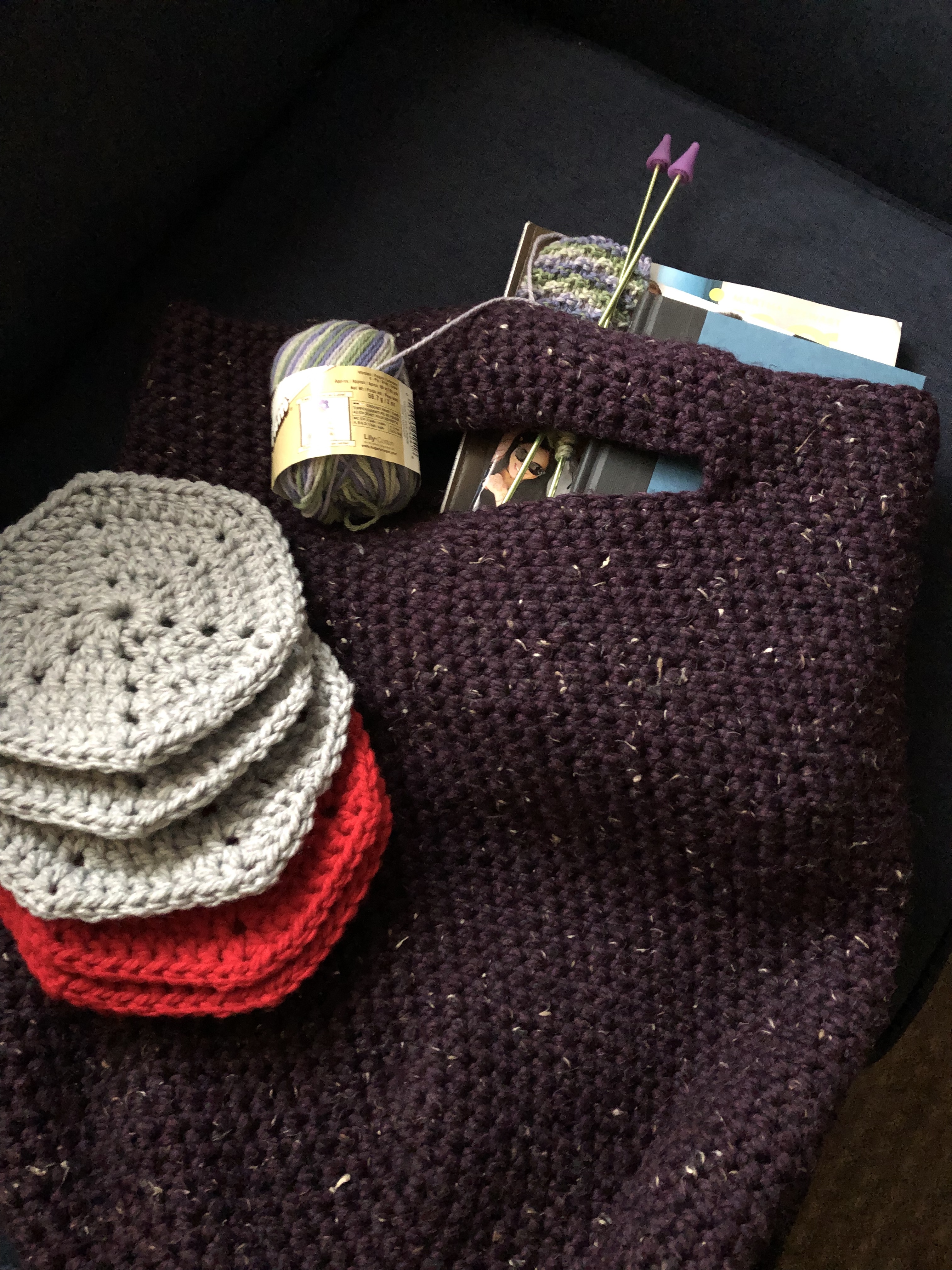
After all this set-up, you may be wondering what exactly it is that I made. Well, I did mention it was a tote and below is a picture of said tote. The pattern is from Two of Wands and is called The Red Hook Afternoon Shoulder Bag. You can purchase the pattern on her blog or purchase a kit on Lion Brand’s website. Initially I was thinking of using a more muted color but, when I went to buy the yarn I was drawn to this raisin color. While I haven’t actually used my tote yet, I am thinking it might be perfect for carrying around yarn projects as I am working on them. Or, for carrying around the plethora of magazines I get every month (and week) that I never seem to have time to fully read. I’ll admit while I was working on this I was unsure at times if I was getting it right… Especially in the beginning when I was increasing each round (and may have missed or added a stitch or two), but, once I got about midway through the project I knew that it was turning out okay. And it sounds silly, but, once I completed the opening for the handle I was quite pleased (and excited). I think it’s the idea of learning new steps, it opens your mind to creating other projects and seeing things differently. All of sudden I understood how to make a button-hole if a pattern called for it.

It’s the perfect size for me to carry around yarn projects, a book, magazines, etc…

Now I just need to stitch together the rectangle I finished three years ago so it can resemble a cardigan that I can actually wear. Oh yeah, and get those final 4 skeins of green yarn so I can finish my new Christmas Tree Skirt before Christmas this year!


T-shirt Yarn Infinity Scarf

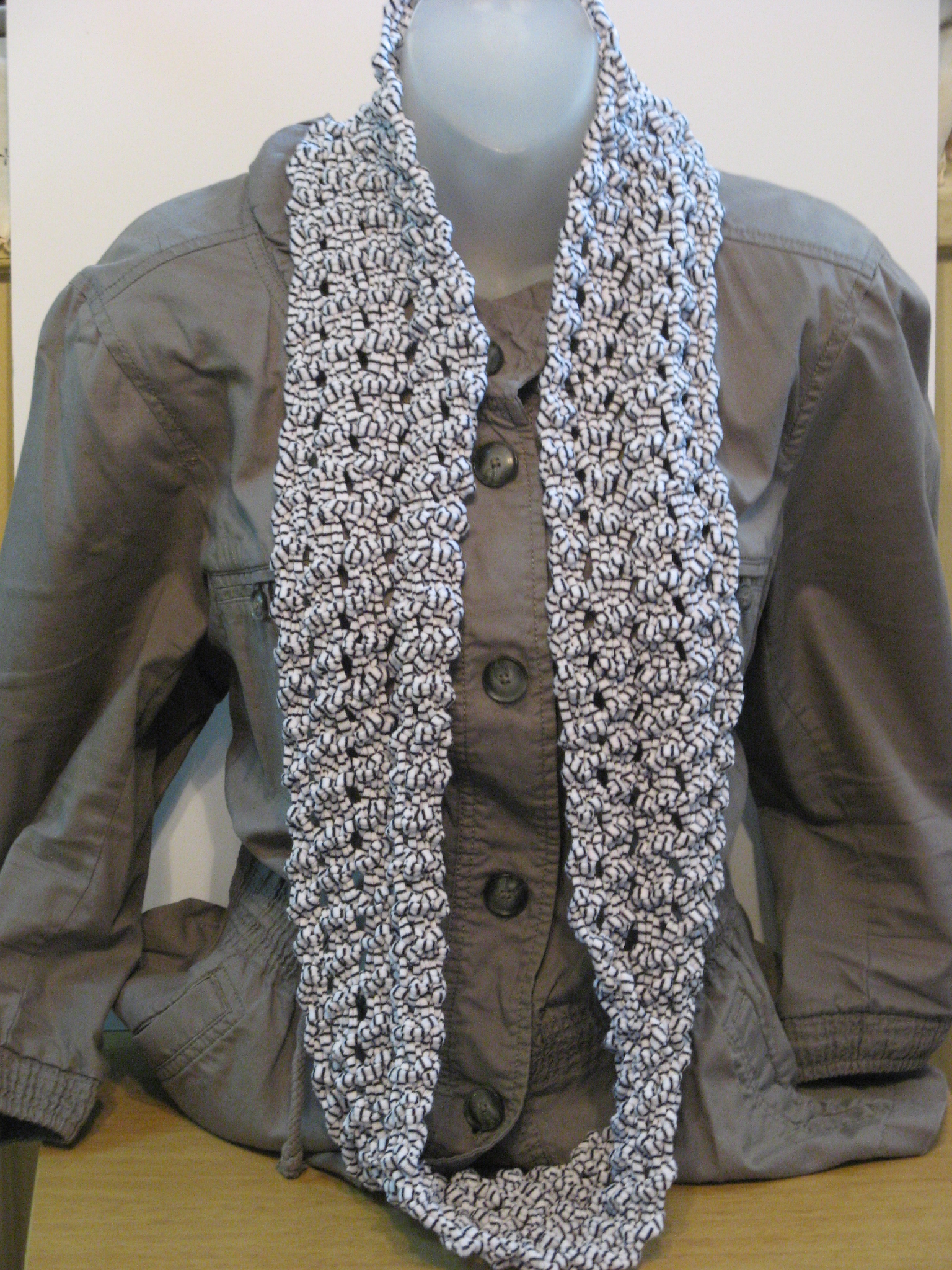
Thanks to large knitting needles and t-shirt yarn I was able to complete the infinity scarf I recently posted about in less than a week. Working with the t-shirt yarn was a lot easier than working with typical yarn. I didn’t have to worry about it fraying our accidentally splitting the yarn with the needles; it’s not the ideal yarn though for most projects, i.e. a blanket. While I did have two skeins of Loops & Threads T-shirt Yarn (which is unfortunately discontinued now) on hand to complete the scarf I only needed one skein.

I ended up knitting the scarf twenty-seven inches and then sewed the ends together so that it would be long enough to loop…

IMG_7176

Or an ideal length for wearing long.

IMG_7182

As for my next yarn project, I’m undecided. It’ll either be a scarf (surprise surprise as those are my favorite things to knit or crochet) or a shrug.


T-Shirt Yarn Infinity Scarf

Materials:

T-Shirt Yarn (one skein approximately 100 yards)

Knitting Needles: US 19 / 15 MM

Directions:

Cast on 10 stitches

Row 1: Knit 2, *Purl 2, Knit 2; repeat from * across. Repeat Row 1 until piece measures your desired length (either to loop around your neck or wear long.)

Bind off.

To finish, sew the ends together and weave in the ends of the yarn.


A Blanket Down, A Scarf To Go

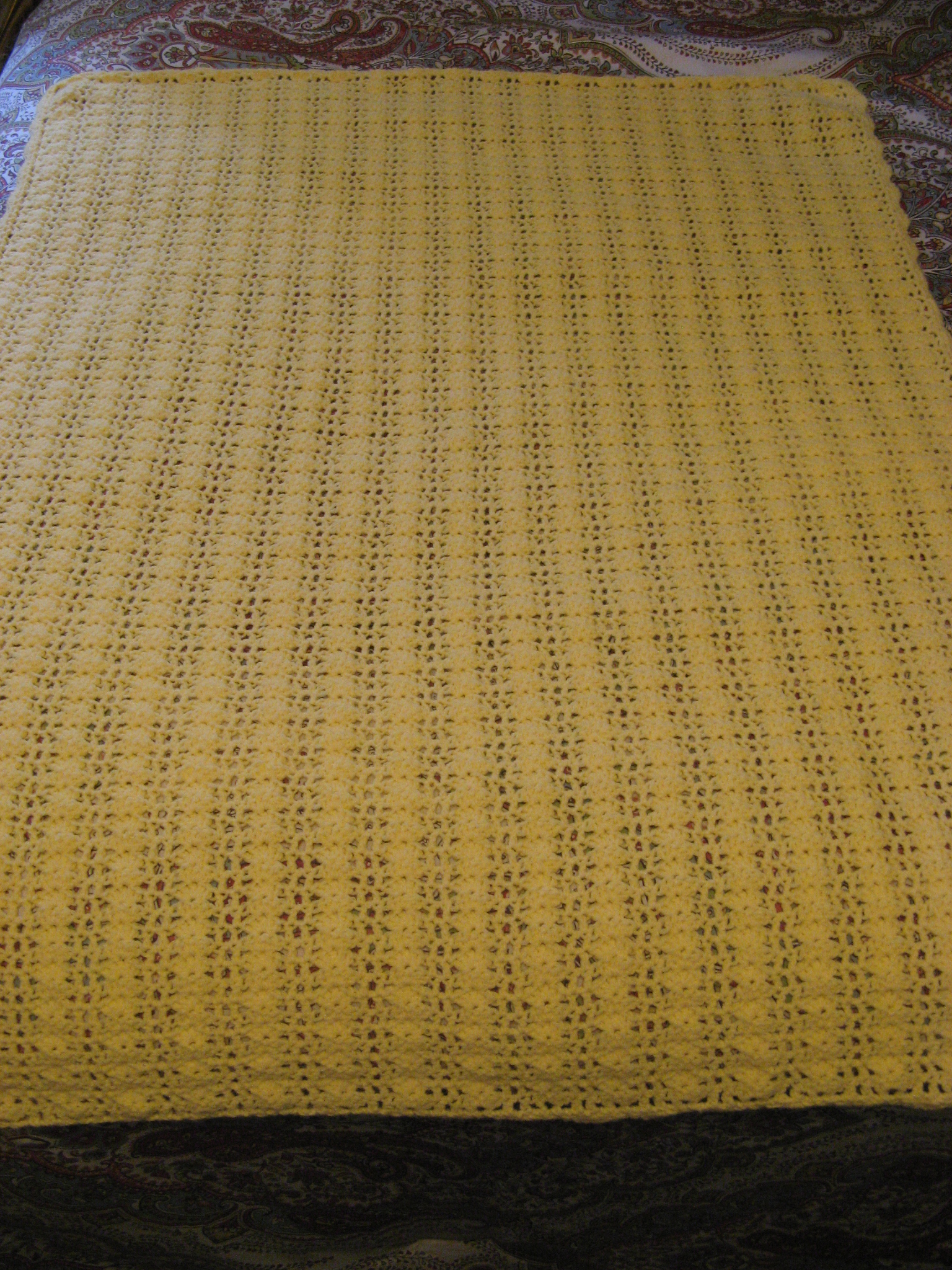
I recently completed the toddler blanket I was working on and am very happy with how it came out. While I have crocheted/knitted my fair share of blankets, this was the first toddler blanket I completed and was a little unsure about the size I wanted to make it…. I obviously didn’t want it to be on the smaller side which would be more appropriate for a baby, but, I also didn’t want it to be so large that it would be too big for a young child. Ultimately the final size of the blanket ended up being 40 x 50 inches, which I think is a decent size for a young child.

IMG_7110

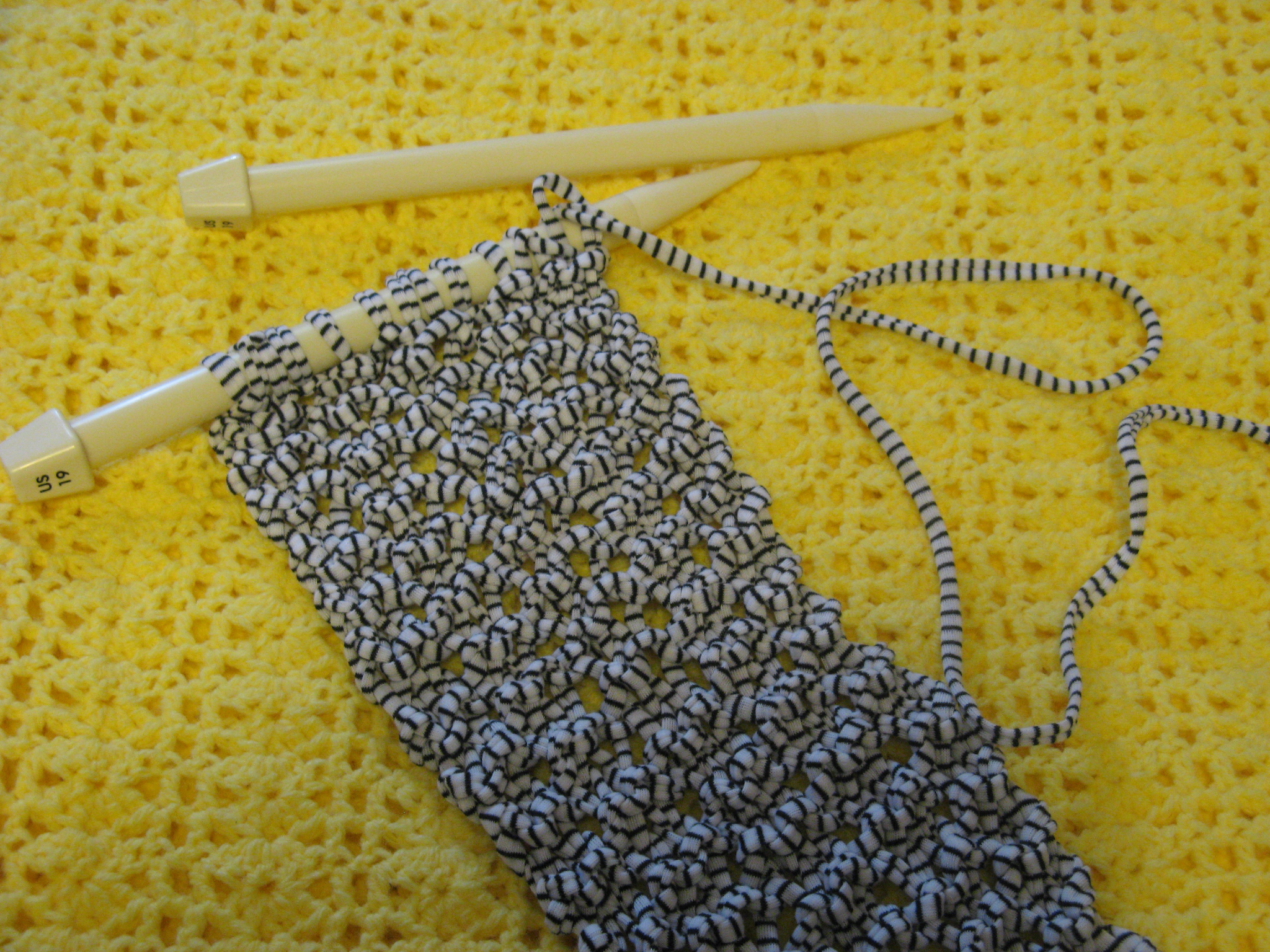
I’ve already moved on to my next yarn project… An infinity scarf (you can never have too many scarves) made with t-shirt yarn. While there a quite a few tutorials online on how to make your own t-shirt yarn I opted to buy mine. I first came across t-shirt yarn when I saw an Arm-Knitting Project using Lion Brand’s Fettuccini Yarn. After visiting the Lion Brand store in NYC I opted to pass on purchasing the yarn for the project – they didn’t have enough skeins of the yarn in the color I wanted and it just seemed like the scarf would end up being a lot more bulky than I would like. Not long after that while at my local Michael’s I came across t-shirt yarn from their Loops & Threads brand and it was more reasonable priced (about $3 skein on clearance than the $9/skein for the Fettuccini Yarn) and didn’t seem as bulky. I decided to scrap the idea of learning how to arm-knit and decided to make an infinity scarf just by regular knitting. So far so good…

IMG_7121


Lion Brand Pound of Love Delectable Shell Afghan – modified from here

Materials:

2 Balls Lion Brand Pound of Love Yarn

Crochet Hook – Size H-8

Directions:

Afghan

Chain 173

Row 1: Double-crochet in 5th Chain from hook, *Skip next  2 chains, 5 double-crochets in next chain, skip next 2 chains, double-crochet in next chain, chain 1, skip next chain, double-crochet in next chain, repeat from * across.

Rows 2 – 95: Chain 4, turn, *Skip next Chain 1 space, double crochet in next double crochet, skip next 2 double-crochets, 5 double-crochets in next double-crochet, skip next 2 double-crochets, double-crochet in next double-crochet, chain 1; repeat from * across, double-crochet in 3rd chain of turning chain. Do not fasten off.

Border

Round 1: Do not turn; work single-crochet evenly spaced around entire outside edge of Afghan, working 3 single-crochets in each corner; join with slip stitch in first single-crochet.

Round 2: Chain 1, single-crochet in same single-crochet as join, skip next single-crochet, 5 double-crochets in next single-crochet, *skip next single-crochet, single-crochet in next single-crochet, skip next single-crochet, 5 double-crochets in next single-crochet; repeat from * around; join with slip stitch in first single-crochet. Fasten off.

Weave in ends.


T-Shirt Yarn Infinity Scarf

Materials:

T-Shirt Yarn (being that I haven’t finished the scarf I am unsure of how much yarn I will ultimately use, I do have 2 skeins that are 100 yards each)

Knitting Needles: US 19 / 15 MM

Directions:

Cast on 10 stitches

Row 1: Knit 2, *Purl 2, Knit 2; repeat from * across. Repeat Row 1 until piece measures your desired length (either to loop around your neck or the classic way – topping it over a top)

Bind off.

To finish, sew the ends together and weave in the ends of the yarn.