Granny Square Tote Bag – Red Heart All In One Granny Square Yarn

Most crocheters / knitters would agree that the worst part of any project is weaving in the ends. If you are unfamiliar with what that means, it’s basically weaving the ends of the yarn into your finished project. This is especially the worst when you create something with multiple yarn colors, like granny squares!

So, I was excited when I saw that Red Heart created a yarn that would minimize ends with granny squares with their new Red Heart All in One Granny Square Yarn. The yarn also takes the guesswork out of selecting colors for the granny squares, although I wasn’t all that thrilled with the color selections. I did find one that I liked, I just had to get my eyes used to crocheting with black yarn. There is a funny saying that goes “If someone makes you something out of yarn, they like you. If they make it out of black yarn, they love you.” Not sure who said it, but there is a lot of truth in it. My mom used to crochet, and she would avoid dark colors (if possible) when working on a project. Working with darker colors requires ample lighting to reduce the strain on your eyes as you work so you don’t miss any stitches. Which can slow your progress down as well. For me personally I can crochet much quicker (and with less mistakes) when working with lighter colors.
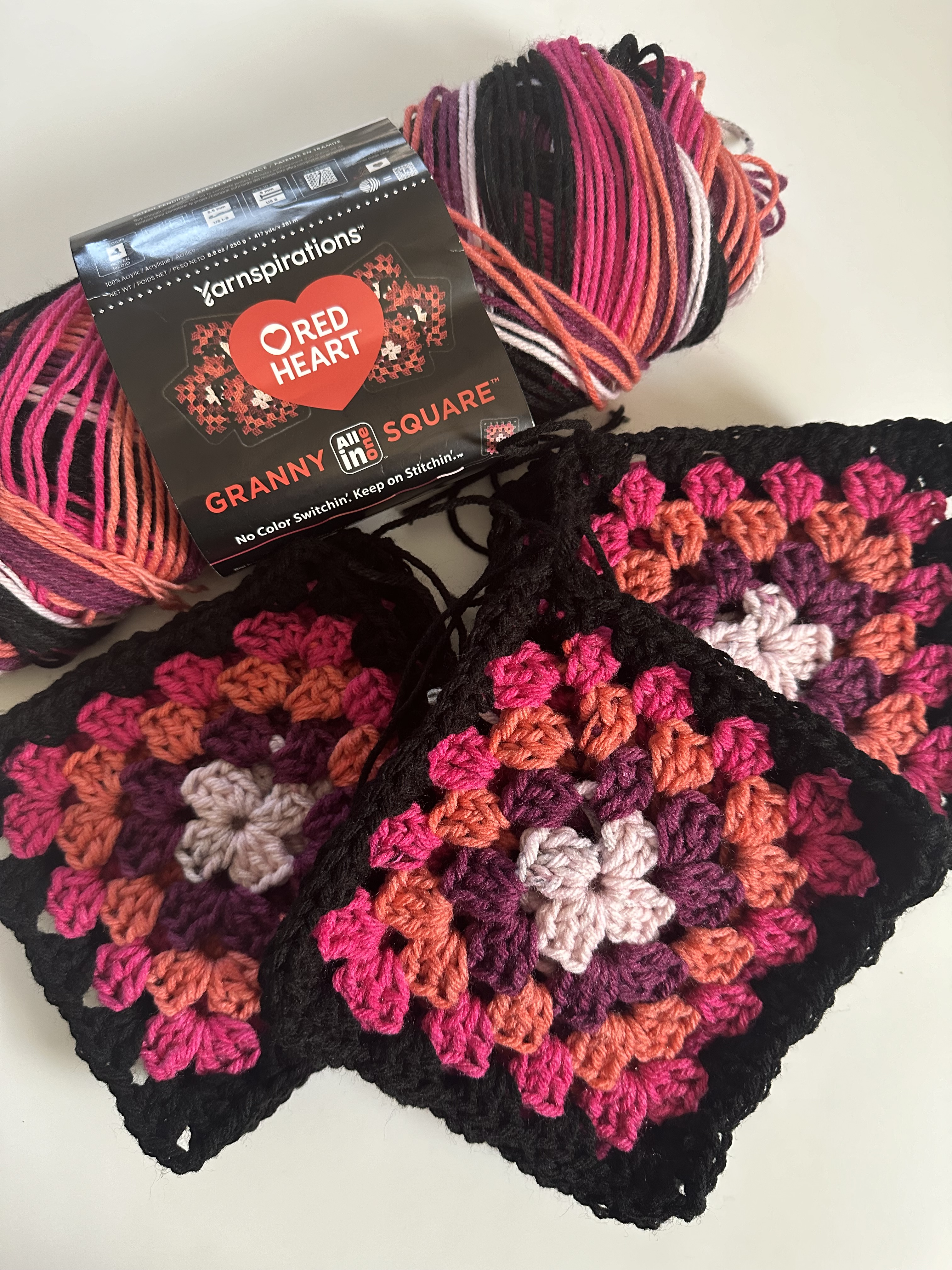
Now, while most patterns for granny squares are the same with just a few tweaks here and there, I opted to follow the pattern that came with the yarn as opposed to the one I normally use just to be sure that my granny squares would work up “properly.” Well, right off the bat I realized that it wasn’t going to be as easy as it seemed. I was constantly frogging (ripping out the yarn) and adjusting my tension to get the colors to line up for the different rounds of the square. There was always a round or two that was off which meant I would have to start the round again. I decided to read the reviews for the yarn on their website to see if there were any tricks or suggestions and what I found was a bunch of negative reviews. I was determined though. Ultimately, I ended up with 15 granny squares that required a lot of patience!

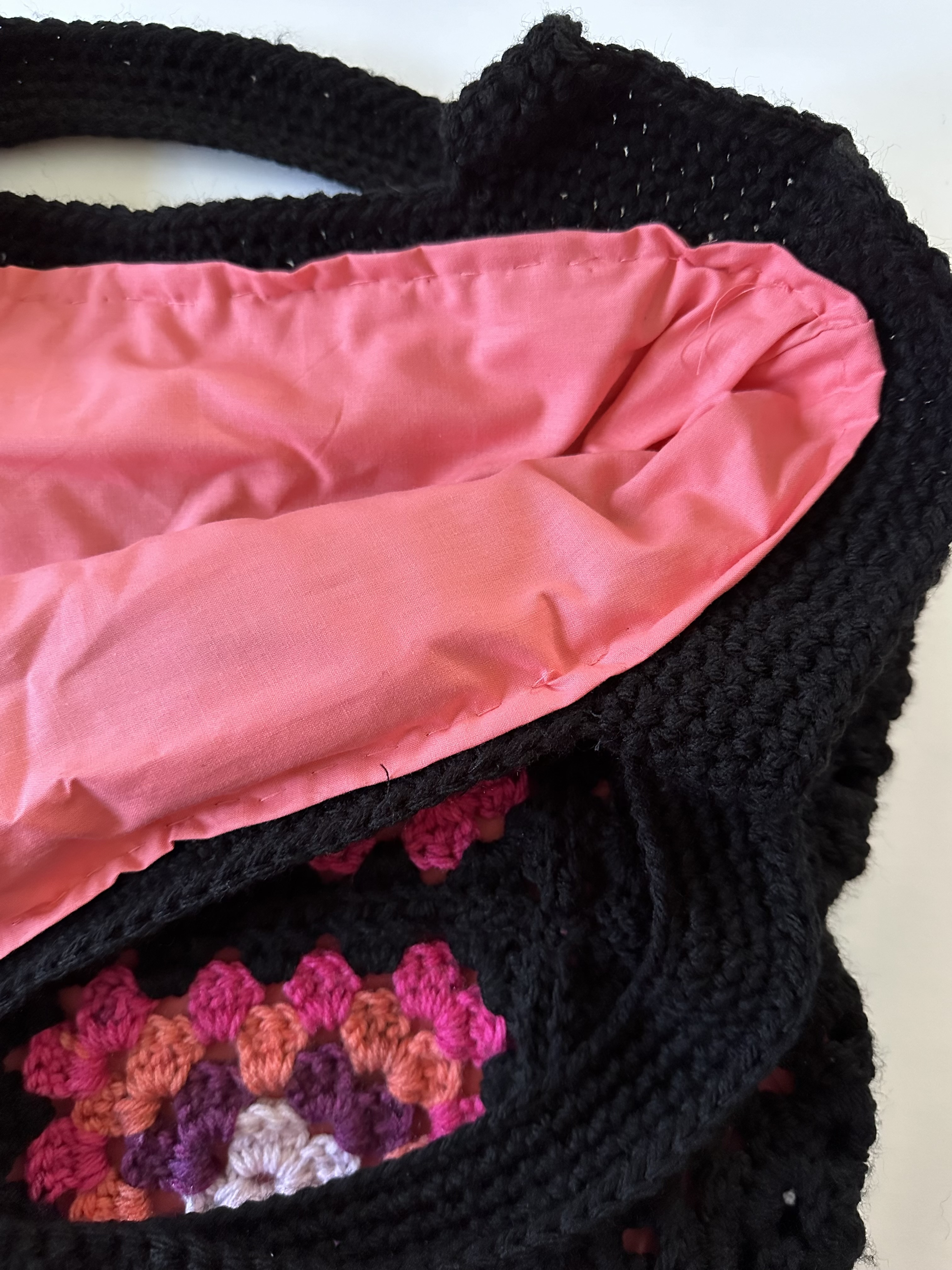
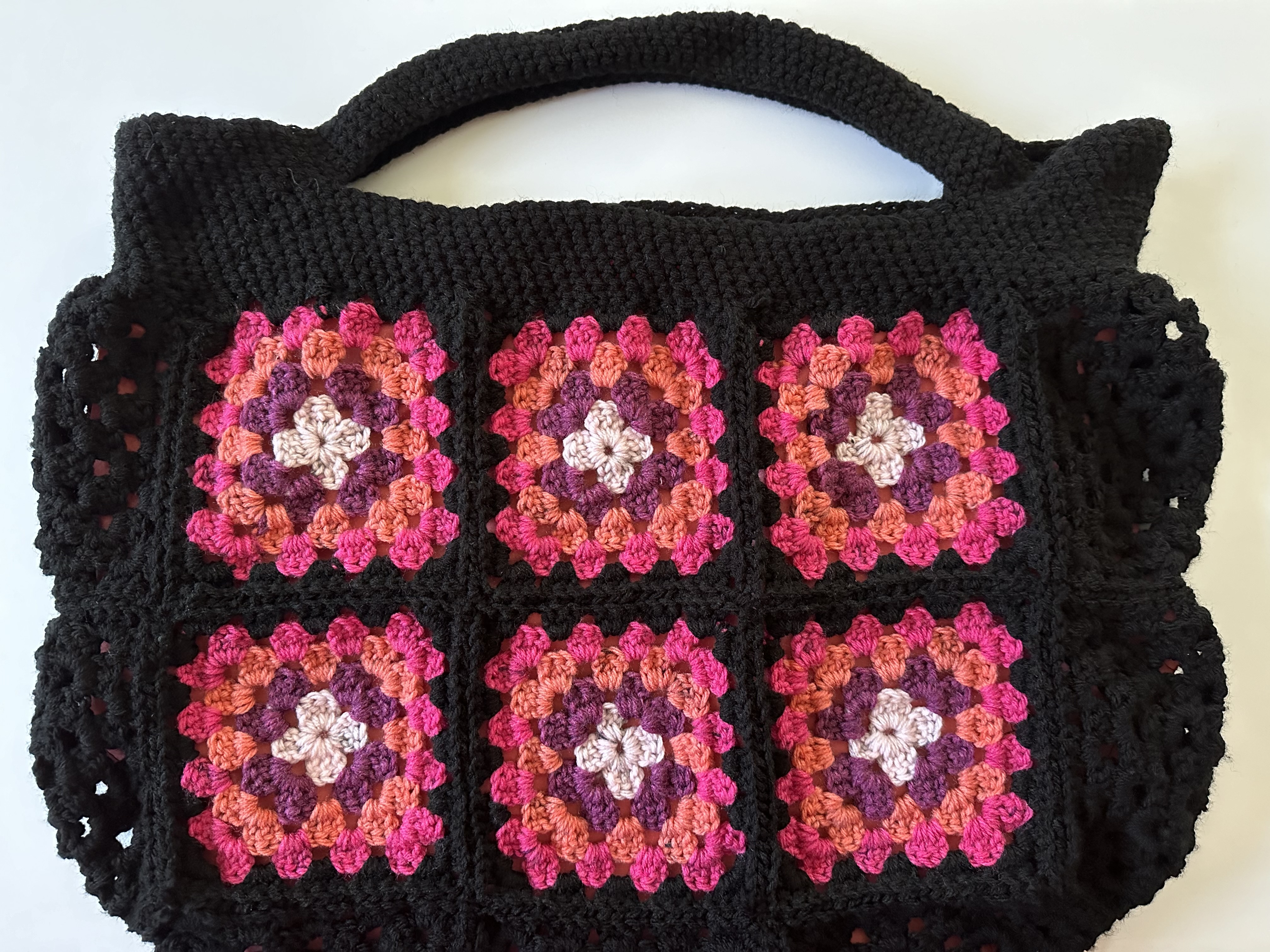
So, what to do with the 15 squares? For a moment I thought of buying a few more skeins of the yarn to make a throw, but I quickly tossed that idea out. I really didn’t feel like working with the yarn again to make more granny squares after all the trouble it was to create the initial 15. I decided on a tote bag instead. I had recently finished another granny square tote bag so why not make another. One thing though, I was going to need more granny squares. I needed a total of 19 granny squares for the basic design I was thinking of. So, I ended up crocheting 7 granny squares in black yarn – straining my eyes once more.

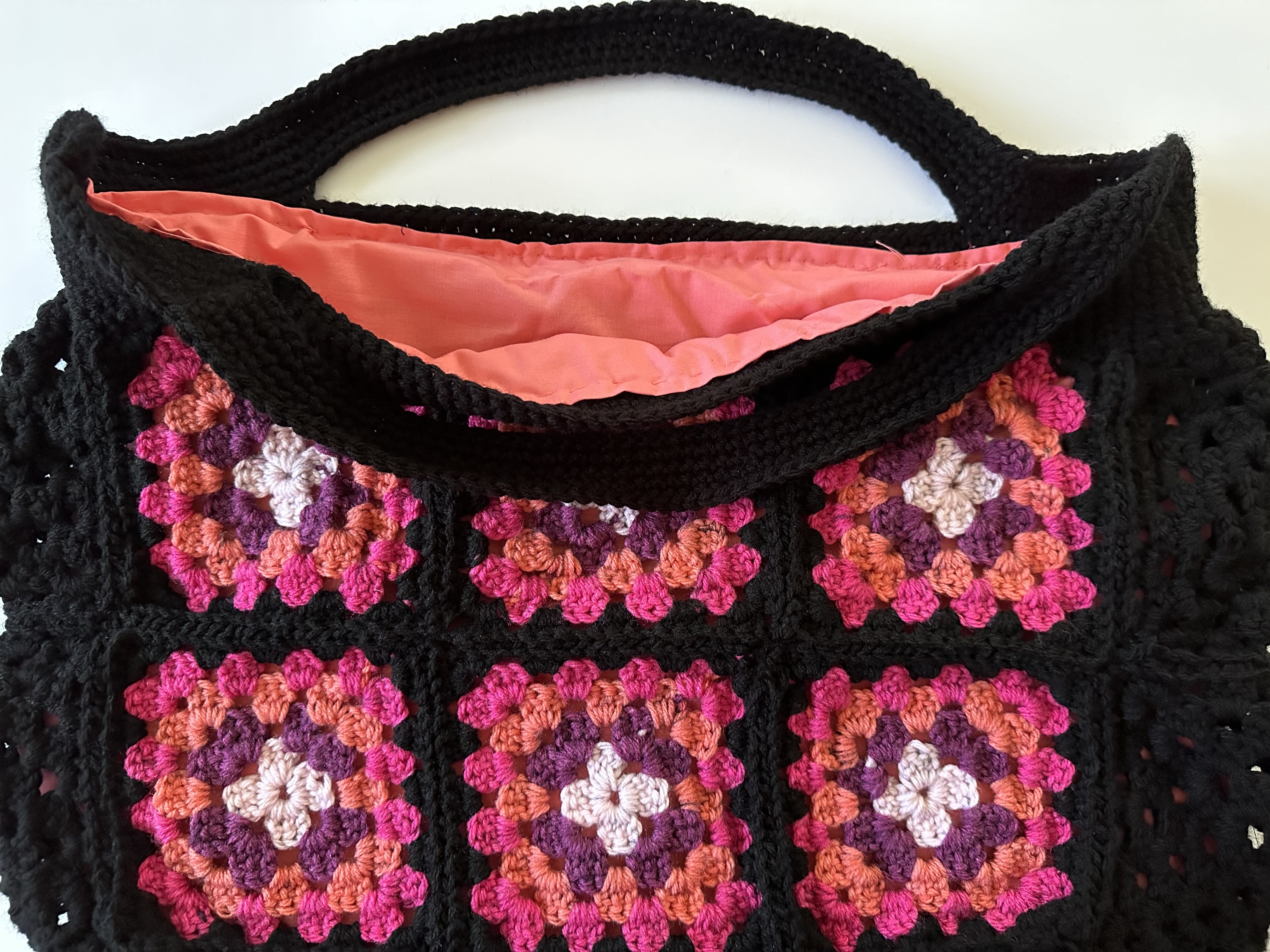
As I mentioned this tote bag was my second granny square bag. After crocheting and stitching together the squares for the first one I decided to add a liner to the bag to give it more structure and to prevent it from stretching when carrying anything in it. This was a daunting task. While I own a sewing machine, I had no clue how to use it for the longest time. I tried once and it was a complete failure. So, to add the liner to the bag I did it completely by hand. Overall, it didn’t come out too bad, but it’s definitely not stitched into the bag completely straight.
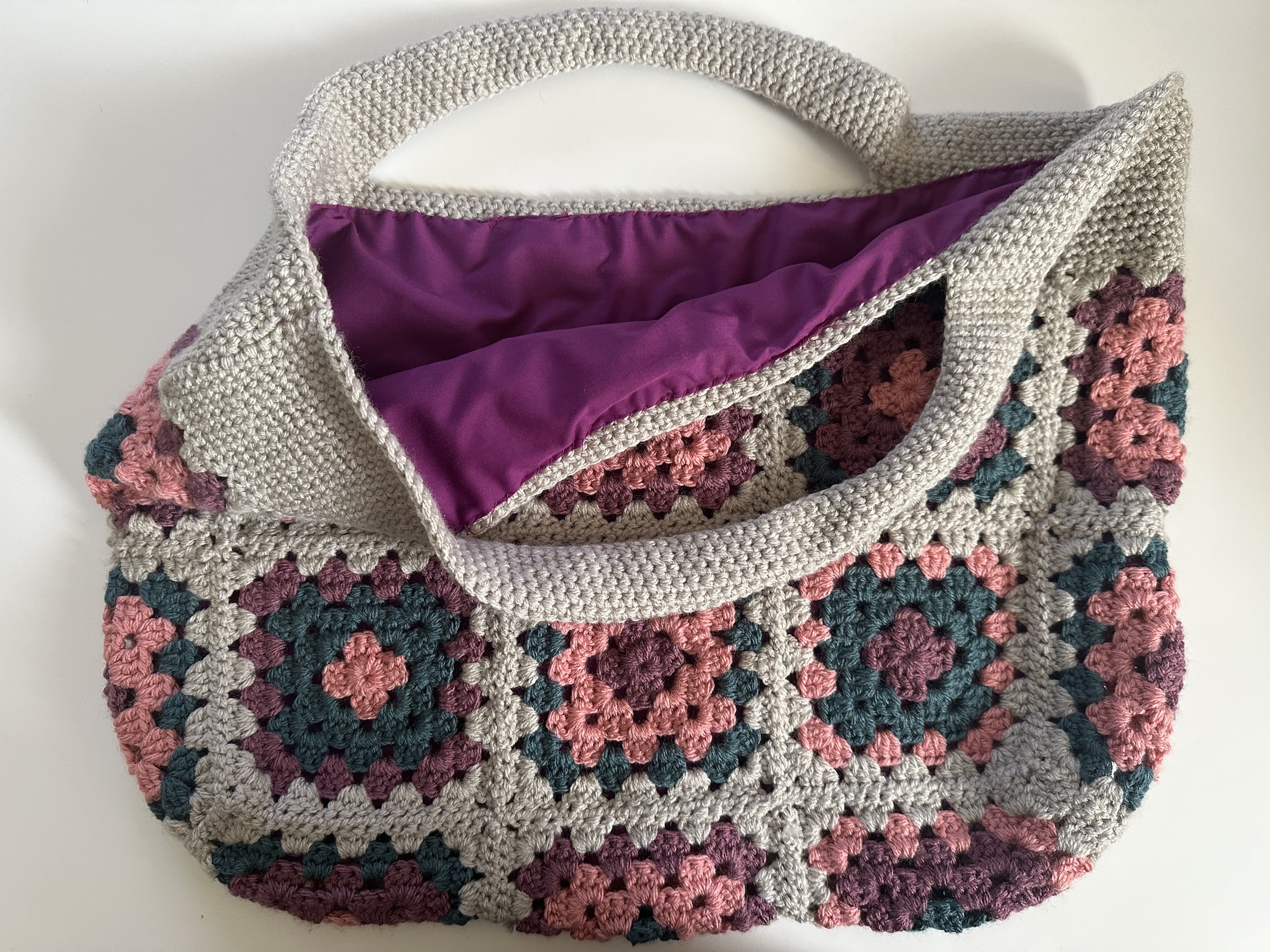
Well, for this new bag I learned how to use my sewing machine. My local library had a “class” where you could bring in your machine and an instructor would show you how to use it. Woo-Hoo! Well, almost! My first attempt at stitching the liner into the new bag was a fail! I practiced with scraps of fabric but then when I got to working on the bag it just wasn’t working out. I sewed the liner in, but it was atrocious! Not one to give up though, I watched a few YouTube videos (which I probably should have done in the first place) to get some tips and decided to rip the liner out of the bag and try again. And my second attempt was much better. I did end up stitching the liner into the bag by hand, but it was much neater this time.
I also ended up making this cute pouch with 2 remaining squares. I even added a zipper to the top!

So, would I use this yarn again? Probably not to make granny squares that’s for sure. While the yarn does cut down on the amount of ends to weave in, I am not all that inspired by the color choices. And I find that lining the colors up for each round is too time consuming and requires me to crochet with a much looser tension than I am accustomed to which I didn’t like. I ended up the squares that were limp and loose.
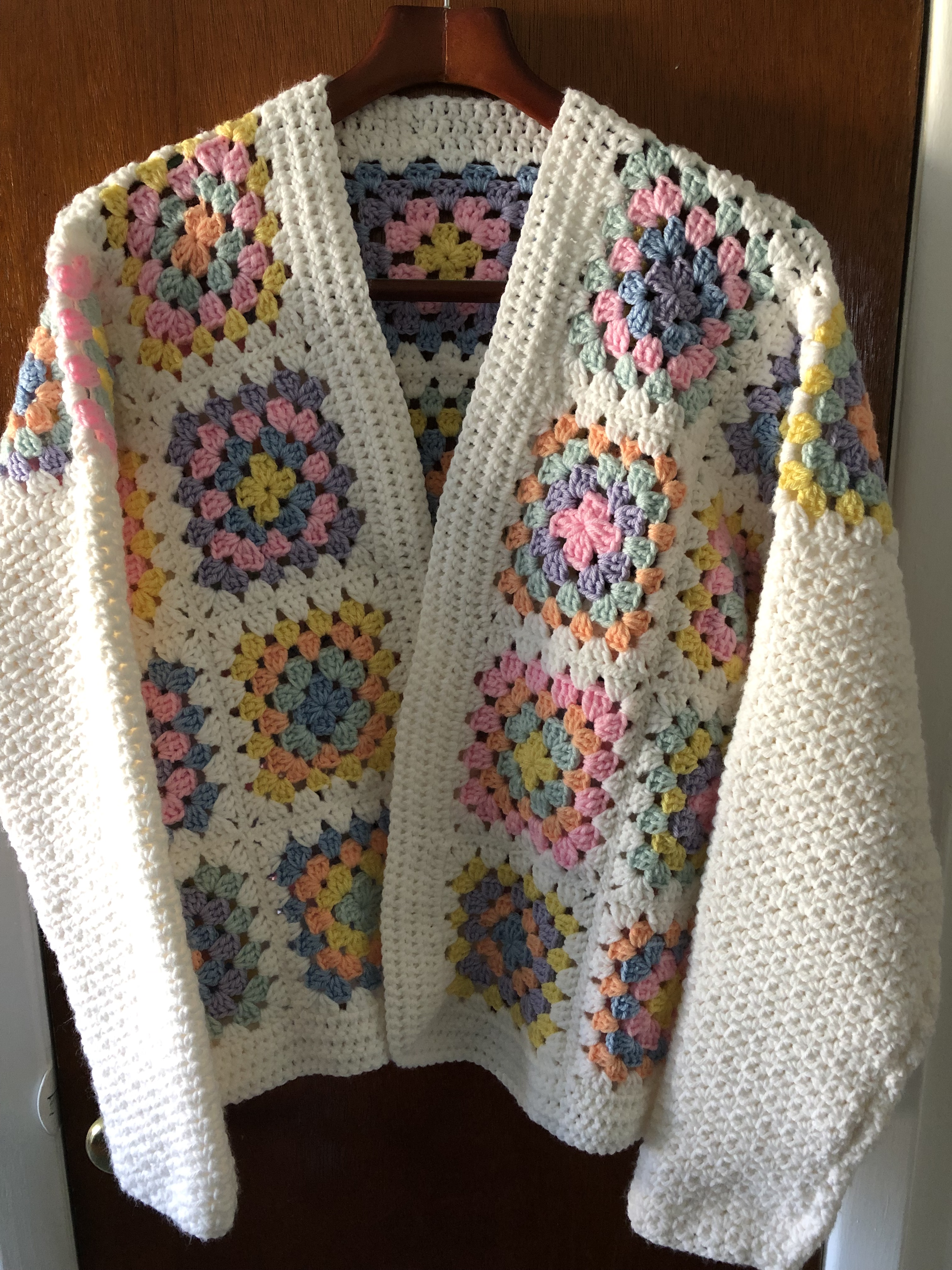
Granny Square Cardigan

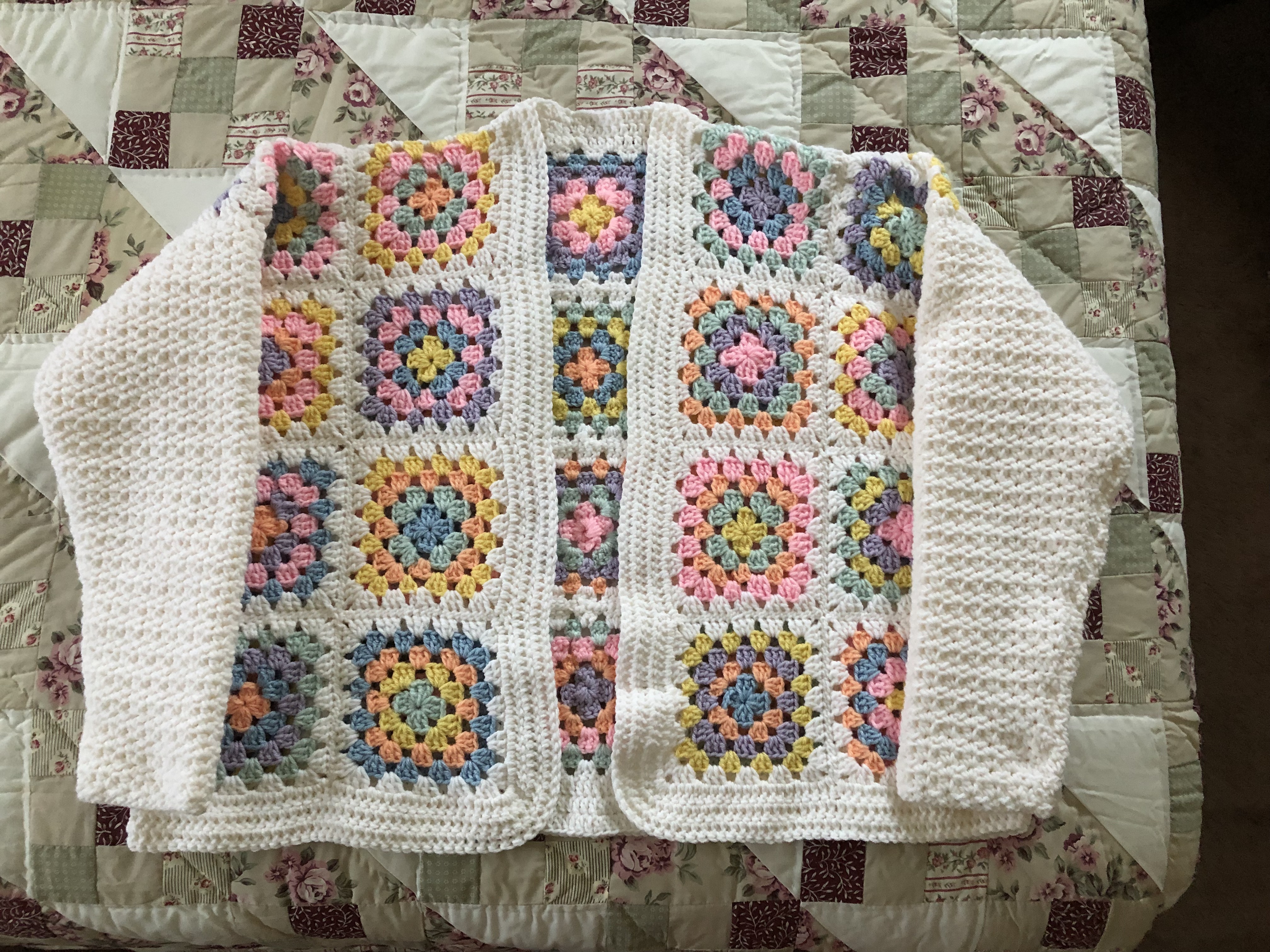
While I’ve been crocheting for over 10 years it wasn’t until recently that I learned how to make a granny square. A little backwards since learning how to make a granny square is usually one of the first things you learn to make when you start crocheting. When you are pretty much self-taught though you learn things as you go and as you need. So, why did I finally learn? Well, I was asked if I could make a granny square cardigan and since I am always up for a challenge and I like to learn new things I said yes.

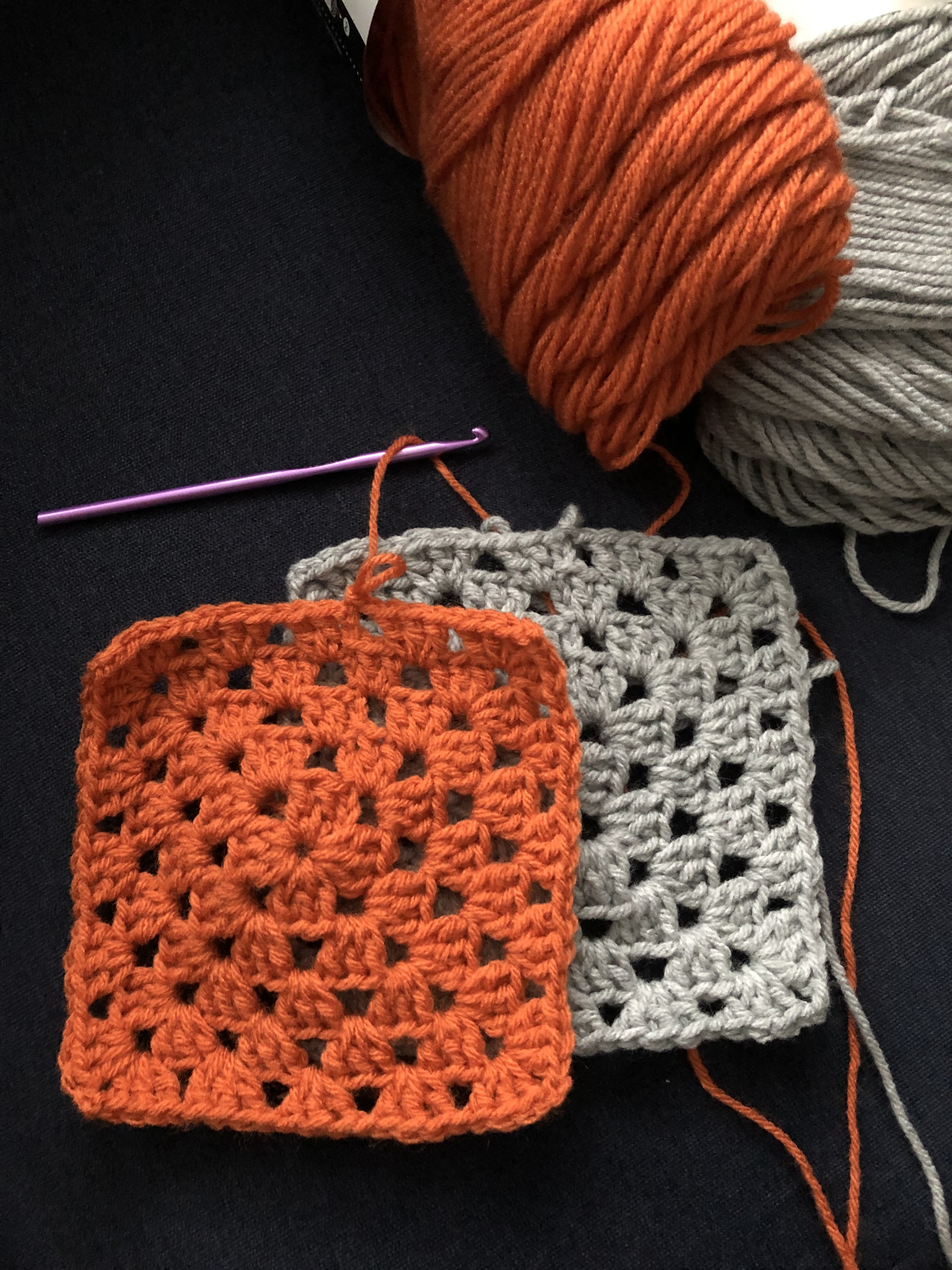
First though I had to learn how to make a granny square. Once I found a pattern that was simple enough to follow I used some extra yarn from my stash to test it out a few times to make sure I had the hang of it.

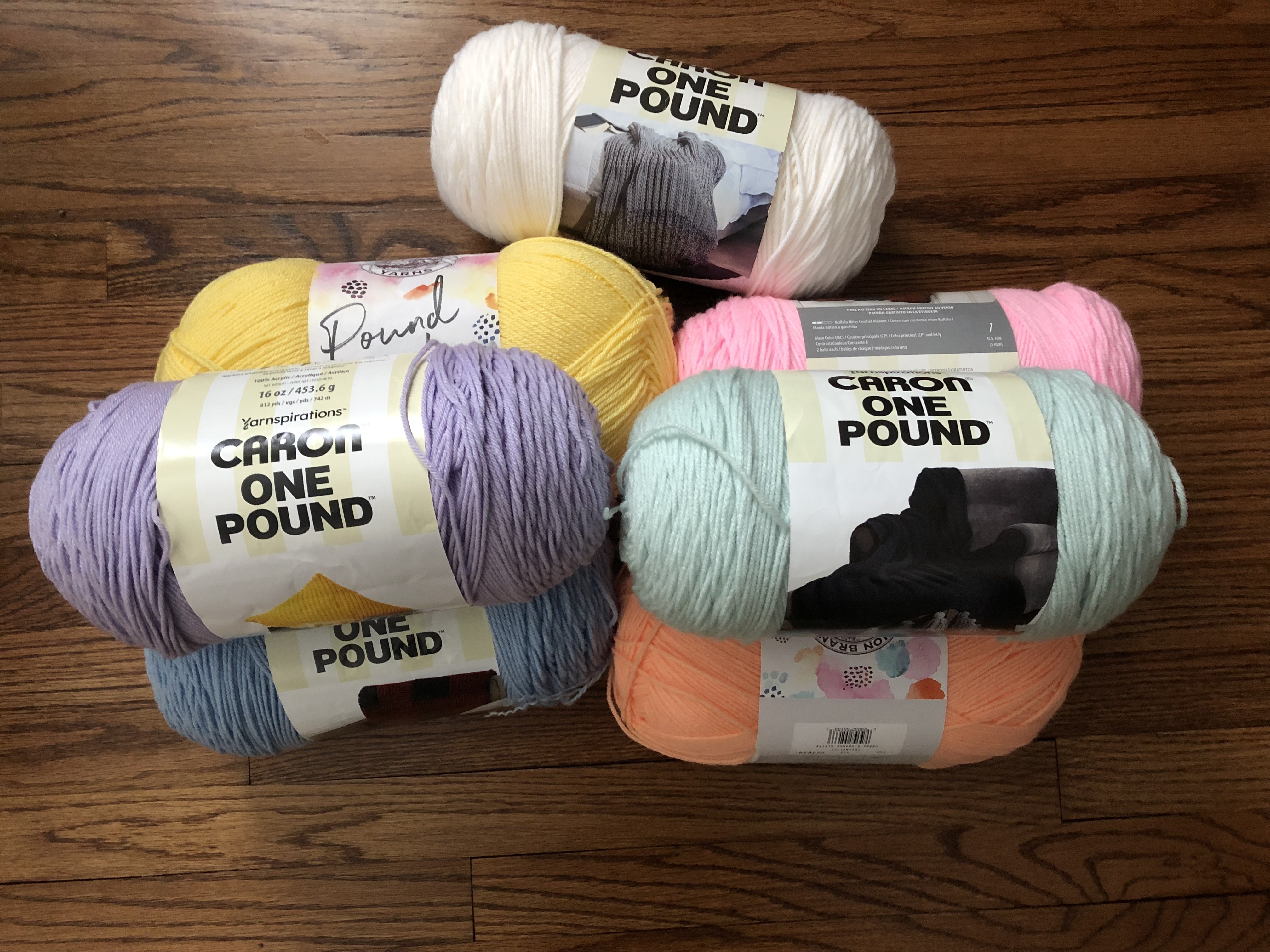
Next, I had to finalize the colors. The person who I was making it for had a color scheme in mind from a cardigan they already saw. They were looking for pastel colors so after going back and forth with different options she decided on the colors below.

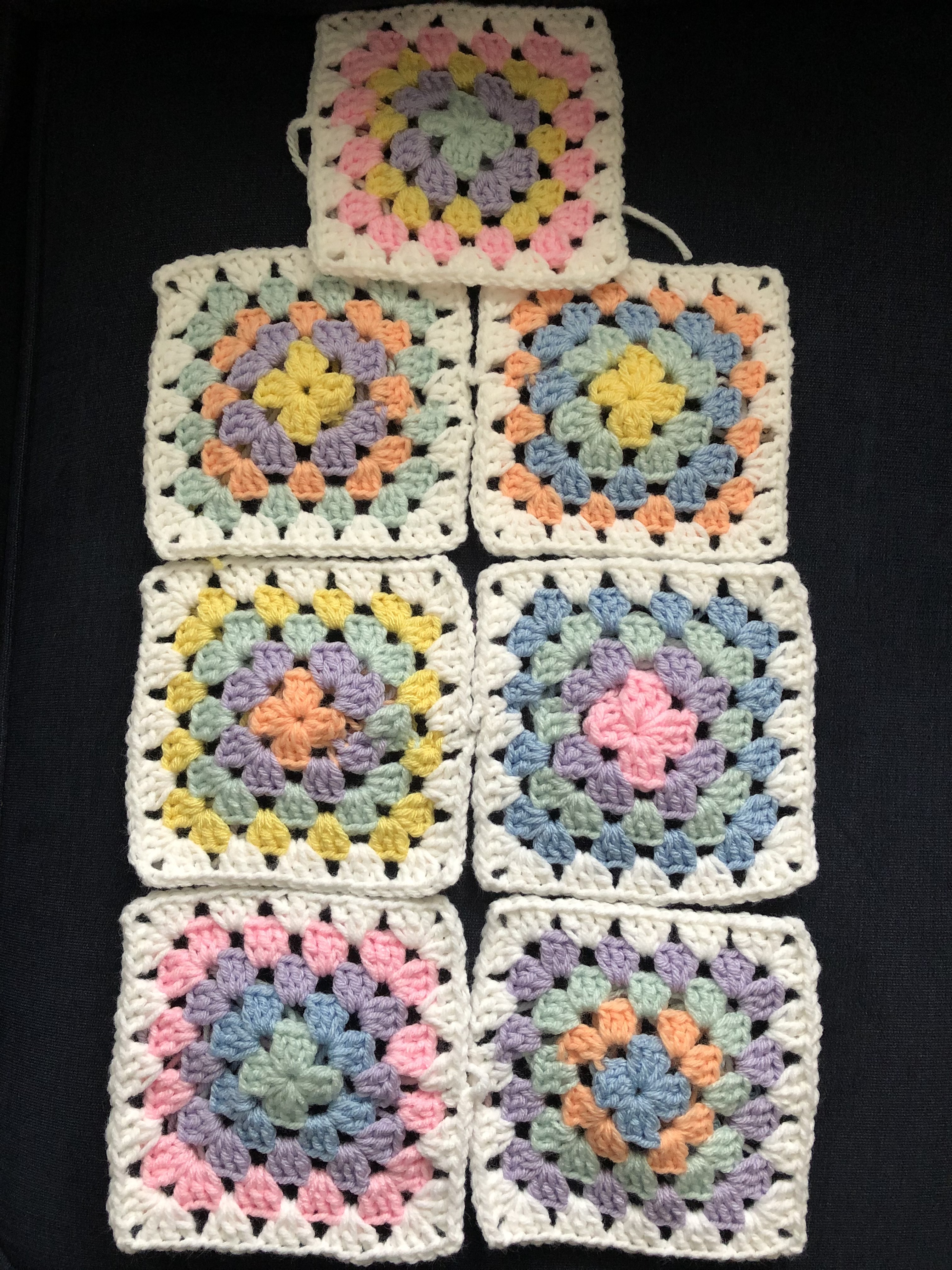
Now, the fun part. I started making the granny squares. I made a few and sent her a picture to make sure she liked the colors once they were all put together.

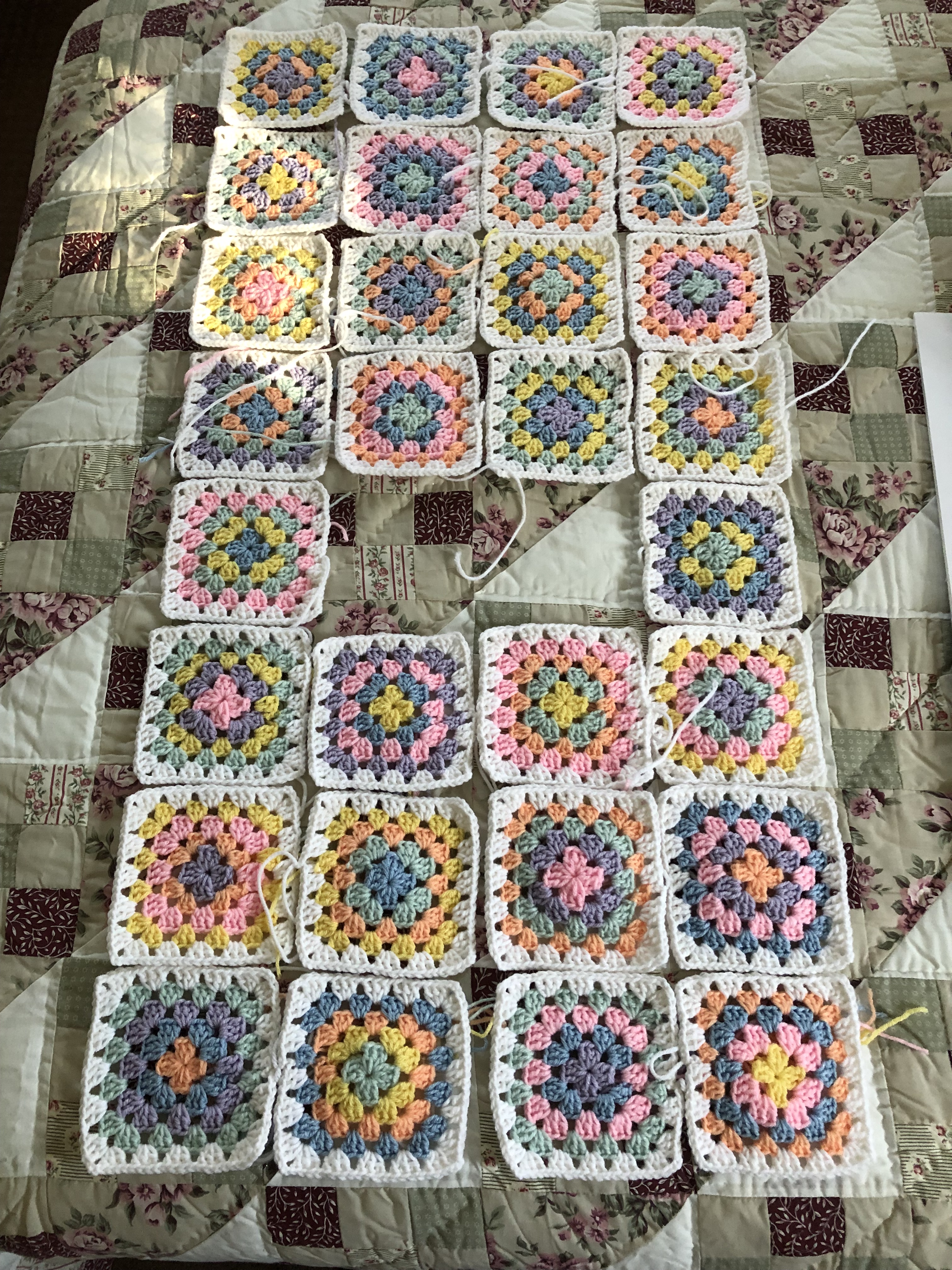
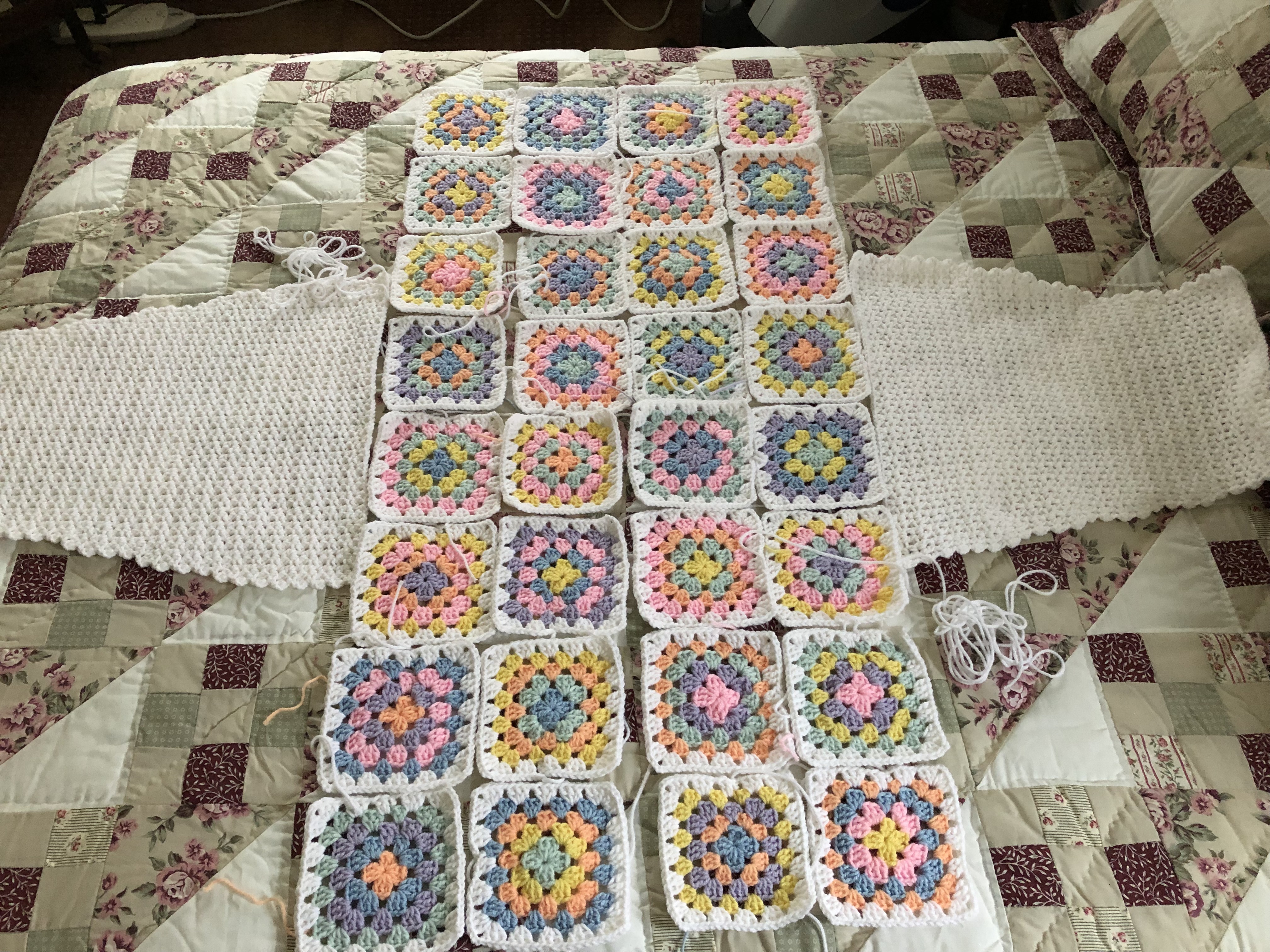
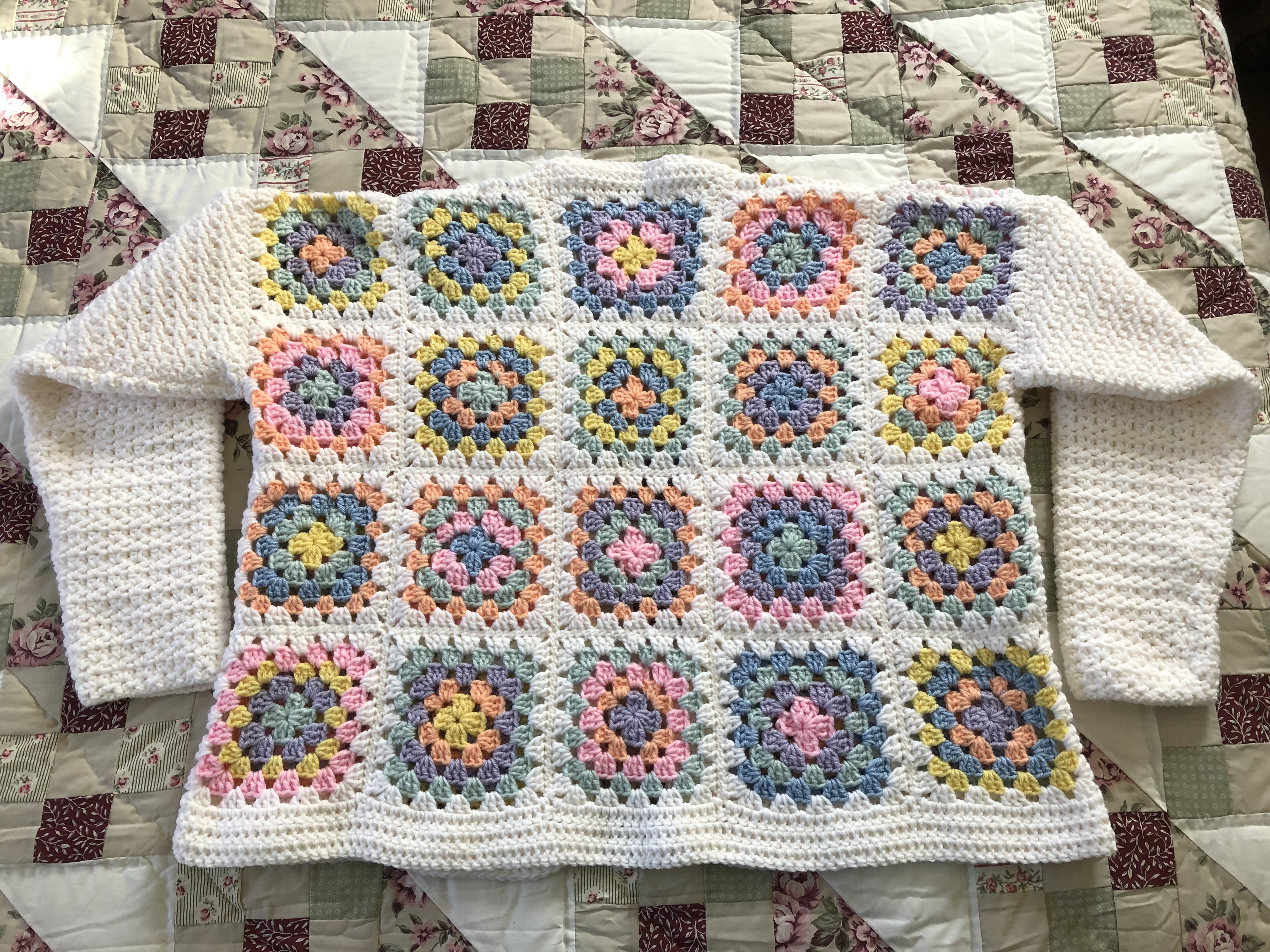
Once I got the greenlight that those looked good I went ahead and continued to crochet more. Truth be told I didn’t have an exact pattern to follow for how many squares I needed. I looked at various patterns and pictures to get an idea. I knew that I had to make the equivalent to a size medium. From doing my research I initially went with making 30 squares and I placed them in the layout below. I had a feeling that it wasn’t completely right but I decided to move on to another part of the cardigan… the sleeves.

Normally with granny square cardigans the sleeves are made using granny squares as well, but, the person I was making it for requested the sleeves to be solid white and they didn’t want them to be granny squares. So, more research. I knew that when it came to making sleeves they needed to be tapered to accommodate a wider upper arm to a narrower wrist. But, I didn’t want to just wing it and start crocheting. I was able find a sweater pattern that had the sleeves broken down exactly as I needed them. The width on top was perfect to be placed in the center of two specific granny squares. I also went ahead and crocheted two additional squares and placed them in the empty spaces I had.

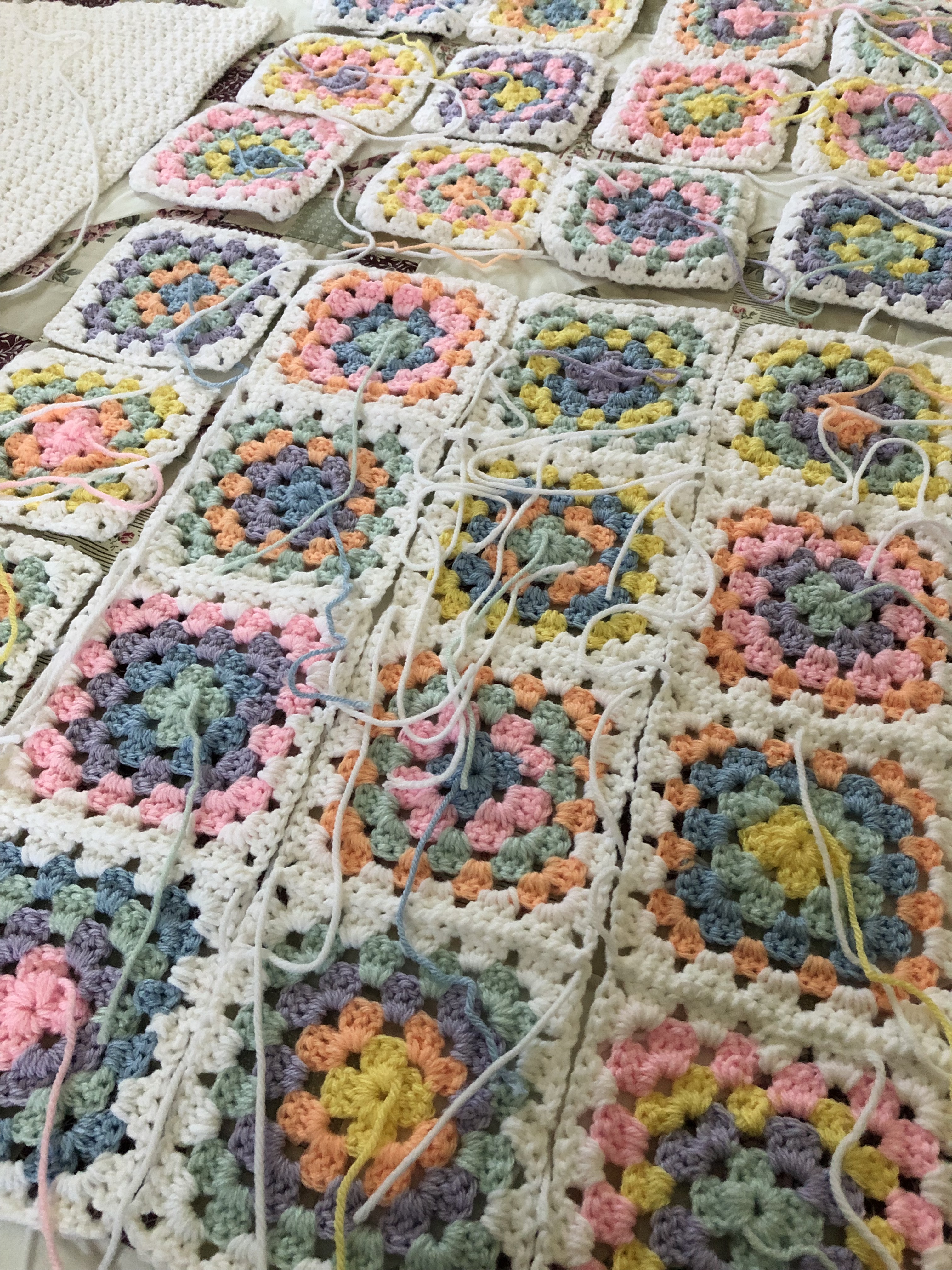
I started seaming together the squares for the back of the cardigan but I still had my doubts about the layout. It just didn’t seem like it was going to fit correctly.

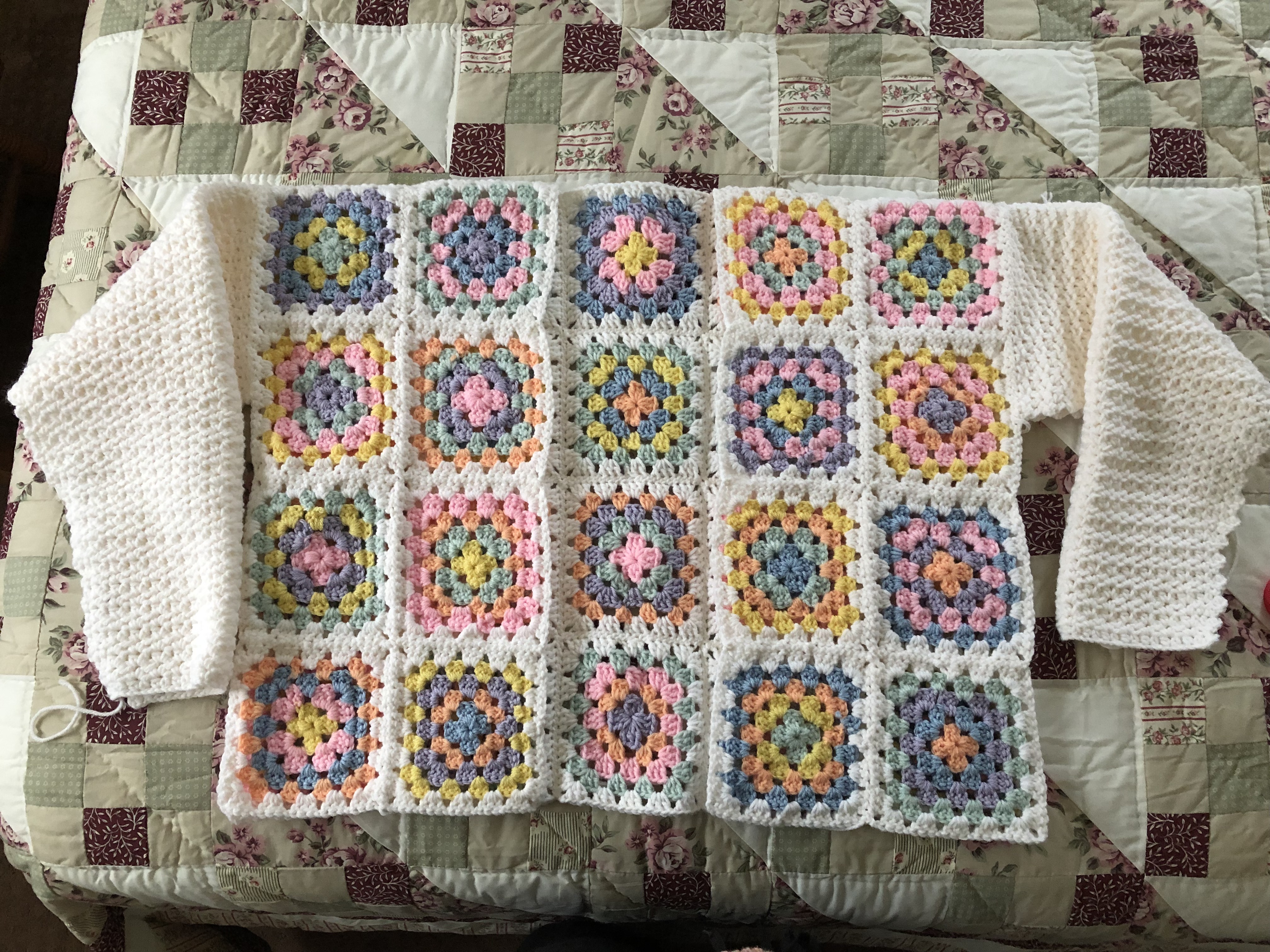
I ended up crocheting four more granny squares and added an additional row to the back of the cardigan so it would sit better. I then finished seaming all the other squares together and then attached the arms and seamed them together. I tried it on and it fit perfectly.

And finally, I crocheted a border around the entire cardigan to give it a more finished look.

I am happy to say that the person I made this for was very happy with it. I may make one for myself one of these days!

Knitted Tube Socks

Before the pandemic started and everything shut down, I was taking crocheting/knitting classes at my local library to learn new patterns and get together with other yarn crafters. Before the pandemic ended the classes I learned how to make crocheted market bags and had just started a class to make a Knitted Keyhole Scarf. What I was excited about though was that I was finally going to learn how to knit socks. It’s something I have been wanting to learn for a while but whenever I read the patterns, they made absolutely no sense to me. I had unfortunately missed the class to learn how to make socks, but the teacher was willing to show me during one of the classes and gave me a pretty easy pattern to follow. A tube sock pattern that didn’t require me to knit a heel, which apparently is the hardest part of making socks. So, I bought the knitting needles I would need (size 3 9-inch circular) and already had the yarn and then classes ended, but I was still determined to learn how to make them.

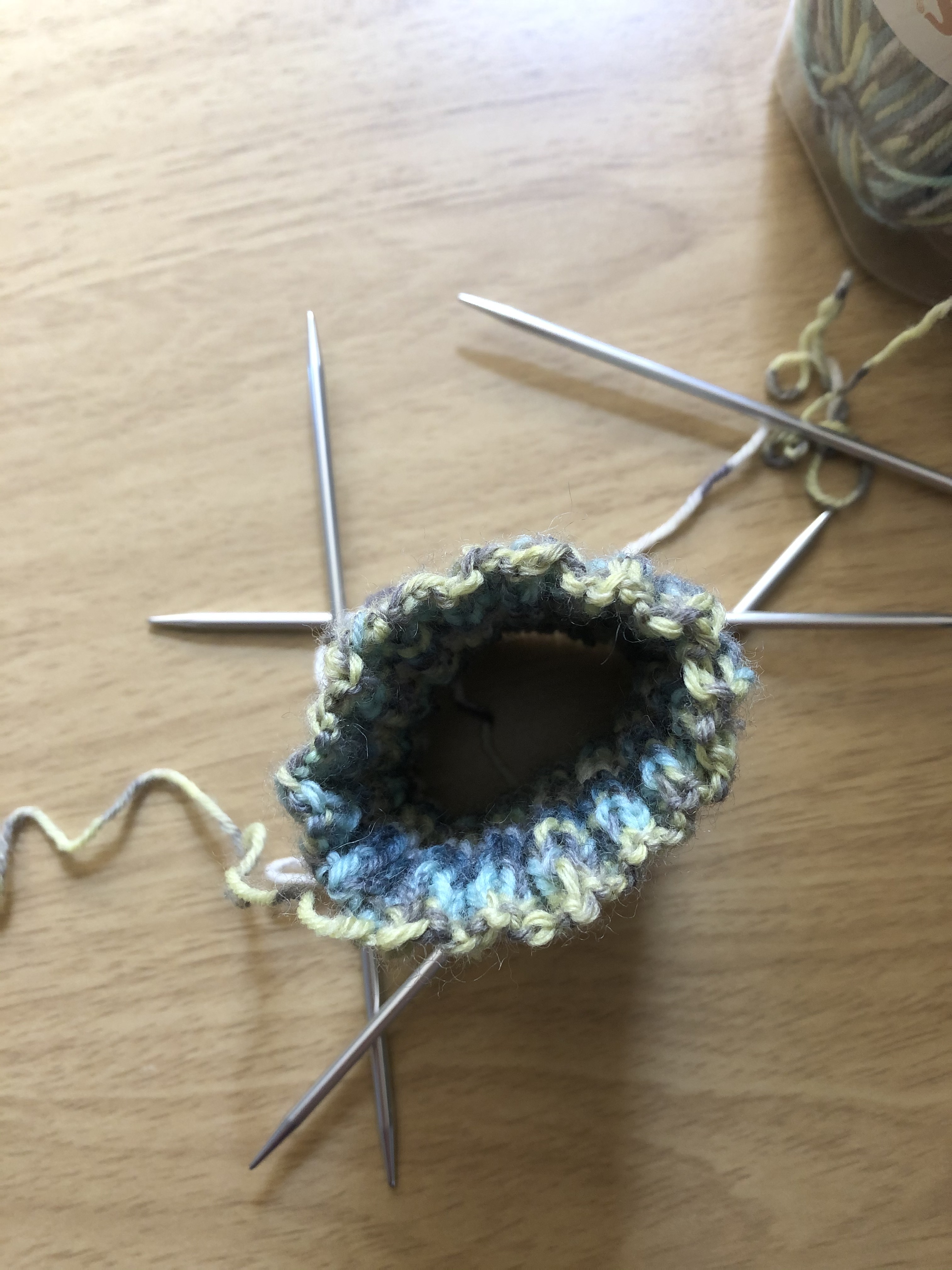
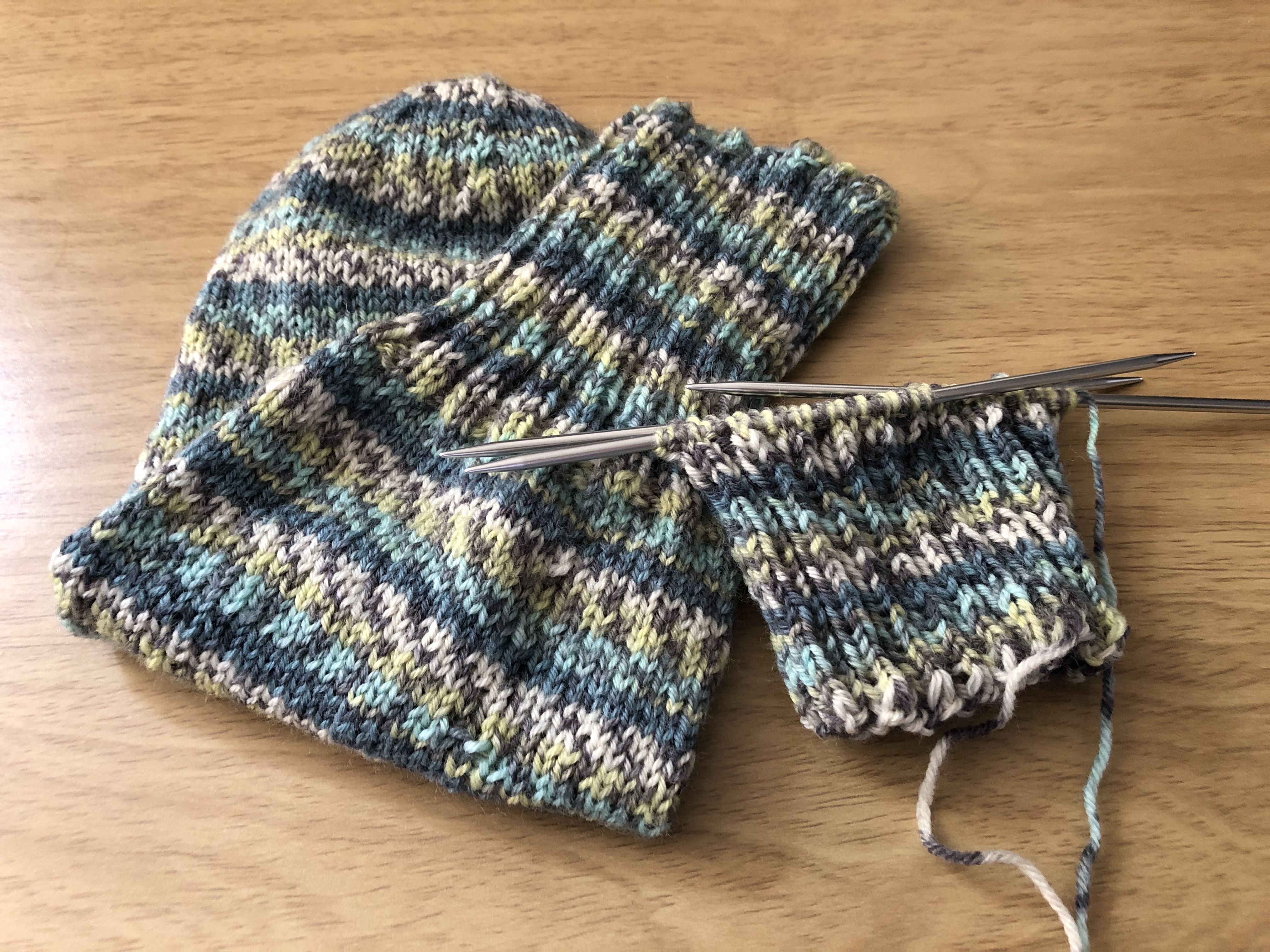
Thanks to YouTube, I was able to figure out how to start the socks. Using the short-cabled knitting needles I casted on 64 stitches and then divided those stitches among three double-pointed knitting needles. I then worked in a K2, P2 ribbed pattern for five inches to make the cuff of the socks.

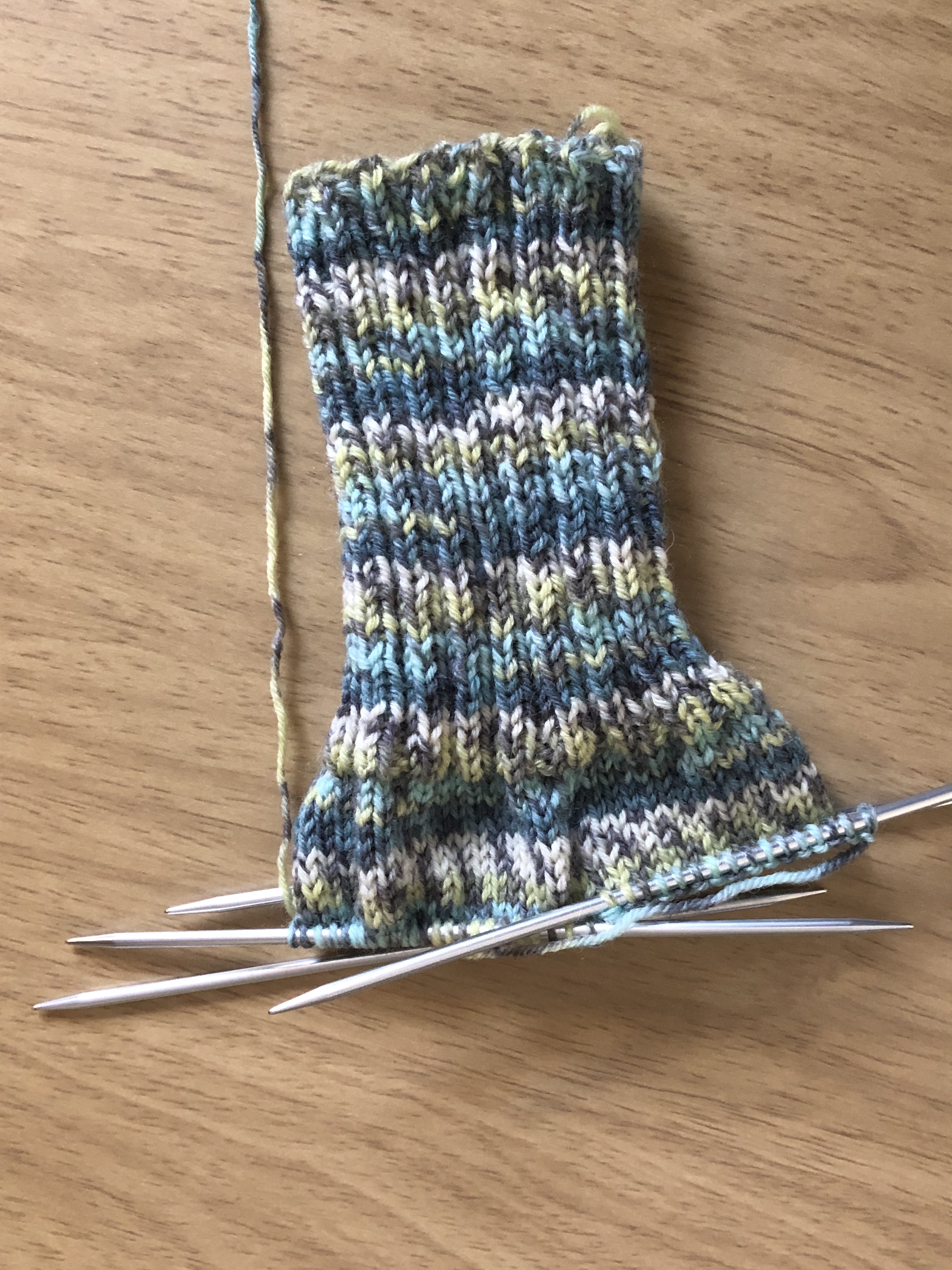
Next, it was time to work on the body of the sock. And it couldn’t have been easier, I knit every row until the sock measured 13 inches from the beginning.

To finish the sock, I had to shape the toe. The directions on the pattern I had weren’t that easy to follow, but after a few Google searches I was able to find a toe shaping pattern that would work for the tube sock I made and was easy enough for me to follow.

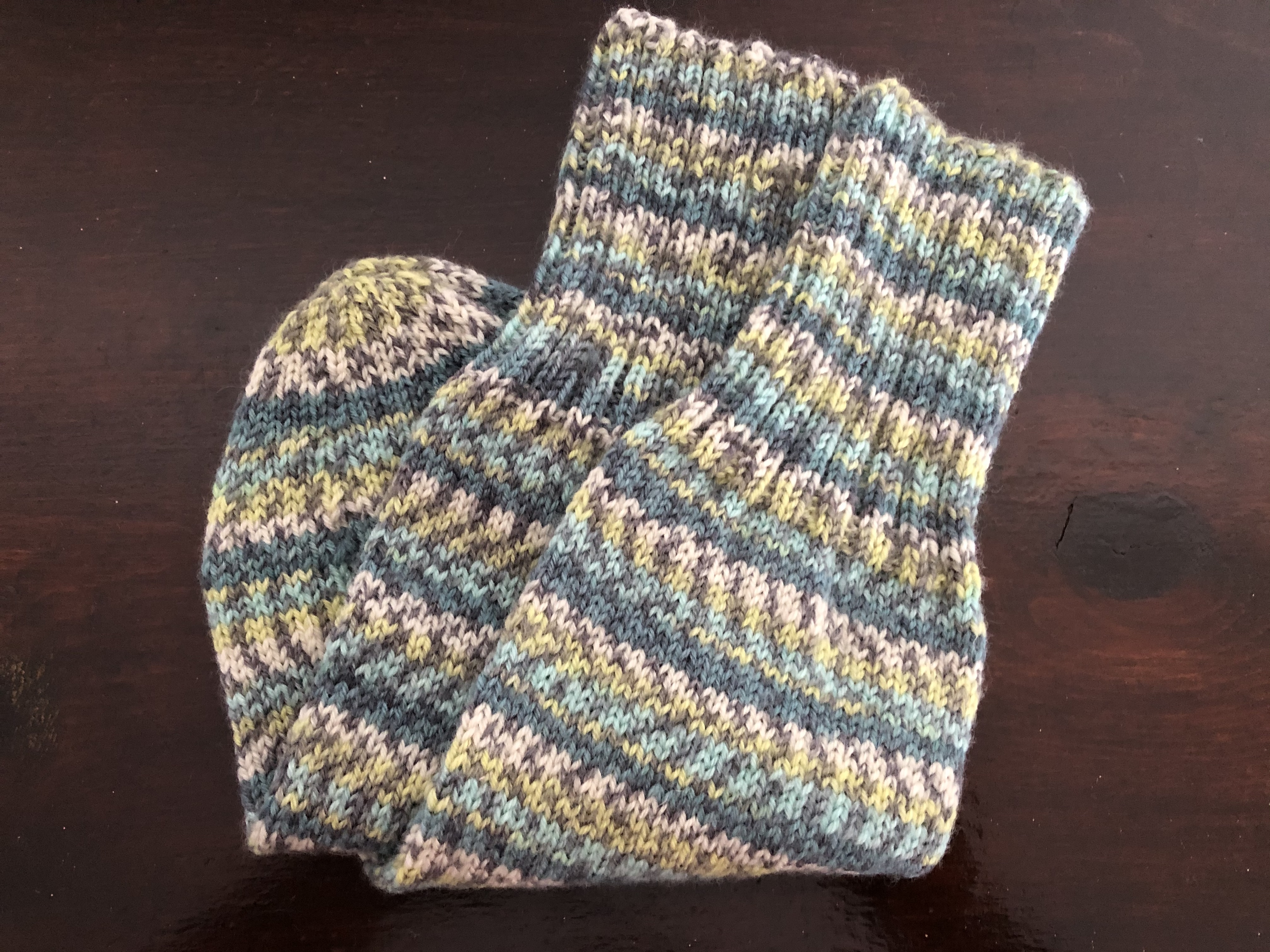
And once I finished, I had a cozy tube sock that will be perfect for the upcoming cold weather. And since I had worked out some of the kinks in the first sock, my second sock was a lot easier to work up.

My new pair of socks…

Knitted Tube Socks

Materials:

100 grams / 3.75 oz Sock Yarn*

Set of 4 US 3 Double Pointed Knitting Needles

Size 3 9-inch circular needles

*I used Patons Kroy Socks Yarn


Directions:

Using the circular needles cast on 64 stitches loosely.

Divide the stitches among three double-pointed needles: 24 stitches on the first needle, 24 on the second needle and 16 on the third needle. Join in round.

Using the 4th needle begin working in K2,P2 rib. Work the ribbing for 5 inches. You can make the ribbing shorter or longer based on your preference.

Knit every round until the sock measures 13 inches from the beginning.

Shape the toe as follows:

Round 1: K6, K2 Tog

Round 2-4: Knit 3 rows

Round 5: K5, K2 Tog

Round 6-8: Knit 3 rows

Round 9: K4, K2 Tog

Round 10-12: Knit 3 rows

Round 13: K3, K2 Tog

Round 14-16: Knit 3 rows

Round 17: K2, K2 Tog

Round 18-19: Knit 2 rows

Round 20: K1, K2 Tog

Round 21: Knit 1 row

Draw the yarn through the remaining stitches and fasten to secure. Weave in ends.

Wash and block to shape.